Showing posts with label AuthorProfile. Show all posts

Thursday, 23 October 2025

Gordon Korman Author Profile and Interview

Gordon Korman Author Profile and Interview

Gordon Korman Author Profile and Interview

Gordon Korman is a Canadian born author who resides in New York since moving there for university. He has published 109 book not counting omnibus editions of some of his series. His works have been translated into over 30 languages. I have a dual form of dyslexia and did not read when I was young. I have now read and reviewed all of Korman’s works, and only one of them do I recall, Our Man Weston, I believe it was read to us in school at some point shortly after it published. As a family we started reading Korman’s works in 2019, a teacher has gifted a copy of Restart to the whole class at the end of the school year. As a family the kids and I started a Reading Challenge in 2016, and after reading Restart both my son and I wanted to work through all of Korman’s works. My son is now 17, and my youngest daughter 14 and they both still love Korman’s works. I reached out to see if Mr. Korman would answer 20 questions for the readers here at Books Reviews and More, so here in his own words, Gordon!

1. You wrote your first novel at age 12 and published it at age 14; at the time did you know that it was a beginning of a series? 

I didn’t even know it was a novel. It was my grade 7 English assignment, and a pretty daunting one at that – to work on the same story for 4-5 months of school. I began to see it as a series pretty soon, though, since GO JUMP IN THE POOL and BEWARE THE FISH were both sequels. It wasn’t until I WANT TO GO HOME that I even considered a book that wasn’t about Bruno and Boots at Macdonald Hall.

2. Who were some of the biggest early supporters of your writing? 

My parents, definitely. We were like a family business at the beginning. They had to co-sign my first contracts and drive me to my meetings and interviews.

3. What authors influenced your writing style and format? 

I’m a big fan of the classic middle-grade genre that started in the 50s and 60s – Beverly Cleary, “The Great Brain,” “The Mad Scientists Club,” early Judy Blume. But I was also influenced by the antic 70s Disney-esque comedies I loved as a kid. Think of Don Knotts hanging from a flagpole above the town square.

4. What does your writing process look like? Takes us through the steps from  idea to publishing? 

I’ve been lucky to have been working with the same two editors for more than 25 years. I take every idea to one of them first and we hash out whether we think it can be a novel. From there, I create an outline and then it’s off to the races.

5. Some of your series are published over several years (Swindle); or  almost 2 decades (Bruno and Boots aka Macdonald Hall),  And some the whole series publishes in a single year (Titanic, Everest, Dive, or Island) What drives these differences?  

“Island,” “Dive,” “Masterminds,” and the other trilogies – as well as “On The Run” (6 books) – were conceived of and planned as series from the very beginning. On the other hand, SWINDLE and THIS CAN’T BE HAPPENING AT MACDONALD HALL were stand-alone novels that became series as I wrote sequels. UNGIFTED will be the next example of that. It will become a trilogy when HYPERGIFTED comes out in January.

6. Is there any series you have written that you would just never return to? 

Never say never, but I think it would be tough to return to Macdonald Hall today. I’m just so different than I was back then.

7. If you could bring one of your out of print books or series back into print for new audiences today which would it be? Why? 

I’d love to see WHO IS BUGS POTTER? make a triumphant return. I feel like I was really learning to be a great plotter when I wrote that one.

8. In 1981 your won the Canadian Authors Association (CAA) award for most promising writer under 35. How did it feel at the time? 

I was only 17, and I had this idea that 35 didn’t seem like a very young author to me. (I’ve changed my mind since then.)

9. I have read that you are a big football fan and have even been a season ticket holder for the New York Giants. Are you a fan of the Canadian Variety as well? Do you have a Canadian team your cheer for? 

I’m a survivor of many Argos games, but I don’t really follow the CFL anymore. Mostly, I’m a long-suffering Leafs fan (although I’ve semi-adopted the Rangers, since it’s hard to root against your kids).

10. Several of your books have been optioned over the years, including No Coins, Please, I Want to Go Home, the Island trilogy and The Twinkie Squad. Born to Rock and Ungifted are listed on IMDB as in development. If you could pick any book or series to come to the big or small screen, which would it be. 

I’m a huge fan of Aircraft Pictures’ “Go Jump In The Pool” – I thought they nailed the tone of Macdonald Hall perfectly. And Nickelodeon’s “Swindle” co-starred a very young Arianna Grande, which means I get to pretend I discovered her. But it’s hard to predict what film/TV projects have a chance. I have a wide range of books in development right now, from newer books like OLD SCHOOL back to NO COINS PLEASE from 1984. Personally, I’d love to see something happen with MASTERMINDS.

11. You co-wrote two volumes of poetry with your mother. Having read them I think they would be excellent for the classroom. What was it like writing with your mother? How was that process different than writing on your own? 

My Mom was always the Poet Laureate of the family and the neighborhood. She’s still got a real knack for poetry and humor. So with the Jeremy Bloom books, we were a great team, since she was the poet and I was good with the kid/school-oriented topics I knew would interest young readers.

12. What was it like working on the 39 Clues Series and contributing pieces to at first a larger story then a series of stories? 

I continue to value that as one of my coolest experiences as a writer. Rather than restricting me creatively, it taught me so much about finding my voice within the constraints of a pre-existing story.

13. Many of your books are available in electronic formats but with that comes bootleg distribution. What are your impressions of eBooks and the distribution of them through torrents and other illegal means? 

It’s unfortunate, but I don’t worry about it too much. We in publishing have been very fortunate that electronic piracy hasn’t affected us the way it has turned the music industry on its head.

14. Some authors monitor torrent sites and contact them to remove their content. Do you do so are have someone do so for you? 

No.

15. What were some of your favourite authors in your youth who helped shape you? 

I’m a fan of the middle grade authors who created the genre in the 50s and 60s, like Beverly Cleary, John D. Fitzgerald, and a little later, Judy Blume. I also loved Farley Mowatt’s work for young readers in both the humor and adventure genres.

16. What are some of your favorite books and authors now? 

I’ve always been a Kurt Vonnegut fan, but more recently, I’ve been really into Michael Chabon, James McBride, Jonathan Franzen, Barbara Kingsolver, and the mysteries written by J.K. Rowling under the pen name Robert Galbraith.

17. I once heard Madeleine L'Engle state that her characters were real to her and almost an extended part of her family, she said once that at the dinner table she sat up and stated "Meg just finished her PhD." Are your characters real to you, do you ever get glimpses of what they are up to now, or once you finish a book is that it? 

I agree that characters can be incredibly real to an author, but I don’t usually take it farther than the timeline of the book. I wouldn’t speculate on whether Noah Youkilis or Elmer Drimsdale will be first to win a Nobel Prize, or if George Wexford Smythe III will ever be indicted for tax fraud.

18. I once had a university professor state that the true goal of a university education should be to teach one to learn how to think. What would you state should be the goal of higher education and why? 

I agree, but I’d expand it beyond university to any learning experience. So much of my thinking was honed over the course of my almost 50 years of writing for kids.

19. If you were stuck on a desert island and could only have 10 books to read again and again, what books would you want with you?

The Dog Who Wouldn’t Be – Farley Mowatt
Tales Of A Fourth Grade Nothing – Judy Blume
The Giver – Lois Lowry
Harry Potter And The Chamber Of Secrets – J.K. Rowling
The Hitchhikers Guide To The Galaxy – Douglas Adams
Slaughterhouse Five – Kurt Vonnegut
Catch 22 – Joseph Heller
The Amazing Adventures Of Cavalier And Clay – Michael Chabon
The Heaven And Earth Grocery Store – Jame McBride
Demon Copperhead – Barbara Kingsolver

20. What advice would you give to young aspiring authors and artists? 

Make writing a part of your life – something you do pretty much every day.

21. Bonus question: you do a lot to promote up and coming authors, who are some of your favorite Canadian authors who write in the children’s and young adult space? 

Montreal-born Sarah Mlynowski has been a very successful writer in the kids’ field for decades, but, strangely, Canada doesn’t often claim her as our own. (She’s based out of LA these days.) And I’d hardly call him up-and-coming, but I’m a big fan of Kenneth Oppel. We first met when he was in his first year at U of T and I’d just graduated NYU.

Thank you Gordon for taking the time to answer those question, and for allowing me to post this on your 62 birthday. As you can see from the answers Korman is passionate about Books and has built his life around something he loves.

Note: Korman is the only author who I have read over 100 works from. An author friend calls me a completionist in that I find authors I love and read everything the published. Now I just need to track down all the works Korman Contributed to and add reviews of those to the list. 
 
Books by Gordon Korman:
MacDonald Hall Series:
         (formerly The War With Mr. Wizzle)
          (aka Macdonald Hall Goes Hollywood)
          (formerly Something Fishy at Macdonald Hall)

Bugs Potter Series:

Jeremy Bloom Series:

Monday Night Football Series:

Masterminds Series:
Masterminds (2015)

Slapshots Series:
Cup Crazy (2000)
4-in-1 Slapshots: The Complete Collection (2008)

Nose Pickers Series:
4-in-1 The Ultimate Nose-Picker Collection (2006)

Island Series:
Shipwreck (2001)
Survival (2001)
Escape (2001)
3-in-1 Island Trilogy Collection (2006)

Son of the Mob Series:

Everest Series:
The Contest (2002)
The Climb (2002)
The Summit (2002)
Everest Trilogy Box Set (2002)

Dive Series:
The Deep (2003)
The Danger (2003)

On the Run Series:

Kidnapped Series:
The Search (2006)
The Rescue (2006)

Swindle Series:
Swindle (2008)
Zoobreak (2009)
Framed (2010)
Showoff (2012)
Hideout (2013)
Jackpot (2014)
Unleashed (2015)
Jingle (2016)

Titanic Series:
Unsinkable (2011)
S.O.S (2011)

The 39 Clues Series:
Flashpoint (2014)

Hypnotists Series:

Ungifted Series:
Ungifted (2012)
Supergifted (2018)
Hypergifted (2026)

Slacker Series:
Slacker (2016)
Level 13 (2019)
...

Non Series Books:
Born To Rock (2006)
Schooled (2007)
Pop (2009)
Restart (2017)
Notorious (2019)
War Stories (2020)
Game On (contains The Chicken Doesn’t Skate and The Toilet Paper Tigers (2021)
Unplugged (2021)
Linked (2021)
The Fort (2022)
...
 

Wednesday, 26 February 2025

Ken Ogorek Author Profile and Interview

Ken Ogorek Author Profile and Interview

Ken Ogorek Author Profile and Interview

Ken has been involved with ministry at many levels. Giving talks around the country. At the parish level and now at the diocesan level. He has written books and collaborated on other projects. He is currently finishing up a three part series of Sunday reflections with Dr. Scott Hahn. He recently took some time to answer some questions for the readers here at Book Reviews and more. Here in his own words, Ken:

1. When did you know you wanted to be a writer? How are you nurturing that dream?

The summer between my junior and senior year of high school it dawned on me that among my few, meager, God-given talents, writing was the strongest and most unique.  Because I wanted to use God’s blessings to be of some help to others (while keeping a roof over my head) I decided that writing would be a good focus for my next step in education i.e. college.

2. Who were some of the biggest supporters of your writing?

Several high school teachers and college professors affirmed and improved my writing.  An early, post-college mentor helped tighten it up.  In some ways you could say that the Holy Spirit at least sometimes supports my writing because I think it might be a charism He’s given me—maybe the only one!

3. What authors influenced your writing style and format?

Whoever (co-?)wrote the Compendium of the Catechism of the Catholic Church affirmed my sense that sometimes less is more.  I.e. sometimes short, sweet pieces of writing that address basic questions re: doctrinal and moral teaching can be helpful to the average reader in efforts to reflect prayerfully on Sacred Tradition.  The same is true about the writer(s) of YOUCAT.

4. What was the process of coauthoring a new series of Sunday Reading reflections with Scott Hahn?

Divide-and-conquer is essentially our approach to collaborating on this resource.  Dr. Hahn contributes his excellent reflections on the Sunday Mass readings.  I chime in with brief passages re: a couple points of basic doctrinal and moral teaching, related to the readings, for each week—including short quotes from the Catechism itself.  Two reflection questions follow, capped off by a little prayer that draws each week’s pages to a nice close.

5. What was it like editing a volume with Mike Aquilina?

Mike is a lovely person.  And our project was a labor of love—a blessing for both of us.  We were both so blessed to know Fr. Ronald Lawler; this essay collection honored his memory.  The list of contributors reads like a Who’s Who in Catholic writing and speaking at the time; for my part, it was cool interacting with all these folks.

6. What does your writing process look like? Takes us through the steps from idea to publishing?

For this project, I started by correlating the 3-year cycle of Sunday Gospel readings with a list of 300+ In-Brief items from the Catechism of the Catholic Church—items chosen by the United States Conference of Catholic Bishops because, taken as a whole, they provide an objectively comprehensive overview of basic doctrinal and moral teaching.  From there I just chipped away, sometimes writing only one reflection at a time after our (then) school-age children went to bed at night.

My more recent contribution to this 3-book series are the brief prayers that end each week’s reflections.  The process for those was praying, reading lectionary selections, reflecting on Dr. Hahn’s excellent commentary for that week, revisiting my own Catechism-based reflections as well as each week’s two questions that help apply the content to daily life…then being attentive to what Person of the Trinity, what saint and so forth bubbled to the surface of my mind and to whom my heart was drawn.  That person, then, became the focus of the written prayer—sometimes direct, sometimes intercessory—always addressing, one way or another, our need to grow in a personal, disciple relationship with Jesus, lived in full communion with His mystical Body and spotless Bride:  our holy, Catholic Church.

7. Some of your earlier books are currently out of print, have you thought of rereleasing them as eBooks?

The simple answer is…no.  😊  Because my day job keeps me hopping, I’ve not (yet) ventured there.  I.e. my duties with the Archdiocese expanded immensely almost two years ago, and that’s a blessing.  But it’s changed the dynamic of my extracurriculars (side avocations) a bit.  That’s okay, though.  I believe the Lord has me where he wants me right now.  I appreciate the suggestion, though!

8. Have you ever considered writing fiction? If so is it a project we might see in the near future?

I used to write some fiction.  Lately, not so much.  I do enjoy writing hymn lyrics to public domain hymn tunes.  Am happy to customize a hymn for a special occasion e.g. parish anniversary, diocesan conference and so forth.  I use the Catechism in addition to Sacred Scripture as a source for lyrics.  My lyrics are always on target doctrinally i.e. no red flags….  😊

9. What books are currently in progress for you? Writing, researching, planning or even just ideas that you would like to work on?

I write a lot—a lot!—for my job.  😊  I’ve considered drafting a book along the lines of Confessions of a Church Middle Manager:  Behind the Scenes at Your Parish, School & Diocese.  Rather than an expose, it’d essentially be an homage in that, despite the occasional bad move I’ve seen in Church leadership, the vast majority of Church leaders are doing really good work.  I suppose I could throw in a bit of advice re: Church leadership given my years of service/experience and track record of being relatively effective by God’s grace and mercy.  😊

10. If you were asked for a list of 10 indispensable books for growing in the Catholic Faith, what would your list look like?

A good translation of the Bible e.g. Approved Translations of the Bible | USCCB
The Catechism, its Compendium, or YOUCAT
A good translation of the documents of the 2nd ecumenical council of the Vatican aka Vatican II
Love Unveiled: The Catholic Faith Explained (Ted Sri)
Women, Sex and the Church: A Case for Catholic Teaching (Erika Bachiochi)
A Crucial Key: Generational Perspectives and Catechetical Leadership (Rita & Tom Walters)
From Christendom to Apostolic Mission: Pastoral Strategies for an Apostolic Age (Msgr. James Shea)
The Religion of the Day (Msgr. James Shea)

(I’ll stop at 8 books…. 😊)

11. How do you stay disciplined when travelling and speaking around the country?

I haven’t been travelling as much lately, although I do still greatly enjoy leading retreat/renewal experiences including parish missions—as well as delivering the occasional one-and-done talk.  My family has always been very supportive in helping me be disciplined by allowing me to disappear for an hour or two now and then to do some focused writing.

12. What fiction books or authors do you enjoy or recommend?

I don’t read a lot of fiction, although a wise Capuchin I once worked with advised me always to keep a novel or short story collection in my reading rotation.  (I read several books simultaneously, mainly because I can have a short attention span at times; eventually each book does get read.)  My go-to recently has been G.K. Chesterton’s Father Brown mysteries.

13. Some of your books are published as Ken Ogorek and some as Kenneth, what was the reasoning behind that? 

No in-depth thought process there.  In my recent collaboration, Dr. Hahn goes by Scott; so I figured I should be Ken.  I will say that Kenneth means very handsome while Ken simply means handsome; even that’s a stretch for me!

14. Do you use a playlist when writing? Are certain books written while predominantly listing to the same music?

I prefer to write in a quiet setting.  If I’m at McDonald’s or Panera using their free wifi, I tune out the soundtrack and stay mentally focused by God’s grace and mercy.  Taco Bell’s harder because I find myself thinking about burritos.

15. What were some of your favorite authors in your teen years who helped shape you?

Two who come to mind are Charles Dickens and William Shakespeare.

16. Who are some of your favorite authors or books now?

If a pope issues a major document, I’m going to read it, for sure.  Chesterton, already mentioned, is also a favorite of mine.

17. I once had a university professor state that the true goal of a university education should be to teach one to learn how to think. What would you state should be the goal of higher education and why?

Similarly, a college president from a while back said that the goal of a liberal arts education is the integration of personality, career and lifestyle.  In the context of virtue, this is a worthy goal.  Certainly a well-educated person thinks critically and analytically, articulating her or his thoughts effectively both in speaking and writing.

18. If you were stuck on a desert island and could only have 10 books to read again and again, what books would you want with you?

The Holy Bible, the Catechism, a breviary and a lectionary/sacramentary.  (I’ll stop at 4 books this time.)

19. What advice would you give to young aspiring authors and artists?

Don’t expect commercial success.  Seek it, within reason, but don’t expect it.

Thank you ken for taking the time. And I look forward to read more of your works. If you have not tried the Breaking the Bread: A Biblical Devotional for Catholics Year C, I encourage you to pick it up and give it a try. Both Year and B and C are excellent and I look forward to Year A releasing later this year.

Books by Ken Ogorek:
The Gospel Truth: A Lectionary-Based Catechism for Adults 
The Great Life: Essays on Doctrine and Holiness In Honor of Father Ronald Lawler, O.F.M. Cap.
Catholic Parent Know-How, Faith-Filled Summer Activities

Let's Talk Series: 
Money, Virtues, "Out-Smarting" Your Parents, and More
Food, Fun, Fitness, and More
Friendship, Well-Being, and More
Resting, Forgiving, Being Free, and More

With Scott Hahh:


Wednesday, 10 April 2024

Author Profile and Interview with Declan Finn

Author Profile and Interview with Declan Finn


Two years ago I finally dived into the works of Declan Finn, I had been aware of his name and works for a while but had not got around to reading any. Once I started I came close to a book a week until I had finished all that were currently in print. And I have been working through the plethora of anthologies he has contributed to. Recently Declan took some time from his busy schedule to answer some questions for the readers here at Book Reviews and More. So here in his own words is Declan Finn.

1. When did you know you wanted to be a writer? How are you nurturing that dream?

When I was 16, I wrote some fan fiction. It spiralled into a multiple volume series that looked nothing like the original by the time I was done with it. I had basically rewired my brain so that it was always “on.” I couldn’t go anywhere or do anything without thinking of how to turn it into a plot or a scene, or an action sequence. 

I wouldn’t say it’s a dream. Kind of more like a night terror. Because, again, my brain is always on. Always. I can’t read a book or watch TV without rewriting it. I have to spend almost as much time marketing as I do writing—imagine spending hours online as part of establishing a brand and interacting with people, especially when you hate being on social media. That’s writing. That’s the inside of my brain.

2. Who were some of the biggest supporters of your writing?

My father encouraged me to start writing my ideas down. Then he encouraged me to continue writing. He was possibly my biggest fan early on. In fact, he was going to reread all of my books when I moved him to Texas. He died a month before the move out of New York City.

My wife was a fan before she married me, so, bonus.

Overall, my family has never asked me “When are you going to get a real job?” In part because I write from nine to five. This is my real job. Though it feels more unreal than not.

3. What authors influenced your writing style and format?

A lot of my early work was inspired by J. Michael Straczynski, creator of Babylon 5 and author of multiple comic books. 

Timothy Zahn helped me create characters who think their way through problems.

Reading John Ringo taught me how to meld politics into a plot… because wherever two or three are gathered, at some level, there is politics, even if it’s just interpersonal. And done correctly, they can add interesting complications to the story.

And David Weber taught me space combat. Because David Weber.

4. You currently have a few series on the go with various publishers, how do you decide which works to publish with which publisher?

I started with one book with Damnation Press… and they were bought by another company that promptly closed them. So that went nowhere.

My first real publisher was Silver Empire Press. I recall that they approached me and was willing to publish almost everything I had self-published at the time. And Silver Empire encouraged me to create a new IP, which turned into Saint Tommy, NYPD.

But when Silver Empire fell apart, I had offers from three other groups. Honestly, I just wanted to try them all out.

My space opera, White Ops, was my first project. It was with Tuscany Bay Books, only because Silver Empire was backlogged for a while (Covid and government messed around with them pretty badly). So I figured, “Okay, they won’t published White Ops until they finish Saint Tommy, NYPD. I’ll give White Ops to Tuscany Bay.” Tuscany Bay ended up with Saint Tommy because I was already with them on the one, might as well do the other

My other series, Love at First Bite, was about Catholic vampires. I was familiar with Three Ravens Press, and a lot of their interest was in Urban Fantasy. So I bounced Love at First Bite off of them. They were happy to take it

My Pius Trilogy was politically incendiary, so I went with a more politically minded publisher, Conservatarian Press. It has not yet been republished, they’re building infrastructure. 

In short, I’m just trying things out with people I know.

Ironically, a pretty big Indie publisher approached me AFTER I had signed with three different publishers. So, that drove me a little nuts.

5. If you had not become a writer what do you think you would be doing for a living?

Had I known then what I know now, I would have become an electrician or a welder. I can turn my brain off on the way home, and read a book in peace.

6. What does your writing process look like? Takes us through the steps from idea to publishing?

It used to be that I would fully develop the characters, wind them up, and let them roam as I throw plot points at them. I let them react naturally. 

Then I started outlining, because Silver Empire asked me to… and sometimes, I still let the characters roam, because they know pacing better than I do.

Then I have people edit. Then I edit. Then, if I’ve made significant changes, I have them edit again. Then I give it to the publisher. Usually, at this point, it’s their problem.

Except for PR. Because PR will lay heavily on you the writer. What? Did you think you could just write the book, and not be integral to selling it?

7. I once heard Madeleine L'Engle state that her characters were real to her and almost an extended part of her family, she said once that at the dinner table she sat up and stated "Meg just finished her PhD." Are your characters real to you, do you ever get glimpses of what they are up to now, or once you finish a book is that it?

The characters are too real sometimes.

I have straight-up killed characters, and they’re still coming back in short stories.

I wrapped up Love at First Bite seven years ago… and there’s a sequel series en route.

And you thought keeping Sherlock Holmes at the bottom of Reichenbach was difficult for Conan-Doyle.

8. What if your favourite character that you have written and why?

Probably Thomas Nolan. I got the most mileage out of him. He was even easy to write.

Though Sean Ryan is a good runner-up, since he’s been in my head the longest. And he’s a bit more balanced between “I grew up in a monastery” and “I feed pedophiles into a woodchipper in my spare time.”

9. What is your favourite book you have written and why?

Go ask grandparents who their favorite grandchildren are. Same thing.

10. Many people have commented on how each of your books would make great films. Have any of them been optioned or has any interest in actually developing them begun?

I have a film script for the first Saint Tommy novel. I have a pilot for Love at First Bite. But I have no offers or options.  Angel studios may have the balls, but their method of contacting them about developing contact is a problem. Nick Searcy would have the balls to do it, but he’s busy. Neal McDonough might be the last option for someone I can reach out to.

11. If you were asked for a list of 10 Catholic Fiction books to read, what would they be?

1. Ann Margaret Lewis, Murder in the Vatican, as well as The Watson Chronicles.  Okay, and Nephilim: Corruption
2. John Desjarlais (RIP), Bleeder and Viper
3. Adam Lane Smith did several great Catholic novels, but I think he’s pulled them all. Keep an eye out for when / if he republishes them.
4. NR LaPoint, Chalk
5. John C. Wright's Somewhither … and Iron Chamber of Memory.
6. L Jagi Lamplighter’s Rachel Griffin Series
7. Tim Powers. Any of Tim Powers. In fact, we need to put him and John Wright in a room together and see what books come out of it.
8. Ralph McInerny, The Red Hat. I know he’s known for Father Dowling, but I enjoyed that novel.
9. Russel Newquist, War Demons
10. Richard Paolinelli, Escaping Infinity

12. If you were asked for a list of 10 Catholic Non-Fiction books to read, what would they be?

I first read this as “non-Catholic fiction books.” So since I made that list, they are… 

1. Blaine Lee Pardoe: Splashdown
2. John Ringo, Princess of Wands
3. Ringo / Weber, March Upcountry
4. Timothy Zahn, any. Seriously, any.
5. Jim Butcher, The Dresden Files
6. Leslie Charteris: The Saint.
7. Jeffery Deaver, The Coffin Dancer
8. James Rollins, The Sigma Files
9. Karl Gallagher, The Lost War
10. Kal Spriggs, In Death’s Shadow

Catholic Non-Fiction.

1. Ronald Rychlak, Hitler, the War, and the Pope, Revised and Expanded
2. The Inquisition, by Howard Kamen
3. For all their Wars are Merry, by Declan Finn
4. Pius History (coming soon), from Declan Finn
5. A Philosophy for Living, by John Konecsni, and Declan Finn
6. Triumph
7. An Exorcist Tells his Story, Gabrielle Amorth
8. The Rite
9. The Snakebite Letters, Peter Kreeft
10. The Bad Catholics Guide to Good Living, by John Zmirak

13. All of your in print books are available in electronic formats but with that comes bootleg distribution. What are your impressions of eBooks and the distribution of them through torrents and other illegal means?

If these buggers are going so cheap that they can’t pay me the $4 or less per book, I can’t imagine that they’d pay if the books were only available legally.

14. Some authors monitor torrent sites and contact them to remove their content. Do you do so or have someone do so for you?

Neither. I will occasionally trip over someone who has pirated my books, and only then do I bother filing a report with someone. But there has been one author already who sued a pirate site, and the pirate is still doing it. So, I’ll do it if it’s right in front of me, but I’m not going to go hunting for it.

15. Why did you choose the pen name Declan Finn? Do you have any regrets with using a nom de plume?

My father had a side business called Declan Finn Inc. I would have used Junior, but he told me not to bother.

Do I regret using an alias? Heck no. My last name is bad enough that I worry that people will swallow their tongue if they tried.

16. What were some of your favorite authors in your teen years who helped shape you?

Joseph Garber’s Verticle Run. 
Tom Clancy
Bernard Cornwell
Timothy Zahn.

17. What are some of your favourite books and authors now?

Ann Margaret Lewis, Murder in the Vatican / The Watson Chronicles.  
NR LaPoint
John C. Wright
L Jagi Lamplighter
Richard Paolinelli, Escaping Infinity
Blaine Lee Pardoe: Splashdown
John Ringo, Princess of Wands
Ringo / Weber, March Upcountry
Timothy Zahn
Jim Butcher
Leslie Charteris
Karl Gallagher
Kal Spriggs

18. I once had a university professor state that the true goal of a university education should be to teach one to learn how to think. What would you state should be the goal of higher education and why?

Keep in mind, I am speaking now as the son of a Catholic philosophy professor, with a PhD. I myself have two Bachelors, a Masters, and a PhD (ABD).

Education, all education, should be to get you ready for life.

Start with high school. Because high school education should prepare people for the real world. Teenagers should leave high school with basic check balancing skills, the ability to fill out a tax return, and the ability to use power tools and metal working. Also, critical thinking skills. Because not everyone goes to college, not everyone has the ability to go to college. Teens should be able to be able to think on their own, because they may have to. 

College should be trade schools. You want a history degree? You should be trained to be able to get a job in history when you get out … whether it be a professional researcher, a high school or a college professor. I’ve got the Masters in history, and it’s absolutely useless. Why? Because when I was in the middle of my PhD, I learned from the American History Association, that demand for my research focus (European history) was at an all time low.

College should tell you upfront what your employment prospects are.

You want a gender studies degree, you can go get a minor in it, but there are no jobs in it. And you should be told that up front.

20 years ago, college felt like high school, the sequel. I worry about what it looks like today.

19. If you were stuck on a desert island and could only have 10 books to read again and again, what books would you want with you?

You mean, aside from “The complete book of ship building” and “Navigating by the stars”?

Anyway… Yeah, that’s the sort of stack that requires length and depth. Especially if I’m going to reread them over and over. 

Les Miserables
The complete Three Musketeers.
The Father Brown Omnibus, Chesterton
Lord of the Rings
The Silmarillion
The Summa Theologica
The complete Narnia
John C Wright’s Somewhither
Triple Zeck, a Nero Wolfe Omnibus
Heir to the Empire trilogy, by Timothy Zahn

20. What advice would you give to young aspiring authors and artists?

Get a degree in marketing or graphic design. Or both. Probably join toastmasters. Because if you’re going into the arts thinking that you’re going to avoid people, you are dead wrong.

Writing is a business. Don’t tell me how it’s “just art.” Artists had patrons. Renaissance art was created because people with money commissioned them. You cannot separate art and money with a crowbar … and I’m not referring to how art pieces are used for illicit activities. 

21. Bonus Question: You often give advice stating that people do not really want to be writers. If someone were insistent on becoming one what advice would you give them?

I always clarify between if someone “wants to be a writer” and if someone “has to be a writer.” 
If you have to be a writer, and you are compelled to write, just embrace it, because it’s too late for you. Welcome to the party pal.
And if you want to be a writer … why? Do you think it will be easy? Fun? It’s work. It may be enjoyable work, but writing is work. 
Worse, selling your writing is work. 
But yeah, learn about graphic design and marketing. You can get people to do this for you, but it’s cheaper if you do it yourself. The more you control, the better.
Find readers among your friends. And I mean friends who will insult you to your face, because you need people who will not spare your feelings as they edit your work. Find friends who will take a blue pen to published newspaper articles. Find your nearest English major and put them to work. Because you cannot edit your own work… unless you want to wait a while.

Declan give us some very serious and substantial answers to the 21 questions he faced. He has provided some excellent advice on education and on writing. He has given some great lists of books to read. A number of the authors he mentioned I was aware of or had not read. And because of Finn my ‘to be read’ bile just grew significantly. Declan spends a lot of time on social media promoting other authors, books and specific publishers. If you have not read anything by him I encourage you to do so. I regret not having started reading his works earlier, so I encourage you not to make my mistake. I recommend starting with White Ops, Saint Tommy, or Live at first bite! 

Books by Declan Finn:
Love At First Bite Series:

The Last Survivors Series:

Convention Killings Series:

Pius Series:
A Pius Legacy
A Pius Stand
Pius History
Pius Tales (Anthology)
Pius Trilogy Short Stories:
...

St. Tommy Series:

Top Secret Service Series:

Dances with Werewolves Series:

White Ops Series:

Land&Sea Season 2:
...

Other books:
...

Anthologies contributed to:
Luna: Planetary Anhtology Series Book 2
Supernatural Streets
Starflight: Tales From The Starport Lounge
Mercury: Planetary Anthology Series Book 4
Venus: Planetary Anthology Series Book 5
Mars: Planetary Anthology Series Book 7
Places Beyond the Wild: A Z-Day Anthology
Shoot the Devil: Ten Tales of Humans Defeating the Demonic
Fantastic Schools, Volume 6
...


Honor At Stake - Declan Finn - Love at First Bite Book 1

Hell Spawn - Declan Finn - Saint Tommy NYPD Book 1

White Ops - Declan Finn - White Ops Book 1

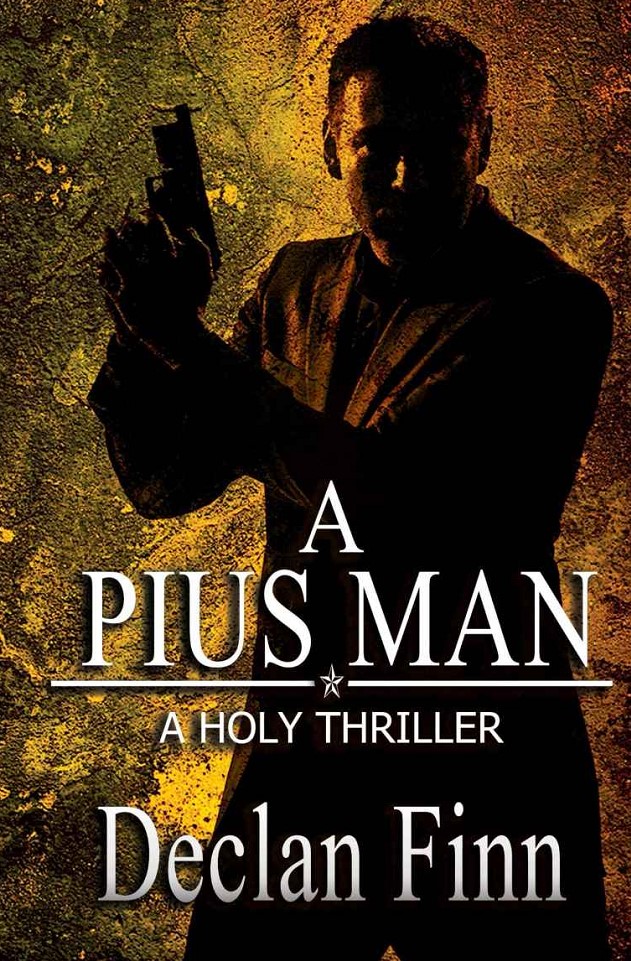
A Pius Man - Declan Finn - The Pius Trilogy Book 1

Wednesday, 17 January 2024

Author Profile and Interview with Jean Olwen Maynard

Author Profile and Interview with Jean Olwen Maynard

Jean Olwen Maynard December 2023

Jean Olwen Maynard is an author who focuses on hagiography in her works for the Catholic Truth Society. She has published numerous volumes for the Catholic Truth Society and also has a number of other works mostly published privately. I have read ten of her volumes and can easily recommend them. I reached out and Olwen took some time from her schedule to answer 20 questions for the readers here at Books Reviews and More.

 1. When did you know you wanted to be a writer? How are you nurturing that dream?

Since forever.

2. Who were some of the biggest supporters of your writing?

I can’t honestly remember anyone being particularly supportive. I think the message I absorbed from people was that writing was a great thing to do, but nobody was likely to be interested in anything I could write.

3. What authors influenced your writing style and format?

Here again I can’t remember, though it makes sense that I must have been influenced by what I read.  It just sort of happened by osmosis and I wasn’t consciously aware of being influenced.

4. You have written a lot about martyrs. Outside of your own books, what volumes would you recommend for someone who wants to read more?

Really satisfying books about martyrs as such are relatively rare, especially in English. I’ve often had to make use of foreign-language publications or unpublished material (for my CTS booklet on Bl Isidore Bakanja I used the files of the devil’s advocate which are kept in a microfilmed archive at a university in Antwerp). There’s also the problem that a lot of people won’t read books, and certainly won’t read long or difficult ones. I’ve quite often recommended to people a recent book about the Penal Times in England because it’s so readable: ‘God’s Secret Agents’, by Alice Hogge.  I also tend to recommend films: the English version of ‘Of Gods and Men’ is available on DVD. Also you can get ‘Un Dios Prohibido’ on DVD with English sub-titles:  Full-length (but not over-long) books which I’ve found impressive would be African Holocaust: The Story of the Uganda Martyrs’ by John F Faupel, and James Brockman’s life of St Oscar Romero.  

5. What of your books is your favorite and why?

I like them all in in different ways.  The list you’ve got isn’t quite correct.  I’ve not written a history of the Sisters of Mercy as a congregation, but rather three community histories about important historic Convents of Mercy in UK (together with any daughter houses): Elgin, Bristol and Commercial Road.  I’ve put a revised list at the end.  

6. What does your writing process look like? Takes us through the steps from  idea to publishing?

I don’t really have a process. I suppose I start with an idea of what I want to do or how it will work, but that’s not something I could put into words, and then I just get on with it and it gradually comes together.

7. Do you use a playlist when writing? Are certain books written while predominantly listing to the same music?

What’s a playlist?  If I really need to concentrate I don’t play music as I’d find it distracting. For less focused stuff that’s actually a bit boring I generally play Gilbert and Sullivan to keep my spirits up.

8. What current projects are you working on?

A study about Catholics in London in the first half of the nineteenth century.

9. What are some of your favorite contemporary religious authors to read?

I’ve read a number of books by Scott Hahn and George Weigel that I thought were really good.

10. If you could only recommend 10 books to a reader looking to be a well-rounded Catholic what books would you suggest?

Can’t come up with ten.  (I read a lot of books but – with some exceptions – I don’t have a very good memory for specific titles/ authors.)  I’d definitely recommend Chesterton’s ‘Orthodoxy’ and Ratzinger’s ‘Introduction to Christianity’.

11. What advice do you wish a writer had passed on to you early in your career, which you only learned through experience?

I’ll have to pass on this one because I know myself too well: if I’d been offered advice I’d not have taken it.  

12. Have you ever considered writing fiction? If so is it a project we might see in the near future?

I did write a novel as a teenager.  Sent it off to a publisher but of course got a rejection slip.  That was at a time when I think publishers were rejecting everything without even looking at it unless it came via a literary agent, but it probably wasn’t much good anyway.  Can’t see myself trying again.

13. Some of your books are available in electronic formats but with that comes bootleg distribution. What are your impressions of eBooks and the distribution of them through torrents and other illegal means?

I enjoy reading novels on kindle but for non-fiction I prefer a proper book.  I’d never thought about it but suppose it would be quite easy to distribute e-books illegally, and I suppose it must cause quite a serious problem.  

14. Some authors monitor torrent sites and contact them to remove their content. Do you do so are have someone do so for you?

I have no idea what a torrent is.  

15. Some of your earlier books are currently out of print, have you thought of rereleasing them as ebooks?

I think CTS has, and it would be a good idea.

16. What were some of your favorite authors in your teen years who helped shape you?

I read everything I could get hold of by C S Lewis – including stuff I was too young to understand.

17. What are some of your favorite books and authors now?

I like Michael Burleigh.

18. I once had a university professor state that the true goal of a university education should be to teach one to learn how to think. What would you state should be the goal of higher education and why?

Definitely I think it should be to learn to think.  

19. If you were stuck on a desert island and could only have 10 books to read again and again, what books would you want with you?

I don’t re-read books much so sounds like my worst nightmare: I’ve no idea how I’d cope.

20. What advice would you give to young aspiring authors and artists?

Just go ahead and write.  (But please learn to use grammar properly, and use words correctly.)

I want to thank Jean for taking the time to answer the questions and interact with the readers here at Book Reviews and More. Her revised list of her works has left me with many more to try and track down. If you have not read anything by her, I highly recommend her books from the CTS. 

Published work by Jean Olwen Maynard:
Privately published by religious orders/parishes:
Greyfriars Convent, Elgin (2006)
A History of St Mary and St Michael’s Parish, Commercial Road, East London (2007)
Sisters of Mercy Bristol (2008)
150 Years of Mercy: A History of the Sisters of Mercy Commercial Road East London (2009)
The Saint of Hoxton (2011)
Saint Monica’s Church Hoxton Square (2018) 
150th anniversary history brochure for Parish of Guardian Angels, Mile End (2018)
150th anniversary history brochure for Parish of Our Lady and St Catherine of Sienna, Bow (2020) 
Immaculate Heart of Mary and St Dominic, Homerton 1873-2023 – 150 Years: A History of the Parish (2023)

CTS Booklets:
Isidore Bakanja 
Joseph Vaz

Articles:
Between Christendom and Islam, The Martyr Mystic Christian de Chergé and the Atlas Cistercians in Algeria, in: Catholic in Religious Dialogue: Monasticism, Theology and Spirituality, ed Anthony O’Mahoney and Peter Bowe OSB, Gracewing, 2006
Campaign for the Catholic Workhouse Children, in: British Catholic History, Vol 31: Issue 4 Oct 2015


Jean Olwen Maynard Books from CTS