Showing posts with label CSLewis. Show all posts

Wednesday, 18 December 2024

Screwtape Proposes a Toast and Other Pieces - C.S. Lewis - The Ransom Cycle Book 4

The Screwtape Letters
and Other Pieces 
The Ransom Cycle Book 4
ISBN 9780008192532
eISBN 9780008228545
ASIN B01MA511VT

Screwtape Proposes A Toast - C.S. Lewis

This book hit very differently reading it this time. I believe that is for a few reasons. Some of which are: One I now believe this is part of the Ransom cycle, more on that below. Two looking back on my life from my mid 50’s I can see thinks, I hope, a little better. As a father of three teenagers, and a child in her late 20’s growing up in this day and age I am even more concerned about the trials and temptations they face. I know I read this volume a number of times in University, but that was before I started keeping a list of everything I have read, which I started in October of 1995. At the time of writing this review according to Goodreads there are over 800 editions of The Screwtape Letters available. Interestingly enough some editions contain this work at the end; there are some notes on that in this edition:

“C. S. Lewis had finished putting this book together shortly before his death on 22nd November 1963. It is devoted almost entirely to religion and the pieces are derived from various sources. Some of them have appeared in They Asked for a Paper (Geoffrey Bles, London 1962, 21s.), a collection whose subjects included literature, ethics and theology. ‘Screwtape Proposes a Toast’ was initially published in Great Britain as part of a hard-covered book called The Screwtape Letters and Screwtape Proposes a Toast (Geoffrey Bles, London 1961, 12s. 6d.). This consisted of the original ‘The Screwtape Letters’, together with the ‘Toast’, and also a new preface by Lewis. Meantime, ‘Screwtape Proposes a Toast’ had already appeared in the United States, first as an article in The Saturday Evening Post and then during 1960 in a hard-covered collection, The World’s Last Night (Harcourt Brace and World, New York)”

The preface ends with:

“At the end of his preface to They Asked for a Paper, Lewis wrote: ‘Since these papers were composed at various times during the last twenty years, passages in them which some readers may find reminiscent of my later work are in fact anticipatory or embryonic. I have allowed myself to be persuaded that such overlaps were not a fatal objection to their republication.’ We are delighted that he allowed himself to be persuaded in the same way over this paperback collection of pieces on religious themes.”

Lewis himself in the new preface included in this volume states:

“I was often asked or advised to add to the original “Screwtape Letters”, but for many years I felt not the least inclination to do it. Though I had never written anything more easily, I never wrote with less enjoyment. The ease came, no doubt, from the fact that the device of diabolical letters, once you have thought of it, exploits itself spontaneously, like Swift’s big and little men, or the medical and ethical philosophy of “Erewhon”, as Anstey’s Garuda Stone. It would run away with you for a thousand pages if you gave it its head. But though it was easy to twist one’s mind into the diabolical attitude, it was not fun, or not for long. The strain produced a sort of spiritual cramp. The world into which I had to project myself while I spoke through Screwtape was all dust, grit, thirst and itch. Every trace of beauty, freshness and geniality had to be excluded. It almost smothered me before I was done. It would have smothered my readers if I had prolonged it.”

And over the years there have been numerous attempts to update or modernize Screwtape including:

Flambeau@Darkcorp.com - Don Hawkings
The Snakebite Letters - Peter J. Kreeft
The Gargoyle Code - Dwight Longenecker
Lord Foulgrin's Letters - Randy Alcorn
As One Devil to Another - Richard Platt
The Gravedigger File - Os Guinness 
     (Now published as The Last Christian on Earth)

And those are just the ones that come to mind and that I have encountered. I have read half of that list but before I started writing reviews. And from what I recall those I have read paled in comparison to this volume. As can be seen from this list and even Lewis’s own preface Screwtape has often been imitated but never replicated. Even Lewis did not attempt that. The work sin this volume are:

Preface and Acknowledgements
Screwtape Proposes a Toast: An Address
The Inner Ring: An Oration
Is Theology Poetry?: A Paper
On Obstinacy in Belief: A Paper
Transposition: A Sermon
The Weight of Glory: A Sermon
Good Work and Good Works: A Paper
A Slip of the Tongue: A Sermon
Footnotes
About the Author
Other Books By C.S. Lewis

A note before I continue:
Recent scholarship published found a handwritten preface to manuscript edition of The Screwtape Letters in the C.S. Lewis Archive in Wheaton, IL. This note indicates the letters were found and translated by Dr. Ransom. And that they were written in Old Solar. Thus linking the 3 Ransom novels, the 2 Screwtape pieces and the partial fourth Ransom novel into one series. As such this reading of this volume is in the order of it being volume 3 of 6 in that reading order.

I could have read the edition of this piece that was at the end of the letters, but historically I have always read an edition that is separate and I decided to do so again. It is also fitting that the remaining pieces in this collection are derived from sermons, talks, or articles by Leis on the topic of religion, faith and life. 

This volume is powerful. But in a very different way the the letters. The first piece is of course my primary concern when reading it as part of the Ransom cycle, but the other pieces fit in well especially as I am now well into That Hideous Strength, as I write this review. I cannot help but feel the other pieces in this serve so well as a counter to N.I.C.E. and what they are trying to achieve. The description of this edition of this work states:

“The only official sequel, penned by Lewis himself, to the ever-popular ‘Screwtape Letters’ – published alongside other short essays.

One of the most popular books ever to come from the pen of C.S. Lewis was written in the name of Screwtape, a senior devil, experienced in the art of luring his ‘patients’ on earth to their own damnation in service of ‘our father below’ – and training others to do the same.

Screwtape’s correspondence with his nephew, an apprentice devil, came into Lewis’s hands, he said, by a route he would not disclose, and many a reader has finished the collection longing for more of the insights they gained from its wisdom.

Much to Lewis’s resistance, this after-dinner speech, given by Screwtape to a graduating class of demons at a college in hell, came to light a few years after the publication of the original letters. Now 75 years later, the speech is reproduced in full once more, along with a short collection of Lewis’s other lesser-known, but perennial works.

Many people will have forgotten about the only official ‘sequel’ that exists to Screwtape; the 75th anniversary of Screwtape’s publication is the perfect opportunity to bring this back.”

I highlighted a few passages while reading this work, some of them are:

“The strain produced a sort of spiritual cramp. The world into which I had to project myself while I spoke through Screwtape was all dust, grit, thirst and itch. Every trace of beauty, freshness and geniality had to be excluded. It almost smothered me before I was done. It would have smothered my readers if I had prolonged it.”

“The sort of souls on whose despair and ruin we have—well, I won’t say feasted, but at any rate subsisted—to-night are increasing in numbers and will continue to increase. Our advices from Lower Command assure us that this is so; our directives warn us to orient all our tactics in view of this situation.”

“As for the poor who benefited by this, they were behaving in a most disappointing fashion. Instead of using their new liberties—as we reasonably hoped and expected—for massacre, rape, and looting, or even for perpetual intoxication, they were perversely engaged in becoming cleaner, more orderly, more thrifty, better educated, and even more virtuous. Believe me, gentledevils, the threat of something like a really healthy state of society seemed then perfectly serious.”

“The first and most obvious advantage is that you thus induce him to enthrone at the centre of his life a good, solid resounding lie.”

“Now this useful phenomenon is in itself by no means new. Under the name of Envy it has been known to the humans for thousands of years. But hitherto they always regarded it as the most odious, and also the most comical, of vices.”

“Under the influence of this incantation those who are in any or every way inferior can labour more wholeheartedly and successfully than ever before to pull down everyone else to their own level.”

“All is summed up in the prayer which a young female human is said to have uttered recently: “Oh God, make me a normal twentieth-century girl!” Thanks to our labours, this will mean increasingly, “Make me a minx, a moron, and a parasite.””

“The basic principle of the new education is to be that dunces and idlers must not be made to feel inferior to intelligent and industrious pupils. That would be “undemocratic”.”

“For “democracy” or the “democratic spirit” (diabolical sense) leads to a nation without great men, a nation mainly of subliterates, morally flaccid from lack of discipline in youth, full of the cocksureness which flattery breeds on ignorance, and soft from lifelong pampering.”

“The ultimate value, for us, of any revolution, war, or famine lies in the individual anguish, treachery, hatred, rage, and despair which it may produce. I’m as good as you is a useful means for the destruction of democratic societies. But it has a far deeper value as an end in itself, as a state of mind, which necessarily excluding humility, charity, contentment, and all the pleasures of gratitude or admiration, turns a human being away from almost every road which might finally lead him to Heaven.”

All of those quotes come from the preface of the Toast. This is one of those volumes that people today will often scoff at or deride, both the toast and most of the other pieces as well. Even in many Christian circles. Those who do take its warnings could face opposition from friends, family and other Christians. But it is an important work, both as part of the Ransom cycle and just on its own. It is a work I am going to encourage my youngest two read. 

I have struggled with the works of C.S. Lewis, when I was in university 35ish years ago he was immensely popular in Campus ministry, with evangelicals, and even mainline protestants. I also know many Catholic scholars, teachers and priests who love his works and use them extensively today. There have been debates of weather he would have converted to Catholicism or if he lived a sort of Catholicism. All I know is that I have hardly read any of his books in decades and that was my loss. And after my recent readings I can greatly appreciate why he is loved by both Catholics and evangelicals.

So my recommendation is if you are Catholic, or evangelical or nondenominational that you give this volume a read with an open heart. And see if you are not changed and challenged by the end of the work. And consider reading the Ransom cycle in the order outlined above. By the end of this volume you will see how they all fit so well together and how we are in need of this great wisdom. 

Other Reviews of Lewis's Books.
A Grief Observed
The Four Loves
...


...
The Dark Tower and Other Stories
...

Narnia Publication Order:
Prince Caspian
The Voyage of the Dawn Treader
The Silver Chair
The Horse and His Boy
The Last Battle
...

Narnia Chronological Order:
The Horse and His Boy
Prince Caspian
The Voyage of the Dawn Treader
The Silver Chair
The Last Battle
...

Books about C.S. Lewis:
Planet's In Peril: A critical Study of C.S. Lewis's Ransom Trilogy - David C. Downing
The Man Who Created Narnia - Michael Coren
...


Out of the Silent Planet - C.S. Lewis

Perelandra - C.S. Lewis

The Screwtape Letters - C.S. Lewis

Screwtape Proposes A Toast - C.S. Lewis

The Hideous Strength - C.S. Lewis

The Dark Tower - C.S. Lewis

Wednesday, 11 December 2024

The Screwtape Letters - C.S. Lewis - The Ransom Cycle Book 3

The Screwtape Letters
The Ransom Cycle Book 3
ISBN 9780060652937
eISBN 9780061949043
ASIN B002BD2V2Y

The Screwtape Letters - C.S. Lewis

This book hit very differently reading it this time. I believe that is for a few reasons. Some of which are: One I now believe this is part of the Ransom cycle, more on that below. Two looking back on my life in my mid 50’s I can see many of the snares and traps outlined in this volume, and the success they had in my life. As a father of three teenagers growing up in this day and age I am even more concerned about the trials and temptations the face. I know I read this volume a number of times in University, but that was before I started keeping a list of everything I have read, which I started in October of 1995. At the time of writing this review according to Goodreads there are over 800 editions of this book available. And over the years there have been numerous attempts to update or modernize it including:

Flambeau@Darkcorp.com - Don Hawkings
The Snakebite Letters - Peter J. Kreeft
The Gargoyle Code - Dwight Longenecker
Lord Foulgrin's Letters - Randy Alcorn
As One Devil to Another - Richard Platt
The Gravedigger File - Os Guinness 
     (Now published as The Last Christian on Earth)

And those are just the ones that come to mind and that I have encountered. I have read half of that list but before I started writing reviews. And from what I recall those I have read paled in comparison to this volume. A quick note before continuing with this review:

Recent scholarship published found a handwritten preface to manuscript edition of The Screwtape Letters in the C.S. Lewis Archive in Wheaton, IL. This note indicates the letters were found and translated by Dr. Ransom. And that they were written in Old Solar. Thus linking the 3 Ransom novels, the 2 Screwtape pieces and the partial fourth Ransom novel into one series. As such this reading of this volume is in the order of it being volume 3 of 6 in that reading order.

So to begin with in the last week prior to reading this, I have reread both Out of the Silent Planet and Perelandra; and looking at this as a volume transcribed by Ransom and provided to Lewis shines an entirely different light upon the work. In part while reading this there was a deep sense of melancholy, for though I read it when I was younger and some of the other volumes mentioned that imitate it, I can looking back see the many times I have fallen and failed. 

This volume is terribly powerful. Both of you read it as allegory or if you read it as lessons. Lessons in this case lessons to be avoided. Sort of reverse manual on how to spot traps, snares, and outright interference in your life and the lives of those around you. The real turning point in my life was a weeklong deliverance ministry retreat. But how I wish my eyes had been opened earlier, the pain I would have saved myself and others. Forgive me father.

This is one of those volumes that people today will often scoff at or deride. Even in many Christian circles. Those who do take its warnings could face opposition from friends, family and other Christians. But it is an important work, both as part of the Ransom cycle and just on its own. It is a work I am going to encourage my youngest two read. This edition also contains Screwtape Proposes a Toast, but I have another edition called Screwtape Proposes a Toast and Other Pieces, and I plan to read it in that edition.

I have struggled with the works of C.S. Lewis, when I was in university 35ish years ago he was immensely popular in Campus ministry, with evangelicals, and even mainline protestants. I also know many Catholic scholars, teachers and priests who love his works and use them extensively today. There have been debates of weather he would have converted to Catholicism or if he lived a sort of Catholicism. All I know is that I have hardly read any of his books in decades and that was my loss.

So my recommendation is if you are Catholic, or evangelical or nondenominational that you give this volume a read with an open heart. And see if you are not changed and challenged by the end of the work. 

Note: Review written in 2024 after a reread but it was read a number of times in the 1990's and early 2000's.

Note 2: Recent scholarship published found a handwritten preface to The Screwtape Letters in the C.S. Lewis Archive in Wheaton, IL. This note indicates the letters were found and translated by Dr. Ransom. And that they were written in Old Solar. Thus linking the 3 Ransom novels, the 2 Screwtape pieces and the partial fourth Ransom novel into one series. 

Other Reviews of Lewis's Books.
A Grief Observed
The Four Loves
...


...
The Dark Tower and Other Stories
...

Narnia Publication Order:
Prince Caspian
The Voyage of the Dawn Treader
The Silver Chair
The Horse and His Boy
The Last Battle
...

Narnia Chronological Order:
The Horse and His Boy
Prince Caspian
The Voyage of the Dawn Treader
The Silver Chair
The Last Battle
...

Books about C.S. Lewis:
Planet's In Peril: A critical Study of C.S. Lewis's Ransom Trilogy - David C. Downing
The Man Who Created Narnia - Michael Coren
...


Out of the Silent Planet - C.S. Lewis

Perelandra - C.S. Lewis

The Screwtape Letters - C.S. Lewis

Screwtape Proposes A Toast - C.S. Lewis

The Hideous Strength - C.S. Lewis

The Dark Tower - C.S. Lewis

Thursday, 13 January 2022

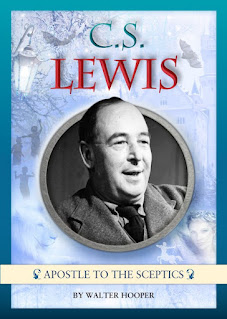
C.S. Lewis Apostle to the Sceptics - Walter Hooper - CTS Biographies

C. S. Lewis Apostle to the Sceptics
Catholic Truth Society
ISBN 9781784690021
eISBN 9781784693046
ASIN B0719TMKLQ
CTS Booklet B760


I admit I was hesitant to pick up this book and give it a read. I have read several books by and about C.S. Lewis, including other works by Hooper. When I was involved with Campus Ministry Lewis’s book were immensely popular with evangelicals and mainline Protestants. I also know that he is popular in many circles of Catholic thought, to the extent that that some argue he was really a Catholic at heart. So as such I was hesitant to pick up this volume and give it a read, even though I have read over 250 volumes from the Catholic Truth Society over the last handful of years. I was however greatly surprised by this booklet and have recommended it to a few friends whom I know are fans of Lewis, both Catholic’s and non-Catholics. But back to this booklet, the description of it is:

“This booklet charts Lewis’s journey from practical atheism to his conversion to Christianity, and thereafter, to becoming Professor of English at Cambridge and one of the best known Christian apologists of his age. In charting Lewis's childhood, youth and adult life, Walter Hooper reveals the many influences that played upon his formation as a writer, thinker, and in his faith.

Spurning celebrity and false certainties, Lewis spoke to millions of his generation of the everyday struggles, enlightened by the truths of Christianity conveyed in straightforward, riveting, understandable prose.”

And the chapters are:

Introduction
Early Days
Schools and Loss of Faith
Oxford and the War
Tolkien and Conversion
The Christian Apologist
A Chapter of Surprises
Further Reading
Endnotes

This volume was published in 2014 and the eBook edition released in 2017. This appears to be a new work by Hooper, and I believe it was one of if not the last book Hooper wrote. I was surprised that it is a new volume and not an excerpt from his other works. Not that he did not draw from them. A few of the passages I highlighted my first time through this book were:

“As I’ve explained in this booklet, The Screwtape Letters was one of the first theological works Lewis published. It appeared in weekly instalments, at the same time the ‘Mere Christianity’ talks were being broadcast. Lewis had the publishers of the Letters and the BBC send the fees for both works to a list of widows and orphans he provided. Lewis had his old friend Owen Barfield, a solicitor, set up a charitable trust - which they called ‘The Agape’ - into which two-thirds of Lewis’s total income would go. All the gifts from the Agape were given anonymously.”

“I think writing gave him more pleasure than anything. A bottle of ink, some nibs for his pen, a stack of paper - and plenty of tea! - that gave him great contentment. One time I asked how he managed to write with such ease. He said the thing he most enjoyed about writing was that it did two things at once. This he illustrated by saying, “I don’t know what I mean till I see what I’ve said.” In other words, writing and thinking were a single process.”

“After his death Warnie invited me to edit his brother’s writings, and this has occupied me for the last fifty years. This would have been impossible without the encouragement and good will of the Inklings, notably Warnie, Owen Barfield, Professor Tolkien and many others. I wish they had been alive in 1984 when I learned that Pope John Paul II wanted to talk with me about Lewis.”

“It was arranged that I would have a private audience with the Holy Father on 14th November 1984. I had known for years that the Pope had used The Screwtape Letters with his students as far back as 1950. Then in 1978, the year he became Pope, he mentioned Lewis’s The Four Loves in one of his Wednesday audiences. The Four Loves are Affection, Friendship, Eros and Agape. When I met the Pope after the General Audience he began by asking, “Do you still love your old friend, C.S. Lewis?” “Yes, Holy Father,” I said, “Both Affection and Friendship.” “You knew I liked The Four Loves!” he said. I replied that many people knew it, and from our conversation I learned that the Pope knew most of Lewis’s theological works, including Mere Christianity.

Then came his questions about what Lewis was like, and it was clear he really wanted to know what inspired this remarkable man to become a champion of the Christian Faith. At the end, I hoped the Pope, having heard me on C.S. Lewis, would say what he thought of him. He did: he said with great firmness:
“C.S. Lewis knew what his apostolate was” - a long pause - “and he did it!””

That interest and familiarity with C.S. Lewis by Saint John Paul II and a few references to Pope Benedict XVI’s to Lewis were news to me. Hooper states:

“Mere Christianity has never been out of print. Although it was written with ‘Everyman’ in mind, numerous Catholics use it in teaching because Lewis could explain profound subjects in simple and compelling language. The book has led many to convert to Catholicism.”

And also:

“It hardly needs saying that Tolkien hoped Jack would become a Catholic. After all, Lewis’s beliefs were much more Catholic than Anglican. But Lewis was trapped by his own success. Following his first series of ‘Mere Christianity’ broadcasts in 1941, Lewis began getting an enormous number of letters, and he felt he must reply to all of them. He argued that if an author publishes a book it is reasonable for his readers to write to him. From about 1945 on Lewis received thousands of letters every year, with the result that he spent at least two hours every day replying to them. The 3500 pages of his Collected Letters are yet another aspect of his Apostolate to the Sceptics.”

As mentioned I was greatly surprised by this little volume. Even with all I have read by and about Lewis and even the other Inklings. This is a wonderful little read. A great book in an excellent series from the  Catholic Truth Society. 

Note: This book is part of a series of reviews: 2022 Catholic Reading Plan! For other reviews of books from the Catholic Truth Society click here.

For reviews of other books in the CTS Biographies series click here.

Other Reviews of Lewis's Books.
A Grief Observed
The Four Loves
...


...
The Dark Tower and Other Stories
...

Narnia Publication Order:
Prince Caspian
The Voyage of the Dawn Treader
The Silver Chair
The Horse and His Boy
The Last Battle
...

Narnia Chronological Order:
The Horse and His Boy
Prince Caspian
The Voyage of the Dawn Treader
The Silver Chair
The Last Battle
...

Books about C.S. Lewis:
Planet's In Peril: A critical Study of C.S. Lewis's Ransom Trilogy - David C. Downing
The Man Who Created Narnia - Michael Coren
...




Thursday, 17 October 2019

The Lion, the Witch and the Wardrobe - C.S. Lewis - The Chronicles of Narnia

The Lion, the Witch and the Wardrobe
Chronicles of Narnia Book #1 Publication Order
Chronicles of Narnia Book #2 Chronological Order
C.S. Lewis 
Harper Collins
ISBN 9780064471046
eISBN 9780061974151
ASIN B001I45UF


I first read this book in the early 90’s while a student at Queen’s University. Having grown up with a dual form of Dyslexia I never really read children’s books when I was a kid. And buy the time I could read them I never went back. I read this book for personal pleasure in the 90’s and then in the early 2000’s I read it in a children’s literature course at the University of Waterloo. And I have just finished reading it again with my youngest two children.  Two years ago, my son got a boxed set of the books. And we read The Magician's Nephew almost immediately. But we kept reading other things, until this one was on a list for this school year.

All three of us love this story. After reading Further Up & Further In: Understanding Narnia by Joseph Pearce I understand even more why this story can still captivate and have a hold on me almost 30 years later. And I love that I am introducing these stories to my children. And that after watching the newest iterations of the movies and the BBC Wonderworks editions, that they want to read the books, and notice so many of the differences. I have read the books in both orders, the order they were published and the chronological order. With my children we are now reading them in chronological order.

If you have not read the book or seen any of the adaptations on either large or small screen let me tell you about this book. It is a story set in war time England. The four Pevensie children have been sent to the countryside because of bombings. Peter, Susan, Edmund, and Lucy find them self in a large old strange home, with an old strange professor as their host. In this volume the door between our world and Narnia opens and there are three tips across the realms. First Lucy, then Lucy and Edmund at the same time but separately, and finally all four children make the trip. Narnia is under a spell of the White Witch, who calls herself the Queen of all Narnia. The story is of the cosmic battle between good and evil. Between choice and responsibility. Between doing what you want and at times choosing what you ought and should. And you will learn about consequences, weather we are aware of them or not.

My children loved the book. And often we read longer than was needed for their signature for school. They love the incident after the stone lion is unfrozen. The Giant amused them. But most of all they fell in love with Aslan. He might not be safe, but he is good. 

We loved the book and will soon return to the next volume. And ever after 30 years, and multiple readings, this book easily gets 5/5 stars from me. And so I encourage you if you have not read this book, or you have children to read it to, pick it up and go Further Up & Further In!

Other Reviews of Lewis's Books.
A Grief Observed
The Four Loves
...


...
The Dark Tower and Other Stories
...

Narnia Publication Order:
Prince Caspian
The Voyage of the Dawn Treader
The Silver Chair
The Horse and His Boy
The Last Battle
...

Narnia Chronological Order:
The Horse and His Boy
Prince Caspian
The Voyage of the Dawn Treader
The Silver Chair
The Last Battle
...

Books about C.S. Lewis:
Planet's In Peril: A critical Study of C.S. Lewis's Ransom Trilogy - David C. Downing
The Man Who Created Narnia - Michael Coren
...


Monday, 30 September 2019

Top Ten Fiction and Non-Fiction Books Third Quarter 2019

Top Ten Fiction and Non-Fiction Books Third Quarter 2019


This quarter I have read 89 books, and a total of 297 to date this year. I am reading at the pace of about a book and a quarter a day.  Of those a total of 46 books received 5/5 stars and are first time reads and are therefor eligible for this quarters top ten list. That left me to choose from 16 non-fiction and 28 fiction.

Here is my top ten fiction and non-fiction books of the third quarter of 2019.

Top Ten Non-Fiction Books:
1. Rediscover the Saints - Matthew Kelly
2. Saint José Boy Cristero Martyr - Fr. Kevin McKenzie
3. CTS Saints of the Isles
4. Take Five: On-The-Job Meditations with St. Ignatius - Mike Aquilina and  Kris D. Stubna
5. CTS Biographies of John Henry Newman
6. Jerzy Popieluszko: Victim of Communism - Grazyna Sikorski - CTS 20th Century Martyrs
7. Eucharistic Miracles - Joan Carroll Cruz
8. Prayer in the Family - John Viatori and Beth Viatori - CTS Family Matters Series
9. Our Lady of Good Help: Prayer Book for Pilgrims - Edward Looney
10. Jean Vanier Logician of the Heart - Michael W. Higgins

Bonus:
In Conversation with God - Francis Fernandez
Volume 4 Part 1 Weeks 13 - 18 in Ordinary Time

Top Ten Fiction Books:
1. Fiorella de Maria's Fiction
2. The Unteachables - Gordon Korman
3. Father Gabriel Mysteries - Fiorella De Maria
4. Gifts: Visible & Invisible - Catholic Teen Books Anthology
5. For Eden's Sake - T.M. Gaouette
6. Breach! Corinna Turner - unSPARKed Book 0
7. Dragon Assassin 6 Royal Blood - Arthur Slade
8. Restart - Gordon Korman
9. Power Engaged - J.S. Criado - Memories of Twilight Book 2
10. Liars - Jack Heath

Bonus:
The Lion, the Witch and the Wardrobe - C.S. Lewis - Chronicles of Narnia
Books by Maureen Jennings
Jack Reacher Books by Lee Child

One of the big differences for a second time this quarter is reading mystery – suspense – crime novels. Especially those by Lee Child and Maureen Jennings. Also this quarter I have read 7 of the 9 books available by Fiorella de Maria. All 7 received 5/5 stars. My reading has been up over each of the last few years. I attribute part of it to Brandon Vogt’s course Read More Books Now, removing all games but 1 brain game from my devices. And I now commute to work on a bus and read on the bus every day. Last quarter was an almost equal balance between fiction and non-fiction, this time it was about 2/3rds fiction.

Note: I do not include books that have been read in previous years and were reread this year in my top ten lists, they are in the bonus section. It was no easy task making this quarter. But if you want more options check out my favorite books year by year list


Relates Posts: 
Top 10 Fiction Books 1st Quarter 2010
Top 10 Fiction Books 2nd Quarter 2010
Top 10 Reading Goals for 2010
Top 10 Fiction Books 3rd Quarter 2010

Top 10 Fiction Books 4th Quarter 2010
Top Ten Reading Goals For 2010 - Recap

Top 10 Fiction Books 2010
Top 10 Picture Books of 2010
Top 10 Non-Fiction Books of 2010

Top 10 Graphic Novels for 2010
Top Ten Reading Goals For 2011
 

Top Ten Fiction Books 1st Quarter 2011
Top Ten Fiction Books 2nd Quarter 2011
Top Ten Reading Goals for 2011 Update
 
Top Ten Fiction Books 3rd Quarter 2011 
Top Ten Fictions Books 4th Quarter 2011
Top Ten Fiction Books 2011
Top Ten Reading Goals 2011 - Recap
Top Ten Reading Goals 2012
Top Ten Fiction Books 1st Quarter 2012
Top Ten Fiction Books 2nd Quarter 2012

Top Ten Fiction Books 3rd Quarter 2012
Top Ten Fiction Books  4th Quarter 2012
Top Ten Fiction Books 2012
Top Ten Non-Fiction Books 2012
Top Ten Reading Goals 2012 - Recap
Top Ten Reading Goals 2013
Top 10 Fiction Books 1st Quarter 2013

Top 10 Fiction Books 2nd Quarter 2013
Top 10 Books Second Half 2013
Top Ten Fiction Books 2013
Top Ten Non-Fiction Books 2013 
Top Ten Books First Quarter 2014
Top Ten Books Second Quarter 2014
Top Ten Books Third Quarter 2014
Top Ten Books Fourth Quarter 2014
Top Ten Fiction Books 2014
Top Ten Non-Fiction Books 2014
Top Ten Books First Quarter 2015
Top Ten Books Second Quarter 2015
Top Ten Books Third Quarter 2015
Top Ten Books Fourth Quarter 2015
Top Ten Fiction Books 2015
Top Ten Non-Fiction Books 2015
Top Ten Books First Quarter 2016
Top Ten Books Second Quarter 2016
Top Ten Books Third Quarter 2016
Top Ten Books Fourth Quarter 2016
Top Ten Non- Fiction Books 2016
Top Ten Fiction Books 2016
Top Ten Catholic Books
Top Ten Books First Quarter 2017
Top Ten Books Second Quarter 2017
Top Ten Books Third Quarter 2017
Top Ten Books Fourth Quarter 2017
Top Ten Non-Fiction Books 2017
Top Ten Fiction Books 2017
Top Ten Books First Quarter 2018
Top Ten Books Second Quarter 2018
Top Ten Books Third Quarter 2018
Top Ten Books Fourth Quarter 2018
Top Ten Non-Fiction Books 2018
Top Ten Fiction Books 2018
Top Ten Books First Quarter 2019
Top Ten Books Second Quarter 2019
Top Ten Books Third Quarter 2019
Top Ten Books Fourth Quarter 2019
... 

All Top Ten Lists on Book Reviews and More

Statistics Books Read By Year:

143 - January-March 2019
359 - 2018
380 - 2017 
272 - 2016 
177 - 2015 
130 - 2014 
88 -  2013
176 - 2012 
163 - 2011
302 - 2010
142 - 2009
98 - 2008
83 - 2007
191 - 2006
151 - 2005
60 - 2004
52 - 2003
97 - 2002
50 - 2001
41 - 2000
71 - 1999
73 - 1998
131 - 1997
101 - 1996