Showing posts with label Pauline. Show all posts

Saturday, 14 February 2026

Coached by Paul the Apostle Lessons in Transformation - Father Nathan Cromly

Coached by Paul the Apostle 
Lessons in Transformation 
Father Nathan Cromly 
ISBN 9781594175237
eISBN 9781594175244

Coached by Paul the Apostle Lessons in Transformation - Father Nathan Cromly

I did not realize I had fallen so far behind on this series. I had a digital copy of this and two over volumes in the ‘Coached by’ series on my reader, When I went to write this review found another forthcoming volume. Reading this volume marks the third in the series I have read.

When I read the first book in this series, Coached By Joan of Arc by Alexandre Havard, I was unaware it was the beginning of a series. They are to date all excellent reads. When I returned to University in my late 20’s the first course I took was ‘Paul’s Life and Letters’ the final was an independent reading course on ‘Pauline Theology’. Since then I have tried to read at least one Pauline Studies book a year. This one is a good read.

The description of this book states:

“St. Paul’s initial transformation was a dramatic shift from Saul to Paul, from persecutor to believer, from darkness to light. And yet, the scales falling from his eyes was only the he lived and taught the lesson of transformation for the rest of his life.

In his book, Fr. Cromly reveals the universality and timelessness of St. Paul’s leadership, what can happen if we let Christ transform our lives, and how we can find guidance from this great saint who is, in fact, much like us. Paul is the one who dares us to be impactful Christians in an often-perilous world, and who shows us how to transform our fears into courage, our rejections into opportunities, our suffering into grace, and our solitude into union with Christ.”

Another on the Scepter site states:

“St. Paul’s initial transformation was a dramatic shift from Saul to Paul, from persecutor to believer, from darkness to light. And yet, the scales falling from his eyes was only the beginning: he lived and taught the lesson of transformation for the rest of his life. 

In his book, Fr. Cromly reveals the universality and timelessness of St. Paul’s leadership, what can happen if we let Christ transform our lives, and how we can find guidance from this great saint who is, in fact, much like us. Just a few of the lessons we can learn include:

  • Five essential questions that help us engage our God-given freedom into action
  • The forms of inner paralysis that result from giving in to fear and negativity
  • How to follow Christ’s call to love – in whatever state of life we find ourselves in
  • How God meets us where we are broken and weak – and how to be open to it
  • The role of the Holy Spirit in confronting fear and uncertainty
  • St. Paul’s secret to turning negative circumstances into positive results
  • The redemptive role of the “daily grind” – and how to use it to glorify God

Paul is the one who dares us to be impactful Christians in an often-perilous world, and who shows us how to transform our fears into courage, our rejections into opportunities, our suffering into grace, and our solitude into union with Christ.”

About the author we are informed:

“Fr. Nathan Cromly is the founder of the St. John Institute and the podcast Dare Great Things for Christ. He is a speaker, writer, and educator whose retreats, workshops, and seminars have touched the lives of thousands of people nationwide. Originally from Toledo, Ohio, he is currently living out his priestly ministry in Denver, Colorado.”

The chapters in the volume are:

Introduction
One: Freedom’s Roadmap
Two: With Eyes like Flames of Fire
Three: Hold Your Head High
Four: In Ashes, Flame
Five: In Darkness, Light
Six: Jumping
Seven: In Pain, a Name
Eight: In Loss, Gain
Nine: In Solitude, Friends
Ten: Life on the Edge

I highlighted numerous passages while reading this book, some of them are:

“This book is not a work of deep spirituality, and it is not a work of spiritual direction. It is a practical book, written simply to help us answer a question: What would our everyday lives look like if they were coached by St. Paul?”

“Second, Paul gives us an approach to leadership that is different from that of the world. Its structure and circumstances are the same, but its impact is entirely new. Paul encourages us to engage our world, not for any gain this could bring us, but in order to bring the influence of Jesus Christ to bear upon it. The impact of St. Paul’s leadership is not measured as much by the scope of his influence as by its depth.”

“Stat crux dum volvitur orbis. It’s a Latin expression which, loosely translated, means, “The world spins while the cross stands erect.””

“This book intends to help Christians in every state of life find a deeper relationship with Jesus by engaging in the duties of the life to which God has called them.”

“When we try to act, we discover our weaknesses—the holes in our lives, if you will. St. Paul will coach us that we do not need to avoid or even overcome these to be successful in God’s eyes because God wants to meet us there and sanctify us. Indeed, St. Paul shows us that the “holes” of our lives are where God wants to make us holy!”

“All human beings have something in common: we sleep until we wake up. After that, the hard part begins. It’s not that our lives are bad—our days are, in fact, full of many wonderful things—but undoubtedly they are often still a grind.”

“It’s not that we don’t have a justification for not living the lives we want to; we all want to move our lives forward. It’s just that sometimes we see so much that needs to be done while simultaneously we feel incapable of knowing where to start.”

“The important thing is to realize that paralysis isn’t an illness, but a symptom. What the world often forgets is that true leadership is fundamentally a question of the heart.”

“If leadership requires courage, and courage comes from the heart, then the more we can engage our heart in our leadership, the more impactful our leadership will be. Since no one knows the heart better than God, no one leads better than the one who lets God teach them how to lead from the heart.”

“Whenever we do something intentionally whether great or small, we engage our freedom. And this means we necessarily pass through five stages. First, we start by wanting to do something. Next, we decide on the best way to do it. Then we choose to begin to do it and discover how to finish what we started. And, finally, we find a way to share with others what we have done so that they can be a part of it. St. Paul—indeed, any impactful leader—has followed this map from paralysis to freedom, and we can too.”

“This is what being coached by St. Paul is all about—it’s all about us discovering and putting the power of our freedom behind the fire of our love. What else is true freedom other than loving truly good.”

“Being Christian means shaking off the inner paralysis of negativity and fear, and waking up into loving activity that shapes the world we are called to lead.”

“1. What is the good that I want to pursue? 2. What is the best way for me to obtain it? 3. What are the first steps I need to take? 4. How can I persevere in my pursuit, despite whatever struggles I encounter? 5. What is the best way to share what I am doing with others so that they can be a part of it.”

“Just as surely as these questions swirl around the hearts of all who look honestly at their lives, the life of St. Paul stands like a colossal monument to the power of Christian hope.”

“Christian Courage shone through his fears as he found his way to his first steps; and Christian Constancy kept him from stopping. Despite all that he went through, St. Paul never stopped traveling, preaching, writing, and exhorting. He was a man of action, giving us a real example of Christian Courage as he dared the risks and acted on his love—following through despite the cost.”

“It is a daring thing to walk on water; it is a daring thing to raise people from the dead; it is a daring thing to be transformed. It is a daring thing to follow Jesus as St. Paul did. It is a daring thing to lead.”

“There are also, however, many truths that stick out to us with stark clarity. One of these is that, when it comes to our lives as human beings on this earth, God is not a big fan of the status quo.”

“But, the followers of Christ are able to do more than just heal the body. His followers can address an even deeper need: they can bring the transforming power of the loving mercy of God to the souls of those longing for life.”

“God does not do anything randomly or without intention, and the same holds true for how he transforms St. Paul and us. When God transforms us, he shapes us into the image of Jesus, his Son. This has major implications for how we understand our lives as Christians. At its core, it means that the goal of our Christian lives cannot be found on this earth.”

“A Christian leader uses the same tools as every other kind of leader but uses them in a different way. We speak, decide, act, and collaborate, but we do not do these things alone. Christ works through us. Christ leads through us.”

“He strides across the stage of history like a great lion of God, this saint, Paul. His achievements are incredible. Conversant in at least three languages, he used his approximately forty years as a disciple of Christ to found over twenty Christian communities, traveling well over ten thousand miles by foot as he summited mountain passes, crossed deserts, slept on highways, and hiked along trails. Along the way, he wrote thirteen of the twenty-seven books of the New Testament, found himself at the starting point of at least five riots, spent over five years in prison, and lived often as a guest in the homes of the wealthy as he was left destitute to survive by the working of his own hands. His presence was considered so volatile to the status quo that at one point he was escorted by no fewer than 470 armed troops to protect him from the forty assassins who lay in wait to kill him, under an oath made to God to neither eat nor drink until they did so. He was a single man, with no money to his name, but the power of his word gave him the reputation of a man who would turn “the world upside down” (Acts 17: 6).”

“You see, our sins are not instruments of God’s grace—quite the contrary—but the human weaknesses, imperfections, and inner wounds that can point us to sin, can also, if we are brave enough to be humble, point us to the Savior instead. Rather than letting the flaws in us induce us to sin out of fear, we can bravely face them instead, and rely on the strength and grace of Jesus who comes to save us in our weakness.”

“Of course, leading requires tremendous personal strength. Leading in Christ, however, requires something even more: tremendous personal humility. In our humility before the strength of Christ’s desire to work through us, we find an even greater power than we could have on our own. This is what it means to become a saint in leadership, and it is the path that God marks out for each of us to walk on as he raises up saints to lead.”

“Following Jesus into love is like climbing a steep mountain, pulling against the gravity of our selfishness and the force of comfort into the cold, rarefied air of a mountain summit. We know that in order to love we need to act.”

“To lead others effectively, we have to pass over from the warm, soft shores of our dreams onto the cold, hardened land of action by the singular bridge of making decisions about how we will get there.”

“Perhaps, instead, the key to following God’s will lies in entrusting ourselves humbly and constantly to the Holy Spirit, allowing God to make all things work out for the good in his perfect time."

“Watching St. Paul in action, we notice something else. St. Paul had a strategy and a kind of plan, and yet he was ready to pivot depending on what he found in front of him.”

“To do anything, we have to start. Sometimes, starting is the hardest of things. What could I do before I try to start something that would make starting even easier? What small step could help me make the bigger step I need to make?”

“St. Paul was always ready to pivot in order to keep moving forward. Is God asking me to pivot in my life? What do I need to change to keep moving forward?
Seven: In Pain, a Name”

“Leadership talks and motivational speeches are all the rage these days. Whether from podcasts or radio talk shows, from books or videos, our modern public is ready to consume messages that challenge, inspire, and push us to action. It all seems wonderful—imagining ourselves fit, healthy, educated, leading our businesses—until we try it.”

“We learn to give cheerfully even when it comes at a cost. This is the essence of what we can call Christian Constancy and it is the blessing God gives the world when we persevere through the pain of “the grind” by his grace.”

“And, somewhere in the grind of forty years of living what was a “daily death” (see 1 Cor 15: 31), his identity became as real as his action. In the grind, he found his name. Deep within Paul’s sacrifices, God was at work—gradually transforming Paul into whom God created him to be: an apostle of Christ Jesus.”

“The truth is, each of us was made uniquely by God from within an unrepeatable act of love. God did not make us because he needed to; he did not make us because in some way we made him any better. He made us out of his sheer good pleasure, because he wanted us to exist. He literally loved us into being.”

“He spent much of his time in prayer, made sure to have periods of rest, and was able to spend time alone. If we are going to stretch ourselves through demanding, challenging activity, we need to take the time to be centered and healthy.”

“This is because, in fact, leadership is only half about a leader’s vision and ability. The other half of leadership is about how effectively a leader can forge a bond with those who follow them. Trust, it turns out, is just as important for reaching our goals as vision and passion.

“Coaches need to inspire the members of their team to play their best as much as they need to know how to recruit the talent for their team. Managers need to earn the respect of those whom they manage as much as they need to understand their company’s operations.”

“But St. Paul shows us his secret: we don’t live for their opinions; we live for God. He could not live based on the opinions others had about him. He had to walk the narrow, higher path—he had to follow the same Christ who finished his life naked upon the Cross. And he did.”

“Just like a Christian who meets the strength of Christ in the very place where they experience their own unique blend of human weakness, a sword has two sides, strong and flat, that are forever inseparable. And, like Christians whose courageous faith allows them to boast of their weaknesses, who lift up their heads before the intimidating fears that could otherwise dull the impact of their lives, the two sides of the sword come to an edge in a fine point. Christianity requires courage in the same way that a sword requires an edge. And a Christian soul is made to be used by Christ in the same way that a sword is wielded in the hand of a warrior—to set free a world bound by the effects of sin.”

“What would our world look like if we Christians decided to live our lives more on the edge of courage? What would our marriages look like if we overlooked the bruises and hurts of the past and braved the mercy of forgiveness? How would our friendships be transformed if we lived them in the pursuit of something greater than ourselves? How would our society be transformed if people decided to build new things in hope instead of destroy old things in fear? It would look . . . wonderful.”

I hope those quotes give you a feel for this volume. It is a good read in a great series. The material is clearly presented. It is easily accessible and could be used by a high school student up to a retiree. The writing is crisp and clean. When I started reading this, I planned on a chapter a day, and I stuck to that pace. 

Having read so much about Saint Paul over the years I was intrigued by the concept of this volume even before I began it. Some of the lessons I found better and more applicable than others. 

This is a good volume that I can easily recommend. And I look forward to reading others in the series. 

Note: This book is part of a series of reviews: 2026 Catholic Reading Plan! For all reviews about Saint Paul and Pauline Theology click here.

Books in the Scepter Coached by Series:
Coached By Joan of Arc - Alexandre Havard
Coached by Josemaría Escrivá - Henry Hanson, O. Praem.
Coached by Paul the Apostle - Fr. Nathan Cromly
Coached by Philip Neri - Rob Marco
Coached by the Curé - Kevin Wells

Coached by Series from Scepter Publishing

Thursday, 13 November 2025

A Pocket Guide to the Bible - Scott Hahn

A Pocket Guide to the Bible
Scott Hahn
Our Sunday Visitor
ISBN 9781592764433
eISBN 9781592767670
ASIN B008FB5JDO

A Pocket Guide to the Bible - Scott Hahn

After reading Dr Hahn’s A Pocket Guide to St. Paul from OSV I have been able to track down all but one in the series. I have been jumping around reading them. Having a religious studies degree with a focus on Roman Catholic thought I thought this volume might be boring, I was absolutely wrong. It is an excellent little read.

The description of this volume states:

“The perfect how-to for easy, quick Scripture reference and comprehension!

Using straightforward, accessible language, Scripture expert Scott Hahn explains the "nuts and bolts" of the Bible -- how it came to be, the types of literature found within it, and the thrust of each book -- in a handy, yet thorough, way that demystifies the Bible and simplifies understanding.”

The chapters in this booklet are:

Introduction  
1. What Is the Bible? 
2. The Shape of the Bible   
3. Who Wrote the Bible?  
4. What Belongs in the Bible?  
5. The Bible and the Church  
6. How to Understand the Bible  
7. Your Reading Program  
8. The Books of the Bible  
9. Where to Find …

I highlighted a few passages while reading this volume, some of them are:

“Yet all these various strains harmonize perfectly in the person of the Word made flesh, Jesus Christ. In Jesus, God communicated himself completely. Yet even then he spoke to us in words. Jesus spoke, preached, counseled, taught, and prayed aloud. He asked questions. He told stories. He even traced words in the sand. He did all of this for our sake, because words are a normal human thing. Nevertheless, his words are extraordinary, because they are revelatory. They are human words that reveal the eternal Word of God. They are the Word of God in the words of men and women and children.”

“The Bible is the Word of God in human words. Because it comes to us from Almighty God, it has the power to be life-transforming. For God knows each of us, and he knows what we need when we open up the book.

“The Bible is a whole library of books written over the course of more than a thousand years, in many different styles, with many different points of view, by dozens of different writers. But it is also one book, with one Author-God-telling one story: the heart-pounding, thrill-a-minute story of our salvation.”

“Finally, there's one more thing that makes the Bible unique. You don't have to be satisfied with just reading it: you can step right into it. Wherever the sacraments are celebrated, they are the Bible in action. Reading the Bible helps prepare you for the sacraments, and in the sacraments everything you've read about comes to life right before your eyes.”

“The answer is that each testament is incomplete without the other. They are two elements of a single plan. St. Augustine said that the New Testament is hidden in the Old, and the Old Testament is revealed in the New.”

“That means we can't really understand the fundamental Christian message without the Old Testament. The New Testament doesn't abolish or revoke the Old Testament: on the contrary it fulfills and renews it.”

“Both the incarnate Word and the inspired Word are fully divine and fully human. In both, the human and the divine are inseparable. In both, the human is the instrument for communicating the divine.”

“The Apostles entrusted the Scriptures to the Church as part of the deposit of faith-the sacred Tradition. Over time, guided by the Holy Spirit, the Church recognized the need to make a formal list of the writings that are divinely inspired. This complete list is called the "canon" of Scripture.”

“Catholics, following ancient tradition, accept those seven later books as part of the Old Testament. Almost all Protestant bodies follow the later Jewish tradition in rejecting them. The debated books are often called Deuterocanonical, from a Greek word meaning "second canon." For a Catholic, they are in no way less inspired than the Protocanonical (" first-canon") books.”

“Later Church councils codified the Christian canons of both the Old Testament and the New. The Council of Trent authoritatively listed the books of the Scriptures, reacting to the Protestants who rejected the Deuterocanonical books.”

“The Bible is the founding document of the Church, and the Bible comes to life in the Church. Without the Church, in fact, you're missing half of the story.
Highlight(yellow) - Page 27 · Location 256
At home, you can read the Bible-and that's wonderful. But when you go to Mass, you live the Bible.”

“However you decide to read, keep at it. Set aside a time during the day for reading the Bible. Do you have ten minutes to spare before breakfast? Can you eat lunch ten minutes faster and leave a bit of time at the end? Do you have ten minutes to spare before you go to bed? Ten minutes is almost always enough time to read the day's readings from the lectionary, or one chapter from the book of your choice. You don't have to make it a big project. Just make it a little project-but one you stick with. You'll be surprised how such a small effort can make a huge difference in your faith.”

I hope those quotes give you a feel for this volume. This little volume is a great little read. I loved the mini overviews of each book of the bible. This book would be a great introduction to the bible and who and how to read it. It is easy to engage with. This volume could be read by a secondary school student. It is an excellent volume that any Catholic or any Christian would benefit from reading. 

It is a great read, thank you Dr. Hahn and Our Sunday Visitor. I just wish this book and the series were still in print, I have already tracked down a few used copies to pass on to others.

Note: This book is part of a series of reviews: 2025 Catholic Reading Plan

Our Sunday Visitor Pocket Guide Series

Books by Scott Hahn:
A Father Who Keeps His Promises
A Pocket Guide to Saint Paul
A Pocket Guide to the Bible
Angels and Saints: A Biblical Friendship with God's Holy Ones
Answering the New Atheism: Dismantling Dawkins's Case Against God
Catholic for a Reason
Consuming the Word: The New Testament and The Eucharist in the Early Church
Covenant and Communion
Evangelizing Catholics: A Mission Manual for the New Evangelization
First Comes Love: Finding Your Family in the Church and the Trinity
Hail, Holy Queen: The Mother of God in the Word of God
Holy Is His Name
Hope for Hard Times
Joy to the World: How Christ's Coming Changed Everything and Still Does
Kinship by Covenant: A Canonical Approach to the Fulfillment of God's Saving Promises
Letter and Spirit : From Written Text to Living Word in the Liturgy
Living the Mysteries - A Guide for Unfinished Christians
Lord Have Mercy: The Healing Power of Confession
Many Are Called: Rediscovering the Glory of the Priesthood
Ordinary Work, Extraordinary Grace
Politicizing the Bible: The Roots of Historical Criticism and the Secularization of Scripture 1300-1700
Reasons to Believe: How to Understand, Explain, and Defend the Catholic Faith
Rome Sweet Home
Scripture Matters
Signs of Life: 40 Catholic Customs and Their Biblical Roots
Swear to God : The Promise and Power of the Sacraments
The Creed: Professing the Faith Through the Ages
The Fourth Cup
The First Society

The Kingdom of God As Liturgical Empire
The Lamb's Supper: The Mass as Heaven on Earth
Understanding "Our Father"


Books in the Handy Little Series from OSV:
The Handy Little Guide to Adoration - Michelle Jones Schroeder
The Handy Little Guide to Confession - Michelle Jones Schroeder
The Handy Little Guide to the Holy Spirit - Michelle Schroeder
The Handy Little Guide to the Lent - Michelle Schroeder
The Handy Little Guide to Novenas - Allison Gingras
The Handy Little Guide to the Liturgy of the Hours - Barb Szyszkiewicz

Handy Little Guides - Our Sunday Visitor

Books in the OSV Companion in Faith Series:
For Those Who Grieve - Jeannie Ewing
Living in Peace - Father Jeffrey Kirby
The Beatitudes - Kathleen M Basi
The Lord's Prayer - T.J. Burdick
The Power of Forgiveness - Patrice Fagnant-Macarthur

Companion in Faith Series Our Sunday Visitor


Wednesday, 20 August 2025

A Pocket Guide to St. Paul - Scott Hahn

A Pocket Guide to St. Paul
Scott Hahn
Our Sunday Visitor
ISBN 9781592765638
eISBN 9781592767663
ASIN B008MNGSBC

A Pocket Guide to St. Paul - Scott Hahn

This volume was added to my kindle library in 2018, but appears to now be out of print. On Goodreads there are 2 Kindle editions, a paperback and an eBook, But I cannot find it online at any resellers. The description of this volume states:

“A handy, yet thorough, guide to St. Paul!

St. Paul was a thinker, a pastor, a missionary, a revolutionary, and a martyr. By the end of his life -- and largely thanks to his efforts -- Christianity enjoyed a worldwide presence. Since then, he has emerged repeatedly down the millennia as a fresh voice, compelling us to envision God, and life, in a new way. We cannot understand Christianity unless we understand his message. We cannot understand ourselves as Christians unless we see ourselves in the light of his words.”

The chapters in this booklet are:

Introduction
1. How We Know About St. Paul
2. St. Paul’s Life
3. St. Paul’s Thought
4. St. Paul’s Letters
5. St. Paul and Us
6. Quick Reference for Catholic Doctrines and Practices in St. Paul’s Life and Work
7. The Quotable St. Paul
8. Prayers to St. Paul
9. For Further Reading

I highlighted several passages while reading this volume, some of them are:

“Trying to write A Pocket Guide to St. Paul is more than a little like writing A Pocket Guide to Nuclear Physics or A Pocket Guide to Neurosurgery. St. Paul is the most influential writer in the history of literature. His work comprises a significant portion of the most influential book in all human history. His erudition was vast, his thought complex, and his accomplishments prodigious. For the magnitude of his effect on the course of human events, he has no rival except his master, Jesus Christ, whose Gospel St. Paul served and proclaimed.”

“He aimed to extend the reach of Christianity through all the western lands of the Roman Empire. And he succeeded to an astonishing degree. By the end of his life—and largely thanks to his efforts—Christianity enjoyed a worldwide presence. Within a century—largely due to the momentum of Paul’s preaching—the Church had grown so large that it was perceived as a threat to the Roman social order. Less than three centuries after Paul’s martyrdom, Rome was a Christian city at the head of a Christian empire.”

“That was his first revolution, but not his last. He has emerged repeatedly down the millennia as a fresh voice, compelling preachers, rulers, and ordinary Christians to envision a new way of living. In the fifth century, St. Augustine re-thought the world along lines that he discerned in St. Paul. In the 16th century, Paul’s letters were at the center of the controversies of the Protestant Reformation and the Catholic Counter-Reformation—controversies that reshaped the world.”

“The Church’s self-understanding is dependent upon the words of St. Paul. Every Christian’s self-understanding should be, too. We cannot understand Christianity unless we understand his message.”

“The New Testament is our richest, most ancient, and most reliable source of information about St. Paul. Of its 27 books, 13 are letters attributed to St. Paul. (Many Church Fathers, and a small but growing number of modern scholars, credit him with a 14th letter as well, the Letter to the Hebrews.)”

“In the 2,000 years since St. Paul’s martyrdom, Christians have produced many commentaries on him. In my own library, I have more than a thousand such books—and they are but a small fraction of the works in print! And the works in print are a still smaller fraction of the works that have vanished from memory. Yet Paul’s life and work still hold Christians spellbound—and theological reflection produces new insights even today. His teaching is an inexhaustible treasury.”

“Saul saw his conversion not as a renunciation of the religion of his childhood and youth, but rather its fulfillment. He spoke of it in terms of a vocation, like the call received by the prophets of the Old Testament (see 1 Sam 3:4). He spoke of it in terms of an apparition, a revelation, and a commissioning (see Gal 1:15-16; 1 Cor 15:8-10), but never as an abandonment of the religion of Israel.”

“His range is remarkable. Romans is a doctrinal tour de force. Galatians is a stern rebuke. Philemon is an ingratiating plea. Philippians is full of warm encouragement and joyful gratitude. The letters to Timothy and Titus are handbooks of practical advice, from an experienced pastor to his young colleagues.”

“It is worth mentioning that at least some of the more critical attitudes toward Paul have sprung from modern interpreters’ anti-institutional bias. Protestant Pauline scholar Michael J. Gorman goes so far as to call it an “anti-Catholic bias,” which has allowed “theological preferences” to affect historical judgments.”

“St. Paul wrote this letter while he was staying in Ephesus, probably during his third missionary journey, around A.D. 56. Corinth was a prosperous commercial and administrative center, a way station on voyages between Asia and Italy. It was famous for sporting events and infamous for its low morals.”

“This letter contains Paul’s most sustained and developed reflection on the Church, which he sees as the Family of God, the Body of Christ, and the Temple of the Spirit. The vision is international, universal, and truly catholic. To be in the Church, Paul says repeatedly, is to be “in Christ.”

“Philippians is best known for its extended treatment of Jesus as the self-giving servant—the Son of God who set aside his deity to become the humblest of men and to die the most humiliating death. Because of this, God the Father exalted him in glory. Thus, Paul exhorts the Church to worship Jesus as God and to imitate the Lord’s self-giving. The letter also preserves Paul’s most intimate reflection on his own apostolate to date and his readiness for martyrdom.”

“This letter is the first of the “Pastoral Epistles” attributed to St. Paul. These letters are like handbooks of advice, addressed from one Christian clergyman to another. They focus on pastoral concerns and matters of Church order: liturgy, hierarchy, discipline, catechesis, and sacred Tradition.

“St. Paul’s favorite term for Christians was “saints” (see, for example, Col 1:2-4). Holiness is our calling and our dignity. Yet he also distinguished between the saints on earth (Col 1:2) and the “saints in light” (Col 1:12)—what Catholic devotion would later call, respectively, the “Church militant” and the “Church triumphant.” The Letter to the Hebrews tells us that the latter are “a cloud of witnesses” (Heb 12:1) around the former.”

I hope those quotes give you a feel for this volume. The chapter on prayers to St. Paul includes the following prayers:

A Prayer to St. Paul
Litany of St. Paul the Apostle

When I returned to university as a mature student almost 30 years ago the first course I took was Pauls Life and Letters taught by Dr. Peter Frick, At St. Paul’s College at the University of Waterloo. It sparked a lifelong passion for Saint Paul and Pauline Theology. The final course I took to graduate was a directed readings course with the same professor on Paul. Since then I have aimed to read at least one volume on Paul a year. I have also been a fan of Dr Hahn’s works for many years. So this volume combines two areas of great interest for me. 

This little volume is an excellent read. My own take on Pauline authorship falls in line with what Dr Hahn has outlined in the volume. I loved the mini overviews of each of Paul’s books from the bible. This book would be a great introduction to Paul and his works or as a refresher. It is easy to engage with. This volume could be read by a secondary school student, or a grad student, but a theologian or a new convert and they will all get something out of it. It is an excellent volume that any Catholic or any Christian would benefit from reading. 

It is an excellent read, thank you Dr. Hahn and Our Sunday Visitor.

Note: This book is part of a series of reviews: 2025 Catholic Reading Plan

Our Sunday Visitor Pocket Guide Series

Books by Scott Hahn:
A Father Who Keeps His Promises
A Pocket Guide to Saint Paul
A Pocket Guide to the Bible
Angels and Saints: A Biblical Friendship with God's Holy Ones
Answering the New Atheism: Dismantling Dawkins's Case Against God
Catholic for a Reason
Consuming the Word: The New Testament and The Eucharist in the Early Church
Covenant and Communion
Evangelizing Catholics: A Mission Manual for the New Evangelization
First Comes Love: Finding Your Family in the Church and the Trinity
Hail, Holy Queen: The Mother of God in the Word of God
Holy Is His Name
Hope for Hard Times
Joy to the World: How Christ's Coming Changed Everything and Still Does
Kinship by Covenant: A Canonical Approach to the Fulfillment of God's Saving Promises
Letter and Spirit : From Written Text to Living Word in the Liturgy
Living the Mysteries - A Guide for Unfinished Christians
Lord Have Mercy: The Healing Power of Confession
Many Are Called: Rediscovering the Glory of the Priesthood
Ordinary Work, Extraordinary Grace
Politicizing the Bible: The Roots of Historical Criticism and the Secularization of Scripture 1300-1700
Reasons to Believe: How to Understand, Explain, and Defend the Catholic Faith
Rome Sweet Home
Scripture Matters
Signs of Life: 40 Catholic Customs and Their Biblical Roots
Swear to God : The Promise and Power of the Sacraments
The Creed: Professing the Faith Through the Ages
The Fourth Cup
The First Society

The Kingdom of God As Liturgical Empire
The Lamb's Supper: The Mass as Heaven on Earth
Understanding "Our Father"


Books in the Handy Little Series from OSV:
The Handy Little Guide to Confession - Michelle Jones Schroeder
The Handy Little Guide to the Holy Spirit - Michelle Schroeder
The Handy Little Guide to the Lent - Michelle Schroeder
The Handy Little Guide to the Liturgy of the Hours - Barb Szyszkiewicz

Handy Little Guides - Our Sunday Visitor

Books in the OSV Companion in Faith Series:
For Those Who Grieve - Jeannie Ewing
Living in Peace - Father Jeffrey Kirby
The Beatitudes - Kathleen M Basi
The Power of Forgiveness - Patrice Fagnant-Macarthur

Companion in Faith Series Our Sunday Visitor

Monday, 1 May 2023

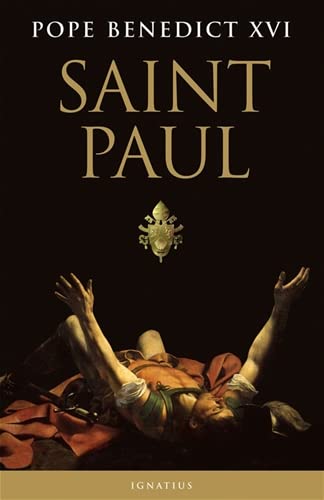
Saint Paul - Pope Benedict XVI

Saint Paul 
Pope Benedict XVI
ISBN 9781586173678
eISBN 9781681494173
ASIN B0026OQZK2


Over the last few years I have read a number of books by and about Pope Benedict XVI. Of the popes in my lifetime I find his writings of immense spiritual benefit. I would state that I underappreciated him until his resignation. And since then I have read much. And with each piece I read I appreciate his wisdom, faith, and stand against modernism. This volume was of special interest to me. I hold a Religious Studies Degree with a focus on Roman Catholic Thought. The first course I did when I returned to University was Paul’s Life and Letters, taught by Dr. Peter Frick, the course was transformative for me spiritually and academically. I enjoyed the course so much that I did a fourth year directed readings in Pauline Studies as one of my final courses to graduate, again with Dr. Frick. I try and read a book on Pauline Theology and thought almost every year. Some of the academic works are out of my price point. This was an excellent read. There are two editions of this work and they are nearly identical. In Europe this volume was published by the Catholic Truth Society called Paul of Tarsus. In North America Ignatius Press published this version. I had tracked down the CTS version and was reading it when I picked up this eBook from Ignatius. Thus I read about half the book in each edition.

The description of the edition of the book is:

“In this book, Pope Benedict XVI, a profound spiritual leader in his own right and a first-rate theologian and Bible commentator, explores the legacy of Paul. Pope Benedict follows the course of the Apostle’s life, including his missionary journeys and his relationship with the other apostles of Jesus such as St. Peter and St. James, and Paul’s martyrdom in Rome. Benedict also examines such questions as: Did Paul know Jesus during his earthly life and how much of Jesus’ teaching and ministry did he know of? Did Paul distort the teachings of Jesus? What role did Jesus’ death and resurrection play in Paul’s teaching? What are we to make of Paul’s teaching about the end of the world? What does Paul’s teaching say about the differences between Catholic and Protestant Christians over salvation and the roles of faith and works in the Christian life? How have modern Catholic and Protestant scholars come together in their understanding of Paul? What does Paul have to teach us today about living a spiritual life?

These and other important issues are addressed in this masterful, inspirational, and highly-readable presentation of St. Paul and his writings by one of today’s great spiritual teachers, Pope Benedict XVI.”

The volume is compiled from a collection of General Audiences given between July 2, 2008 and February 4, 2009, during the Jubilee year of Saint Paul which ran from June 28, 2008 to June 29th, 2009. The CTS has several booklets from the Year of Saint Paul. I could have used this volume and some of the ones from that Year for that final I did a year after the fact. 

And the chapters are:

1. Religious and Cultural Environment
2. Life of Saint Paul before and after Damascus
3. Saint Paul’s “Conversion”
4. Saint Paul’s Concept of Apostolate
5. Paul, the Twelve and the Pre-Pauline Church
6. The “Council” of Jerusalem and the Incident in Antioch
7. The Relationship with the Historical Jesus
8. Paul’s Ecclesiological Dimension
9. The Importance of Christology: Pre-existence and Incarnation
10. The Importance of Christology: The Theology of the Cross
11. The Importance of Christology: The Decisiveness of the Resurrection
12. Eschatology: The Expectation of the Parousia
13. The Doctrine of Justification: From Works to Faith
14. The Doctrine of Justification: The Apostle’s Teaching on Faith and Works
15. The Apostle’s Teaching on the Relation between Adam and Christ
16. The Theology of the Sacraments
17. Spiritual Worship
18. Letters to the Colossians and Ephesians
19. Pastoral Epistles: Letters to Timothy and Titus
20. Saint Paul’s Life and Legacy

Each chapter is from a specific General Audience. Because this is a collection for talks given there is no introduction or conclusion. I really enjoyed reading this volume. I read it just a few months after the passing of Pope Benedict XVI. And reading books by him at this time is helping me process my feelings on his passing. I once heard a theologian say that without Saint Paul there would be no Christianity. And I do not doubt that statement. This book gives a rich and deep look into the man, his life and his message. 

I have a dual form of dyslexia and really prefer eBooks, because I can change the font, page and font colour to make reading easier. My progress once I switched to the Ignatius eBook edition was much faster. This is an excellent read, one any Catholic, any Christian would benefit from reading. It is another excellent volume from Pope Benedict XVI, and I can easily recommend it.

Note: This book is part of a series of reviews: 2023 Catholic Reading Plan


CTS Year of St Paul Series 2008-2009:
Acts of the Apostles - Henry Wansbrough OSB (Introduction) - CTS Scriptures
Letters of Paul - Henry Wansbrough OSB (Introduction) - CTS Scriptures
Rome A Pilgrim's Companion - David Baldwin
St Paul the Apostle - Fr Jerome Murphy-O'Connor OP,
The Gospel of Paul - Ronald Knox
The Holy Land A Pilgrim's Companion - David Baldwin
Thoughts on St Paul - Pope Benedict XVI
...

Books by Benedict XVI:
Jesus, the Apostles and the Early Church and Church Fathers 
...                   

Thursday, 27 April 2023

Paul of Tarsus - Pope Benedict XVI - CTS Biographies

Paul of Tarsus
Pope Benedict XVI
ISBN 9781860825774
CTS Booklet B718


Over the last few years I have read a number of books by and about Pope Benedict XVI. Of the popes in my lifetime I find his writings of immense spiritual benefit. I would state that I underappreciated him until his resignation. And since then I have read much. And with each piece I read I appreciate his wisdom, faith, and stand against modernism. This volume was of special interest to me. I hold a Religious Studies Degree with a focus on Roman Catholic Thought. The first course I did when I returned to University was Paul’s Life and Letters, taught by Dr. Peter Frick, the course was transformative for me spiritually and academically. I enjoyed the course so much that I did a fourth year directed readings in Pauline Studies as one of my final courses to graduate, again with Dr. Frick. I try and read a book on Pauline Theology and thought almost every year. Some of the academic works are out of my price point. This was an excellent read. There are two editions of this work and they are nearly identical. In Europe this volume was published by the Catholic Truth Society. In North America Ignatius Press published once called Saint Paul. I had tracked down this volume and was reading it when I picked up the eBook from Ignatius. Thus I read about half the book in each edition.

The description of the edition of the book is:

“Pope Benedict turns his attention as a theologian and Scripture scholar to one of the most important figures in the history of the Church. Reflecting on St Paul's life and times, his indefatigable missionary activity and the most important events of his life, the Holy Father then goes on to explore the most important themes and theologies of St Paul's writings including the incarnation, the cross, works, faith, and the sacraments.”

The volume is compiled from a collection of General Audiences given between July 2, 2008 and February 4, 2009, during the Jubilee year of Saint Paul which ran from June 28, 2008 to June 29th, 2009. The CTS has several booklets from the Year of Saint Paul. I could have used this volume and some of the ones from that Year for that final I did a year after the fact. 

And the chapters are:

1. Religious and Cultural Environment
2. Life of Saint Paul before and after Damascus
3. Saint Paul’s “Conversion”
4. Saint Paul’s Concept of Apostolate
5. Paul, the Twelve and the Pre-Pauline Church
6. The “Council” of Jerusalem and the Incident in Antioch
7. The Relationship with the Historical Jesus
8. Paul’s Ecclesiological Dimension
9. The Importance of Christology: Pre-existence and Incarnation
10. The Importance of Christology: The Theology of the Cross
11. The Importance of Christology: The Decisiveness of the Resurrection
12. Eschatology: The Expectation of the Parousia
13. The Doctrine of Justification: From Works to Faith
14. The Doctrine of Justification: The Apostle’s Teaching on Faith and Works
15. The Apostle’s Teaching on the Relation between Adam and Christ
16. The Theology of the Sacraments
17. Spiritual Worship
18. Letters to the Colossians and Ephesians
19. Pastoral Epistles: Letters to Timothy and Titus
20. Saint Paul’s Life and Legacy

Each chapter is from a specific General Audience. Because this is a collection for talks given there is no introduction or conclusion. I really enjoyed reading this volume. I read it just a few months after the passing of Pope Benedict XVI. And reading books by him at this time is helping me process my feelings on his passing. I once heard a theologian say that without Saint Paul there would be no Christianity. And I do not doubt that statement. This book gives a rich and deep look into the man, his life and his message. I really enjoyed the format of the CTS Edition of this book. It had wide margins for notes. Clear clean font. And perfect size for personal study. I gave my physical copy to Dr. Frick who is working on his own Paul book after teaching about Paul for 30 years.

This is an excellent read, one any Catholic, any Christian would benefit from reading. It is another excellent volume from Pope Benedict XVI, and I can easily recommend it.

Note: This book is part of a series of reviews: 2023 Catholic Reading Plan! For other reviews of books from the Catholic Truth Society click here.


CTS Year of St Paul Series 2008-2009:
Acts of the Apostles - Henry Wansbrough OSB (Introduction) - CTS Scriptures
Letters of Paul - Henry Wansbrough OSB (Introduction) - CTS Scriptures
Rome A Pilgrim's Companion - David Baldwin
St Paul the Apostle - Fr Jerome Murphy-O'Connor OP,
The Gospel of Paul - Ronald Knox
The Holy Land A Pilgrim's Companion - David Baldwin
Thoughts on St Paul - Pope Benedict XVI
...

Books by Benedict XVI:
Jesus, the Apostles and the Early Church and Church Fathers 
...