Showing posts with label JeanOlwenMaynard. Show all posts

Wednesday, 17 January 2024

Author Profile and Interview with Jean Olwen Maynard

Author Profile and Interview with Jean Olwen Maynard

Jean Olwen Maynard December 2023

Jean Olwen Maynard is an author who focuses on hagiography in her works for the Catholic Truth Society. She has published numerous volumes for the Catholic Truth Society and also has a number of other works mostly published privately. I have read ten of her volumes and can easily recommend them. I reached out and Olwen took some time from her schedule to answer 20 questions for the readers here at Books Reviews and More.

 1. When did you know you wanted to be a writer? How are you nurturing that dream?

Since forever.

2. Who were some of the biggest supporters of your writing?

I can’t honestly remember anyone being particularly supportive. I think the message I absorbed from people was that writing was a great thing to do, but nobody was likely to be interested in anything I could write.

3. What authors influenced your writing style and format?

Here again I can’t remember, though it makes sense that I must have been influenced by what I read.  It just sort of happened by osmosis and I wasn’t consciously aware of being influenced.

4. You have written a lot about martyrs. Outside of your own books, what volumes would you recommend for someone who wants to read more?

Really satisfying books about martyrs as such are relatively rare, especially in English. I’ve often had to make use of foreign-language publications or unpublished material (for my CTS booklet on Bl Isidore Bakanja I used the files of the devil’s advocate which are kept in a microfilmed archive at a university in Antwerp). There’s also the problem that a lot of people won’t read books, and certainly won’t read long or difficult ones. I’ve quite often recommended to people a recent book about the Penal Times in England because it’s so readable: ‘God’s Secret Agents’, by Alice Hogge.  I also tend to recommend films: the English version of ‘Of Gods and Men’ is available on DVD. Also you can get ‘Un Dios Prohibido’ on DVD with English sub-titles:  Full-length (but not over-long) books which I’ve found impressive would be African Holocaust: The Story of the Uganda Martyrs’ by John F Faupel, and James Brockman’s life of St Oscar Romero.  

5. What of your books is your favorite and why?

I like them all in in different ways.  The list you’ve got isn’t quite correct.  I’ve not written a history of the Sisters of Mercy as a congregation, but rather three community histories about important historic Convents of Mercy in UK (together with any daughter houses): Elgin, Bristol and Commercial Road.  I’ve put a revised list at the end.  

6. What does your writing process look like? Takes us through the steps from  idea to publishing?

I don’t really have a process. I suppose I start with an idea of what I want to do or how it will work, but that’s not something I could put into words, and then I just get on with it and it gradually comes together.

7. Do you use a playlist when writing? Are certain books written while predominantly listing to the same music?

What’s a playlist?  If I really need to concentrate I don’t play music as I’d find it distracting. For less focused stuff that’s actually a bit boring I generally play Gilbert and Sullivan to keep my spirits up.

8. What current projects are you working on?

A study about Catholics in London in the first half of the nineteenth century.

9. What are some of your favorite contemporary religious authors to read?

I’ve read a number of books by Scott Hahn and George Weigel that I thought were really good.

10. If you could only recommend 10 books to a reader looking to be a well-rounded Catholic what books would you suggest?

Can’t come up with ten.  (I read a lot of books but – with some exceptions – I don’t have a very good memory for specific titles/ authors.)  I’d definitely recommend Chesterton’s ‘Orthodoxy’ and Ratzinger’s ‘Introduction to Christianity’.

11. What advice do you wish a writer had passed on to you early in your career, which you only learned through experience?

I’ll have to pass on this one because I know myself too well: if I’d been offered advice I’d not have taken it.  

12. Have you ever considered writing fiction? If so is it a project we might see in the near future?

I did write a novel as a teenager.  Sent it off to a publisher but of course got a rejection slip.  That was at a time when I think publishers were rejecting everything without even looking at it unless it came via a literary agent, but it probably wasn’t much good anyway.  Can’t see myself trying again.

13. Some of your books are available in electronic formats but with that comes bootleg distribution. What are your impressions of eBooks and the distribution of them through torrents and other illegal means?

I enjoy reading novels on kindle but for non-fiction I prefer a proper book.  I’d never thought about it but suppose it would be quite easy to distribute e-books illegally, and I suppose it must cause quite a serious problem.  

14. Some authors monitor torrent sites and contact them to remove their content. Do you do so are have someone do so for you?

I have no idea what a torrent is.  

15. Some of your earlier books are currently out of print, have you thought of rereleasing them as ebooks?

I think CTS has, and it would be a good idea.

16. What were some of your favorite authors in your teen years who helped shape you?

I read everything I could get hold of by C S Lewis – including stuff I was too young to understand.

17. What are some of your favorite books and authors now?

I like Michael Burleigh.

18. I once had a university professor state that the true goal of a university education should be to teach one to learn how to think. What would you state should be the goal of higher education and why?

Definitely I think it should be to learn to think.  

19. If you were stuck on a desert island and could only have 10 books to read again and again, what books would you want with you?

I don’t re-read books much so sounds like my worst nightmare: I’ve no idea how I’d cope.

20. What advice would you give to young aspiring authors and artists?

Just go ahead and write.  (But please learn to use grammar properly, and use words correctly.)

I want to thank Jean for taking the time to answer the questions and interact with the readers here at Book Reviews and More. Her revised list of her works has left me with many more to try and track down. If you have not read anything by her, I highly recommend her books from the CTS. 

Published work by Jean Olwen Maynard:
Privately published by religious orders/parishes:
Greyfriars Convent, Elgin (2006)
A History of St Mary and St Michael’s Parish, Commercial Road, East London (2007)
Sisters of Mercy Bristol (2008)
150 Years of Mercy: A History of the Sisters of Mercy Commercial Road East London (2009)
The Saint of Hoxton (2011)
Saint Monica’s Church Hoxton Square (2018) 
150th anniversary history brochure for Parish of Guardian Angels, Mile End (2018)
150th anniversary history brochure for Parish of Our Lady and St Catherine of Sienna, Bow (2020) 
Immaculate Heart of Mary and St Dominic, Homerton 1873-2023 – 150 Years: A History of the Parish (2023)

CTS Booklets:
Isidore Bakanja 
Joseph Vaz

Articles:
Between Christendom and Islam, The Martyr Mystic Christian de Chergé and the Atlas Cistercians in Algeria, in: Catholic in Religious Dialogue: Monasticism, Theology and Spirituality, ed Anthony O’Mahoney and Peter Bowe OSB, Gracewing, 2006
Campaign for the Catholic Workhouse Children, in: British Catholic History, Vol 31: Issue 4 Oct 2015


Jean Olwen Maynard Books from CTS

Thursday, 19 October 2023

No Greater Love The Martyrdom of the Ulma Family - Jean Olwen Maynard - CTS Books

No Greater Love: The Martyrdom of the Ulma Family
Jean Olwen Maynard
Catholic Truth Society
ISBN 
9781784697600
eISBN 9781784697112
ASIN B0CGVB4B3R
CTS Booklet B778


This is the tenth volume from Jean Olwen Maynard that I have read. All of the ones I have read are from the Catholic Truth Society. A number of years ago I stumbled upon the CTS books while doing research on an author, since then I have read 368 different volumes from them. And nearly all have been excellent. I now purchase all new eBooks that are available from the CTS as soon as they release. This and three others were available on the same day and this was the second of them that I read. This volume released 9 days before the beatification of the family, including the new born baby. There was much news on social media about the family and specifically the baby. They were beatified as red martyrs for they gave their life because of their faith. It is not an easy book to read. But it is an important one.

The description of this book is:

“In 1944, under the Nazi occupation of Poland, a family with seven small children – including one not yet born – were murdered by the Nazis. Guided by the parable of the Good Samaritan, the Ulmas had sheltered a Jewish family, a heroic act the whole family gave their lives for.

Under the Nazi occupation of Poland during World War II, Jews were indiscriminately arrested, imprisoned, and killed. Christians who helped them hide or escape placed themselves in the same peril. Józef and Wiktoria Ulma, who, guided by the parable of the Good Samaritan, which was underlined in red ink in the family Bible, sheltered a Jewish family in their village of Markowa. As a result, in 1944, Józef, Wiktoria, and their seven small children – one not yet born – were murdered by the Nazis. This biography tells the story of the heroic virtue and sacrifice that led to their beatification.”

And the chapters in this little volume are:

A Family of No Importance
Poland: Land of Opportunity
Markowa
The Summer of 1939
Life under Occupation
Operation Barbarossa
Betrayed
Ongoing Trauma and the Suppression of Memories

I highlighted numerous passages while reading this booklet. Some of them are:

“This is the story of a family – a mother and father, and their seven children all very small and one not yet born – who were of no importance in the eyes of the world. They lived their lives in an underdeveloped backwater of Central Europe, in a period of history when ideologies of hatred gained such widespread acceptance as to be considered normal and legitimate. Under the power of those ideologies countless numbers of people made choices which led them into horrifying depths of evil and brought suffering and death to millions of others.”

“Even if we can’t fully grasp the why and the how of it all, we do need to know about what happened. A firm consensus against permitting those terrible crimes to be forgotten and swept under the carpet provides a safeguard against letting them happen again. It is also a way of showing respect, something we owe to the dead.”

“Their story is nevertheless a bright light shining in the darkness. Through it God is saying to us something the world cannot hear. That each and every human person is infinitely precious in his sight. And that he designed us to be born and grow up in families, profoundly bound up with one another so that even in our fallen condition we might come to understand something of how truly precious each person is. The Ulmas didn’t have advanced degrees in theology, but they absolutely knew all this in their hearts. This is why the Church recognises them as having given their lives for the sake of the Gospel: as martyrs, slain by the forces of evil out of hatred for the Faith.”

“Poland was the only country in Europe where Jewish farmers were entitled to own the land they tilled. From the sixteenth century, the Jews of Poland experienced a golden age in which Jewish culture and rabbinic learning flourished wonderfully.”

“The majority Polish community would in pre-modern times have been thoroughly laid back about that, but the first half of the twentieth century was far too dominated by ethnonationalist ideologies. Moreover, although adversity can make people kinder and more sympathetic towards others, it often has the opposite effect, especially when the entire society they identify with has spent generations being pushed around and humiliated.”

“During the years of partition, the Roman Catholic Church had provided the Polish people with a safe space for expressing and nurturing their Polishness, and religious allegiance had come to serve as a crude identifier of nationality. Accordingly, the repressive measures against the Ukrainians included religious persecution of Orthodox Christians and efforts at forcibly converting them to Roman Catholicism in order to make them “properly Polish”.”

“Within Polish Catholic society there emerged a growing tide of anti-Semitism, and as the global Great Depression set in, the Jews were increasingly blamed for the spread of unemployment and economic hardship. In fairness to the Poles, this was part of a global trend: anti-Semitic attitudes and organised anti-Semitic movements were very much on the rise at this time throughout most of Europe and North America. Even in the UK, attitudes towards Jews which would nowadays be considered totally unacceptable were firmly within the spectrum of normal public discourse.”

“Speaking to pilgrims visiting Rome who had presented him with a missal, Pope Pius XI drew attention to the part in the Eucharistic Prayer referring to “the sacrifice of Abraham, our father in faith” and unexpectedly departed from his written text to issue a strong statement condemning anti-Semitism. “Through Christ and in Christ we are Abraham’s descendants. No, it is not possible for Christians to take part in anti-Semitism… We are spiritually Semites.””

“Galicia was a stronghold of the Polish peasant movement, which had its own political party. Pro-democratic and in favour of land reform, the Peasant Party was an important source of opposition to the Sanacja. The peasant movement was all for modernity and progress – and for education, provided that it wasn’t the kind that would suck young people out of the countryside and make them feel ashamed of getting their hands dirty.”

“Józef Ulma took his Catholic faith seriously. As a teenager he joined a diocesan Eucharistic Union, committing to pray and fundraise for the building of more local churches and chapels. He also belonged to the Catholic Youth Association, at the same time as being very active in Wici.”

“Józef loved reading and had a small collection of books which he happily lent out to anyone who was interested, acting as a kind of librarian to the various groups he belonged to. Another of his big interests in life was photography.”

“Nazi ideology deemed Poles, along with all Slavs, to be racially inferior – effectively sub-human and fit only to be slaves.”

“Polish Catholicism in the annexed regions was targeted for annihilation as a matter of top priority. Most of the bishops and clergy were arrested and then deported into the non-annexed region, sent to concentration camps or simply shot. Convents were closed, and hundreds of nuns were sent to concentration camps or transferred to Germany for forced labour.”

“Among the effects of the German occupation was a general enabling and fostering of criminality and violence: the official food ration for Poles was insufficient to sustain life, so everyone had to depend on the black market to survive, and hooligans of all kinds quickly learned that they could harass Jews with impunity.”

“The Polish Jews numbered 3.3 million – roughly ten per cent of the total population of interwar Poland. What the Nazis had in mind for them was even worse than for the Poles, though at this early stage the distinction was barely apparent.”

“No doubt most people kept their heads down and concentrated on their own daily struggles to make ends meet, but the plight of the Jews might still throw up tempting opportunities. There were rewards to be gained by denouncing Jews who had gone into hiding, or else there was the option of blackmailing them, demanding payment in return for not betraying them. Blackmailings and denunciations of Jews could, of course, incur punishment at the hands of the Resistance, and there were well-publicised cases of blackmailers being executed by the Home Army. However, such cases were difficult to investigate and hardly the Resistance’s top priority, so there was a good chance of getting away with it.”

“Research suggests that the overwhelming majority of Polish people resisted temptations to harm the Jews or exploit their vulnerability, and at least kept their hands clean, but didn’t feel obliged to make any positive efforts to help them. They’d have felt that they had enough problems of their own and that the Jews were really nothing to do with them anyway.”

“It was in this context that in Jedwabne a mob of about 40 ethnic Poles murdered at least 340 of their Jewish fellow-townspeople. Most of the victims – men, women and children – were locked in a barn which was then set on fire. In Lwów and other cities, Ukrainian nationalists, who’d been led to believe that the Nazis were supportive of their aspirations for Ukrainian independence, carried out fearsome pogroms in which thousands of Jews died and many others were left badly injured.”

“All the ghettoes had good railway connections – their locations had been selected with that in mind – and from March onwards the people imprisoned in them began to be summoned to assemble with their luggage to board trains. They were told that they were being evacuated for “resettlement in the east”.”

“An underground network – Żegota – was set up as part of the Polish Resistance to provide assistance to the Jews. Żegota provided food, medicines, money and false documents to thousands of Jews – mainly those who’d managed to hide, but also some of those held in forced labour camps. Jews in hiding, unless they could pass as Aryans, were unable to work and weren’t entitled to rations, so help with food was vital. Żegota also placed around 2,500 Jewish children with foster families or in church-run orphanages, where they had to learn Christian prayers so that they could pretend to be Polish Catholics. Despite huge difficulties in doing so, the Polish government-in-exile was constantly trying to send funds to support underground activities.”

“A cause for the beatification of Józef and Wiktoria Ulma and their children, along with other Polish martyrs of World War II, was introduced in 2003. The process for the Ulmas was subsequently separated off from that for the others and entrusted to the Archdiocese of Przemyśl. On 17th December 2022, Józef and Wiktoria, Stasia, Basia, Władziu, Franuś, Antoś, Marysia and the unborn baby were all officially recognised as martyrs, and the date for their beatification was set for 10th September 2023. Fittingly, it was decided that they would be declared “Blessed” in a ceremony conducted by Cardinal Semeraro, Prefect of the Dicastery for the Causes of Saints, among those who treasure their memory, in their own home village of Markowa.”

As mentioned this was not an easy read. Reading about the holocaust, and the actions of both the Germans and the Soviets during the Second World War are never easy. But they are important. This is an excellent offering. It provides a clear back story to the region and events. It provides concise details of the events. And research into the events after. It is a book that will inspire, challenge readers. I am thankful I read this volume. 

Note: This book is part of a series of reviews: 2023 Catholic Reading Plan! For other reviews of books from the Catholic Truth Society click here.


Published work by Jean Olwen Maynard:
Privately published by religious orders/parishes:
Greyfriars Convent, Elgin (2006)
A History of St Mary and St Michael’s Parish, Commercial Road, East London (2007)
Sisters of Mercy Bristol (2008)
150 Years of Mercy: A History of the Sisters of Mercy Commercial Road East London (2009)
The Saint of Hoxton (2011)
Saint Monica’s Church Hoxton Square (2018) 
150th anniversary history brochure for Parish of Guardian Angels, Mile End (2018)
150th anniversary history brochure for Parish of Our Lady and St Catherine of Sienna, Bow (2020) 
Immaculate Heart of Mary and St Dominic, Homerton 1873-2023 – 150 Years: A History of the Parish (2023)

CTS Booklets:
Isidore Bakanja 
Joseph Vaz

Articles:
Between Christendom and Islam, The Martyr Mystic Christian de Chergé and the Atlas Cistercians in Algeria, in: Catholic in Religious Dialogue: Monasticism, Theology and Spirituality, ed Anthony O’Mahoney and Peter Bowe OSB, Gracewing, 2006
Campaign for the Catholic Workhouse Children, in: British Catholic History, Vol 31: Issue 4 Oct 2015


Books in the 20th Century Martyrs Series:
Sophie Scholl and the White Rose: Resistance to the Nazis - Helena Scott and Ethel Tolansky
Johann Gruber & Jacques Bunel Victims of the Nazis - Helena Scott and Ethel Tolansky
Maximilian Kolbe, F. Jagerstatter, K. Leisner, R. Mayer: Victims of the Nazis - Franz Jagerstatter
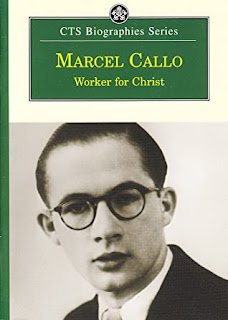
Edith Stein, Marcel Callo, Titus Brandsma: Victims of the Nazis – Matthew Monk
Saint Maria Goretti: Teenage Martyr for Chastity - Glynn MacNiven-Johnston
The Atlas Martyrs – Jean Olwen Maynard

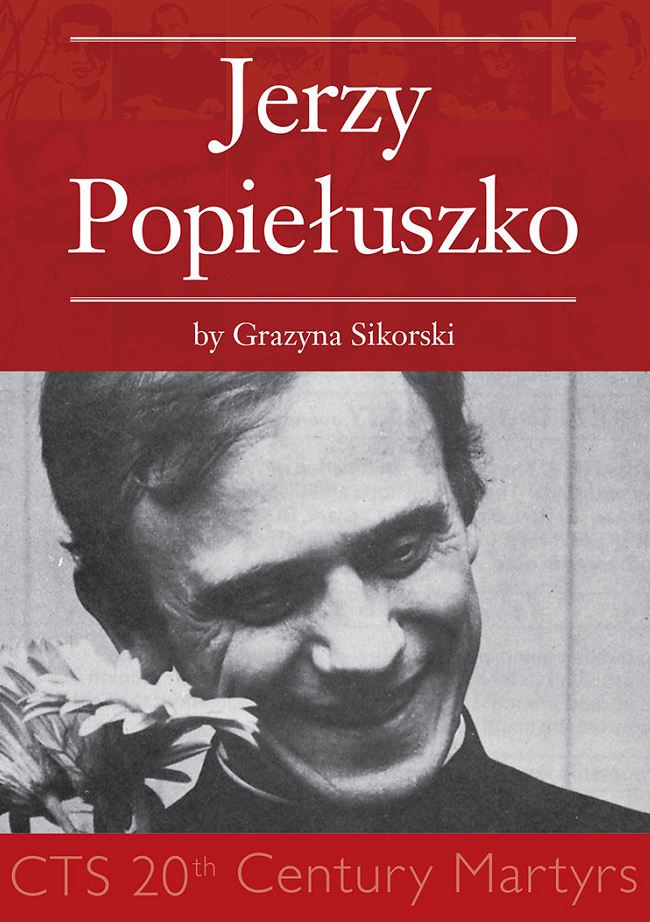
Jerzy Popieluszko Victim of Communism - Grazyna Sikorski
Isidore Bankanja - Jean Maynard

Gianna Molla - Jean Olwen Maynard

Saturday, 30 September 2023

Top Ten Fiction and Non-Fiction Books Third Quarter 2023

Top Ten Fiction and Non-Fiction Books Third Quarter 2023


It has been a very good year for reading, in fact I think it is my best to date, and not likely ever to be matched. I have read 371 books read to date, and 102 of them this quarter. A lot of great reads, and a few new authors that I had not explored yet.  I have read just over a book and a quarter a day. I read 109 books this quarter, in comparison with the last 7 years:

     2022 – 87
     2022 – 79
     2021 – 79
     2020 – 61
     2019 – 89
     2018 – 91
     2017 – 64
     2016 – 94

But back to this quarter by the numbers:

Books Read: 102
First Time Reads: 76
Fiction: 47
Non-Fiction: 55
5/5 Stars: 70

So right about on par with most of the years. I can state again that looking back 2016 is a bit of an outlier as late that year I switched jobs and have since had much better work – life balance. In the spring of 2016, I worked through Brandon Vogt’s course Read More Books Now (now available on ClaitasU). The year before that I removed all games from my phone and tablet and my reading had doubled. 

Here is my top ten fiction and non-fiction books of the fourth quarter of 2020.

Top Ten Non-Fiction Books:

1. Vision Books for Young Readers from Ignatius Press
An American Little Flower - GinaMarie Tennant 
Maria von Trapp and Her Musical Family - Cheri Blomquist and John Herreid
3. CTS Biographies from the Catholic Truth Society
Martyrs of Uganda - Joanna Bogle
8. Books by Alice Curtayne
10. Books by Mary Fabyan Windeatt from TAN Books

Top Ten Fiction Books:

4. Dreams of the Storyteller - Richard Paolinilli
6.  Glaston Chronicles Books by Donal Anthony Foley
9. The Harwood Mysteries - Antony Barone Kolenc - The Lucy Short Stories
10. Royal & Ancient - Amanda Lauer

Bonus Books:

My reading has been up over each of the last few years. And I thought last year would be a high watermark. But this year is proving me wrong. Which I attribute in part to Brandon Vogt’s course Read More Books Now, removing all games but 1 brain game from my devices. And I was commuting to work on a bus and read on the bus every day. Working from home reading took a little more discipline. And with a planned return to hybrid work things will change again soon.  

Note: I do not include books that have been read in previous years and were reread this year in my top ten lists, they are sometimes in the bonus section. But if you want more options check out my favourite books year by year list. Or this year not to flood the list with one specific author.   


Relates Posts: 
Top 10 Fiction Books 1st Quarter 2010
Top 10 Fiction Books 2nd Quarter 2010
Top 10 Reading Goals for 2010
Top 10 Fiction Books 3rd Quarter 2010

Top 10 Fiction Books 4th Quarter 2010
Top Ten Reading Goals For 2010 - Recap

Top 10 Fiction Books 2010
Top 10 Picture Books of 2010
Top 10 Non-Fiction Books of 2010

Top 10 Graphic Novels for 2010
Top Ten Reading Goals For 2011
 

Top Ten Fiction Books 1st Quarter 2011
Top Ten Fiction Books 2nd Quarter 2011
Top Ten Reading Goals for 2011 Update
 
Top Ten Fiction Books 3rd Quarter 2011 
Top Ten Fictions Books 4th Quarter 2011
Top Ten Fiction Books 2011
Top Ten Reading Goals 2011 - Recap
Top Ten Reading Goals 2012
Top Ten Fiction Books 1st Quarter 2012
Top Ten Fiction Books 2nd Quarter 2012

Top Ten Fiction Books 3rd Quarter 2012
Top Ten Fiction Books  4th Quarter 2012
Top Ten Fiction Books 2012
Top Ten Non-Fiction Books 2012
Top Ten Reading Goals 2012 - Recap
Top Ten Reading Goals 2013
Top 10 Fiction Books 1st Quarter 2013
Top 10 Fiction Books 2nd Quarter 2013
Top 10 Books Second Half 2013
Top Ten Fiction Books 2013
Top Ten Non-Fiction Books 2013 
Top Ten Books First Quarter 2014
Top Ten Books Second Quarter 2014
Top Ten Books Third Quarter 2014
Top Ten Books Fourth Quarter 2014
Top Ten Fiction Books 2014
Top Ten Non-Fiction Books 2014
Top Ten Books First Quarter 2015
Top Ten Books Second Quarter 2015
Top Ten Books Third Quarter 2015
Top Ten Books Fourth Quarter 2015
Top Ten Fiction Books 2015
Top Ten Non-Fiction Books 2015
Top Ten Books First Quarter 2016
Top Ten Books Second Quarter 2016
Top Ten Books Third Quarter 2016
Top Ten Books Fourth Quarter 2016
Top Ten Non- Fiction Books 2016
Top Ten Fiction Books 2016
Top Ten Catholic Books
Top Ten Books First Quarter 2017
Top Ten Books Second Quarter 2017
Top Ten Books Third Quarter 2017
Top Ten Books Fourth Quarter 2017
Top Ten Non-Fiction Books 2017
Top Ten Fiction Books 2017
Top Ten Books First Quarter 2018
Top Ten Books Second Quarter 2018
Top Ten Books Third Quarter 2018
Top Ten Books Fourth Quarter 2018
Top Ten Non-Fiction Books 2018
Top Ten Fiction Books 2018
Top Ten Books First Quarter 2019
Top Ten Books Second Quarter 2019
Top Ten Books Third Quarter 2019
Top Ten Books Fourth Quarter 2019
Top Ten Non-Fiction Books 2019
Top Ten Fiction Books 2019
Top Ten Books First Quarter 2020
Top Ten Books Second Quarter 2020
438 - 2022
365 - 2021
317 - 2020 
392 - 2019
359 - 2018
380 - 2017 
272 - 2016 
177 - 2015 
130 - 2014 
88 -  2013
176 - 2012 
163 - 2011
302 - 2010
142 - 2009
98 - 2008
83 - 2007
191 - 2006
151 - 2005
60 - 2004
52 - 2003
97 - 2002
50 - 2001
41 - 2000
71 - 1999
73 - 1998
131 - 1997
101 - 1996


Friday, 9 December 2022

The Gypsy Saint 'El Pele' Cerefino Jimenez Malla - Jean Olwen Maynard - CTS 20th Century Martyrs

The Gypsy Saint 'El Pele' Cerefino Jimenez Malla
Jean Olwen Maynard
Catholic Truth Society
ISBN 
9781860820724
CTS Booklet B656


It took me a while to track down this volume, this booklet is part of the CTS 20th Century Martyrs Series. To date I have read 328 volumes from the Catholic Truth Society, and this is the eleventh in this specific series. I believe I only have 2 left to track down in the series, Isidore Bankanja and Pedro Poveda. Reading about Martyrs is not an easy thing. But I believe it is an important thing for us to do. I am thankful for this book, the series, and the many other books in the CTS Biographies for they are amongst my favourite reads over the last few years. The version I tracked down was a first edition published in 1999. Jean Olwen Maynard has written a number of books published by the Catholic Truth Society. But back to this volume.

The description of this volume is:

“In August 1936 the bloody corpse of Ceferino Jimenez Malla, a 75 year old gypsy, was tipped into a mass grave, covered with quicklime and buried. What was the story of this man, “El Pele”? Just another victim of the countless atrocities on each other by the left-wing Republicans and right-wing Falangists meted out in the Spanish Civil War? Unable to read or write, a respected gypsy horse-dealer, good husband and father, his is a compelling story of goodness and faith in Christ. In 1997 he was beatified by John Paul II in St Peter’s, Rome as the first gypsy martyr.”.”

The chapters and sections in the volume are:

Early Years 
     The Gypsies in Europe 
     The Gypsies in Spain 
     Ceferino's Birth 
     Ceforino's Childhood 
     Marriage 
     A house in Barbastro 
     Spain's economic problems 
     Pele and Teresa adopt a child 
     Pele befriends Nicolas Santos de Otto 

Pele's return to the Church 
     An act of charity repaid 
     Catholicism in Spain 
     Charity and generosity 
     Pele becomes a gypsy leader 
     Pele's care for local children 
     Teresa dies 
     Pele becomes more involved in the Church 
     Political problems in Spain 
     The Republicans legislate against the Church 
     A new bishop in Barbastro 

The Spanish Civil War 
     Arrested for the Rosary 
     Pele's final journey 
     The victims of the Civil War 
     El Pele, martyr for the Faith 
     Bibliography

I am well completely unaware of this story. And I only stumbled upon the booklet by chance when doing research for a different review. I had thought I had a complete list of the volumes in the series and this one was a surprise. As is the story contained within this volume. Once I started reading this story I had a very hard time putting it down. I read it in 2 sittings over two consecutive days. And to be honest I plan to go back and read it again. I highlighted numerous passages while I was reading the book, some of them are:

“But the gypsy horse-dealer was a well-known character in the city, and his intense piety was accepted and respected by his neighbours – backed up as it was by the integrity of his life.”

“State after state passed law ordering the nomads ~ deported. In Britain and elsewhere a man or woman could be brutally flogged, branded or hanged for no other reason than being "'a wandering gypsy”.

“Defined out of existence, the cale were forbidden to wear distinctive clothing, speak their own language, maintain a nomadic lifestyle or even practice their preferred occupations of horse -dealing and blacksmithing. Ordered to settle in specified owns, they were not to be allowed to live together in large groups: various measures were passed attempting to disperse them across the country and even to enforce intermarriage with non-gypsies.”

“But a generation later politicians were asking again why the gypsies could not be deported to penal colonies, or dumped in South America? King Carlos III wanted gypsy children removed from their parents at birth. Even after 1783, when the government finally threw in the towel and passed a law granting equal rights to gypsies, harassment and restrictive surveillance continued.”

“Nevertheless, as he grew older and his friendship with Don Nicolas deepened, the liturgy and sacraments of the Church became increasingly precious to him. His natural and spontaneous relationship with God was not something he saw as opposed to institutional structures. He quickly discovered a fruitful mutuality between the inner wellsprings of his own faith, and the outward sacramental signs which nourished that of his friend.”

“He prayed the rosary all through the liturgy, as pious people so often did in those days when it was in Latin, and received Holy Communion with great reverence. He was always praying the rosary: at least once a day with his family, and often at other times, even when he was walking along the street. Someone gave him a little picturebook version of the Stations of the Cross, and he prayed this too with great devotion.”

“To Pele, a human being was a human being. Gypsy or payo, rich or poor didn’t matter. So he became a bridge between the different races and social groups. The Santos de Otto. Jordan and other middle-class families came to be accepted by the gypsy community in Barbastro, because they were friends of Pele.”

“Pele was gradually drawn into the activist core of the Catholic community. Whenever there was a public procession, especially on Good Friday and Corpus Christi, he was there - usually up near the front, holding a lighted candle. He loved to accompany the priest taking the Viaticum to someone who was dying.”

“Even now, when he himself was actually quite poor, Pele still tried to help those in need in whatever ways he could.”

“Tears came to Pele’s eyes when he heard of the fall of the monarchy. He was sure it meant trouble for Spain. A month later came an outbreak of anti-clerical riots in Madrid, Seville and several other cities. Over a hundred churches and other Catholic institutions were burned clown. The Republican government refused to take any action, on the grounds that protecting church buildings was not worth risking the safety of' even one policeman.”

“From the day of his death, El Pele was regarded in Barbastro as a Christian martyr, killed for his faith. Everyone talked about how this gypsy had gone to his death carrying his rosary and shouting “Viva Cristo Rey!” .”

“Ferruchon's families used to pray in front of his picture, both for him and to him. Other local gypsies also regarded him as a saint and asked for his intercession when they needed anything. From the 1960s researchers began interviewing people in and around Barbastro, collecting material about his life and martyrdom. By the 1980 his fame among the gypsy people had spread even to eastern Europe.”

“In 1993 another process was opened for the beatification of the Servant of God
Ceferino Jimenez Malla. It went through with lightning speed. El Pele was beatified together with the bishop on Sunday 4th May 1997 in a ceremony in St Peter’s Square, attended by thousands or gypsies. He was the first gypsy ever to be beatified.”

I hope those quotes will give you a sense of this volume. It is well worth tracking down. This is an amazing story and it is well worth the read.  It is an excellent volume in an important series. I highly recommend it, and encourage you to track it down and give it a read. I was completely taken with this man’s faith. He was arrested because he was carrying a rosary, he was executed with it still in his hands. He lived his faith and would not give it up even in the face of certain death. And the political groups that lead to this death are similar to those on the rise today. Churches are being burned and looted in Europe, Canada, the United states. His faith can give us courage in the light of what is happening in the world today.

Note: This book is part of a series of reviews: 2022 Catholic Reading Plan! For other reviews of books from the Catholic Truth Society click here.

Oscar Romero: Martyr for Faith - Ashley Beck
Pedro Poveda - Bernadette Lally


Published work by Jean Olwen Maynard:
Privately published by religious orders/parishes:
Greyfriars Convent, Elgin (2006)
A History of St Mary and St Michael’s Parish, Commercial Road, East London (2007)
Sisters of Mercy Bristol (2008)
150 Years of Mercy: A History of the Sisters of Mercy Commercial Road East London (2009)
The Saint of Hoxton (2011)
Saint Monica’s Church Hoxton Square (2018) 
150th anniversary history brochure for Parish of Guardian Angels, Mile End (2018)
150th anniversary history brochure for Parish of Our Lady and St Catherine of Sienna, Bow (2020) 
Immaculate Heart of Mary and St Dominic, Homerton 1873-2023 – 150 Years: A History of the Parish (2023)

CTS Booklets:
Isidore Bakanja 
Joseph Vaz

Articles:
Between Christendom and Islam, The Martyr Mystic Christian de Chergé and the Atlas Cistercians in Algeria, in: Catholic in Religious Dialogue: Monasticism, Theology and Spirituality, ed Anthony O’Mahoney and Peter Bowe OSB, Gracewing, 2006
Campaign for the Catholic Workhouse Children, in: British Catholic History, Vol 31: Issue 4 Oct 2015