Sunday, 25 June 2023

Phoenix - Lori Janeski - Carter Files Book 1

Phoenix
The Carter Files Book 1
ISBN 9798365554344
eISBN 9798215427798
ASIN B0BN9WFSN9

Phoenix - Lori Janeski - The Carter Files Book 1

I picked this up for three reasons. First author Declan Finn recommended it, and having read all of his books except one series currently out of print, I needed another read. Second I have been impressed by everything I have read from Tuscany Bay Books to date. And third the John Carter of Mars books by Edgar Rice Burroughs were some of the first I read after I learned to compensate for my dual form of dyslexia. I loved the cover but did not read anything about the book specifically before beginning it. And it did not disappoint. The description of the book is:

“Humanity has colonized the solar system, but crime still doesn't pay. David Carter is one of the most decorated agents in the Interplanetary Police Forces, but for the last two years, he's turned reckless, throwing himself into his work—or into the path of a criminal's bolt pistol. As a specialist in deception analysis and interrogation, Veronique de Tournay has been right where she wants to be: a profiler in the major cases bureau, Division 7.

Unfortunately, the director has reassigned her to Special Agent Carter, and neither of them are happy about it. After they stop a devastating attack on Mars, meant to kill thousands and cripple interplanetary travel, Carter and de Tournay discover evidence of other subversive attacks in the system. With time running out, the reluctant partners may be the only ones standing in the way of a conspiracy that stretches all the way from Luna to the Saturn Space Station.”

If this volume had been written by Burroughs it would have been three separate stories. Even if it had been by Heinlien, Piers Anthony, Harry Harrrison and others I can think of both from classic Science fiction and modern writers it would have been spilt up into three separate volumes. The volume comes in at 560 pages for the eBook and 549 for the print editions. And it was an adrenalin rush from the first page. I could hardly put the book down, but a bust week at work and friends visiting from out of country forced me to savour this story slowly over time. And I am already itching for the next volume.

In some ways David Carter reminds me of Heninlin’s Lazarus Long, and in others Harry Harrison’s James Bolivar diGriz aka “Slippery Jim” and “The Stainless Steel Rat”. But it also brought to mind both Serenity and Firefly, there is definitely a space western and Mal feel about Carter’s character. His partner Veronique de Tournay is full of surprises. The characters in this story are amazing. The plot is excellent and runs at a breakneck pace nearly from beginning to end. You will find yourself cheering for Carter and de Tournay. The story is pack with great action, fantastic dialogue, tremendous suspense, and surprising plot twists. I appreciate greatly the name of Carter’s parent’s pub. And I love the fast talking Irish mom. This Irish Catholic Cop in space is masterfully executed.

The difference between this story and some of the classic sci-fi authors and books previously mentioned is world view. Janeski writes with a Christian or Catholic world view. And as such the story is much cleaner than many I read in my youth or that are available today. It is a volume I would not hesitate to give to my 15 year old son or even my 13 year old daughter. It is a much better story morally, and to be honest better written than much of what I read in my youth. In some ways this is space opera and in other police procedural or mystery novel. But no matter the category you put it in it is a fantastic read. Before I had even finished this book I looked to see what else Janeski had published, I already had the Planetary Anthology Luna but had not read it yet and also picked up the Freedom's Light: Short Stories anthology to tide me over until the next volume in this series releases. 

This is a book I can easily recommend and give my highest praise, for as soon as I finished it I put it back in my to be read pile to circle back and read it again. A great read for fans of science fiction, mysteries, crime procedurals or really anyone who just wants to sit down with a big book and enjoy a great story. C.S. Lewis once quipped that “No tea cup is big enough nor book long enough for me to be satisfied.” this one is close. Pick it up I am certain it will entertain!

Note: This book is part of a series of reviews: 2023 Catholic Reading Plan!
For reviews of all books from Tuscany Bay click here.

Books by Lori Janeski:
The Carter Files:
02 Raven 

Contributed to:
Freedom's Light: Short Stories
Luna: Planetary Anthology
Space Marines III

Phoenix - Lori Janeski - The Carter Files Book 1

Luna: Planetary Anthology Edited Declan Finn

Freedom's Light: Short Stories Anthology

Saturday, 24 June 2023

Tom's Revenge - James Edward Webb

Tom's Revenge
James Edward Webb
ISBN 9798839524316
eISBN 9798201472900
ASIN B09NVJW5NQ


I freely admit it has been a few decades since I have read what would be considered a true western novel. This one did not disappoint. In many ways it was like a jump back to my young and reading my dad’s hand me down westerns, or watching the spaghetti westerns of Clint Eastwood and others. It was a story that as soon as I started I was hooked. I picked it up nearly a year before reading it. I had grabbed it and sort of forgotten about it. And then an author who had originally recommended it mentioned it again. A few different authors had mentioned the book before I picked it up, and I have yet to read anything from Tuscany Bay that was a disappointment. This one was a great story and reading the authors note afterwards made it even a more powerful tale.

The description of this book is:

“Hidden In Plain Site

Tom Dufran was on the trail of one of the most malicious men to roam the west, with only the image on an old wanted poster to go on. The trail not only led him to Belle Fourche in the Dakota Territory, but also to cross paths with someone from his past. Aubrey Walters was only in town to purchase a herd of cattle, not to run into the man she thought had perished years ago. Now the memories and feelings of the past were flooding back in.

Did he feel the same way about her?

Would she be able to find out?

While that was unforeseen, giving countenance to the man to board the train was even more startling. A gross oversight that would allow him to fix the past.

Would he be able to rectify it in time?”

The story moves at a steady pace. The characters are masterfully written. The story is both plausible and possible. Cody, Tom, and Aubrey are well written and fleshed out characters. The current events in the main story take place over just a couple of days, but we have flash backs and history from many of the characters in the book. The story is told in a series of first person accounts, and because of this sometimes we encounter the same event from more than one person’s point of view. The first couple times it happened I though paragraphs had been repeated. When I went back and checked there were subtle differences and the different perspective was evident. We even have a recap of events previously concluded from another point of view. It is a technique I do not recall encountering previously and as a literary effect it worked well. 

This is the story of a law man on the trail of a murdered. A law man still recovering from his experiences in the civil war and shortly ether after. It is the story of Aubrey Walters, out in the territories buying a herd of cattle to take back to her business in New Orleans. It is the story of friendships, and hardships and maybe just maybe a second chance at a life that was though lost forever.

The story had more of an Unforgiven feel than say High Plains Drifter. It would be a great read for those who love western stories or movies, or to be honest anyone who just loves a great story. This was a great read. I can easily recommend this volume and would not hesitate to pick up the next offering from Webb’s pen.

Note: For reviews of all books from Tuscany Bay click here.
 

Friday, 23 June 2023

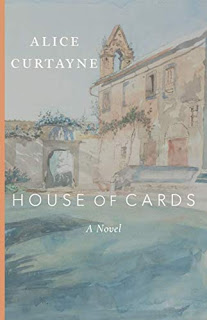
House of Cards - Alice Curtayne - Cluny Media Reprint Edition

House of Cards:
Cluny Media Reprint Edition
Alice Curtayne

ISBN 9781950970742
Previous editions:
The Bruce Publishing Company (1939)
Phoenix Publishing (1939)
Talbot Press (1940)


A few years ago, I fell in love with the works of Alice Curtayne. I first encountered the writings of Alice Curtayne through her book Twenty Tales of Irish Saints, I was captivated by her writing style and her style as a hagiographer. And I started tracking down her other writings. This is not proving an easy task. The first problem is that only 2 of her works were in print at that time. Second many of her books never had North American editions, and that made them hard to find in Canada or even copies that would ship to Canada. Her first book was published in 1929. She wrote histories, most focused on saints. She wrote a few novels. And she wrote extensively for newspapers and magazines. I have also found that she wrote pamphlets for the Catholic Truth Society and other Catholic organizations. I believe that Cluny Media has released 5 of her books in reprint editions and one she contributed to, The Irish Way.  Most are available as paperbacks or hardcovers, and todate only one has a digital edition. Alice Curtayne wrote only a couple of novels that I am aware of. This is the first I have read. It was originally published in 1939, though the description of this edition states 1940. I have been able to confirm 4 other editions all between the years 1939 and 1940. Both editions in Ireland and the United States. This Cluny reprint edition released in 2020. At the time there was indication that eBooks editons would be forthcoming but 3 years on they have not materialized. This is the sixth volume I have read from Cluny Media. 

The description of this edition of this book states:

“House of Cards, originally published in 1940, delves into the explicable workings of the human heart. At the age of seventeen, Anne Farrelly leaves her hometown in the West of Ireland for England, eager for the adventure of education and the promise of a career to follow. In the decade that follows, Anne works up from a lowly position at a struggling English school to a directorship at an Italian firm’s Rome offices, all the while contending with the question of whether she must be married in order to find true fulfillment. Through every turn—romantic, tragic, or comedic—Curtayne presents the concrete difficulties, fraught decisions, and testing freedoms in the life of a young woman. Curtayne’s first foray into the realm of fiction, House of Cards is a debut novel worthy of serious consideration for its compelling dramatic arc as much as for its distinctive and credible an ambitious young woman who may stand to lose more than she gains by her choices.”

Before we get to the review of this specific volume I want to restate, that it should be noted that this reprint edition from Cluny is very well done. Unlike many books brought back from the public domain, this volume went through a process of a high quality scan. And a complete re-typesetting. Cluny is dedicated to restoring quality editions of old books, focused on the Catholic Tradition. Their motto is: ‘Promote the tradition. Preserve the Past.’ Which is a very worthy cause. I really appreciate the work of Cluny Media, they are trying to restore Catholic books, bringing them back into print in wonderful physical editions and for a few eBooks. They are excellent editions. I just wish they had eBooks for all volumes.

This book was a very different read for me. It was the first of Curtayne’s novels I have read. I had a pretty good idea early in where the story was going and it took longer to get there than I expected. Anne Farrelly is an easy enough character to like, and appreciated. Based on when it was published I was surprised that the rise of fascism did not play into her decision to leave Italy. For the first two thirds of the book it was good writing, pleasant descriptions, and very realistic story akin to Madeleine L’Engle’s adult fiction that I am familiar with. The final third moved at a much quicker pace and was more relatable. 

If the story were written today, it would be considered historical fiction starting over 100 years ago. But at the time it was just fiction, and it does capture the essence of an orphan striving for meaning and finding her place in the world, even if looking back later there are some regrets. It is not my favourite of Curtayne’s works. It was an entertaining story and well written. It is not the type of story I would pick up today to read and there are several published each year set in and about that time and up to just after WWII. The Cluny edition with its freshly reset type and artistic covers is a pleasing book to hold and read. As with all titles I have read from Cluny or from the pen of Curtayne I am thankful to have given this a read. And very thankful it is back in print. 

Note: This book is part of a series of reviews: 2023 Catholic Reading Plan

For All reviews of Books from Cluny Media click here.
For All reviews and articles about Alice Curtayne click here.


Thursday, 22 June 2023

St David of Wales - Rev David Crowley - CTS Biographies

St David of Wales
CTS Biographies
Rev David Crowley
Catholic Truth Society
CTS Booklet B414
1955


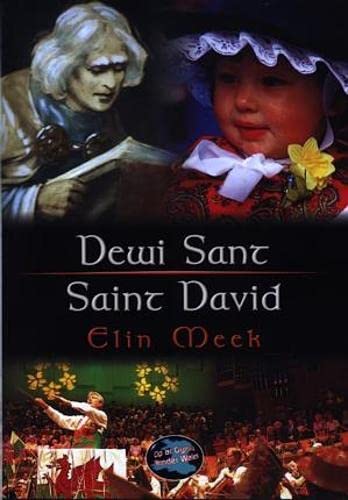
This book was another that was harder to track down, it was well worth doing so. I love readings books that are part of the CTS Biographies series. I have read some published just this year (2023) and some over 100 years ago. This one is in the middle with a publication date of 1955. A few years ago I read Dewi Sant: St David Patron of Wales, by J.B. Midgley, who wrote mainly for the CTS but not this specific volume. This started my interest in this saint. My son found out this is the patron saint of his school Saint David’s in Waterloo, Ontario so I decided to look for more books about him. This is one I read in that further study about Saint David of Wales, Dewi Sant.

And the sections in the volume are:

His Times
Celtic Monasticism
The Written life
Date of Birth - Parentage
Menevia and St Patrick
Birth and Early years
David the Monk
David the Reformer
Archbishop?
Canonization?
Cultus
His Death
Miracle and Legend
St David in Art
Postscript

This is a small volume. But it is wonderfully written. It is one of only 3 volumes on Saint David I have found written for adults. I highlighted a number of passages while reading this small volume. They are:

“WALES for the last 300 years has been so identified with Protestantism, especially Non-Conformity with its extreme hostility to Catholicism, that it comes as a surprise, even to Catholics, to learn that that same Wales has a long and ancient Catholic past. The Welsh nation has been Catholic for three times as long as it has been Protestant. It can boast of a good thousand years of Catholic Faith.”
 
“St David was born at the end of the fifth century. It must have been a turbulent and restless Wales into which he was born. Roman rule had ceased at the beginning of that century; Roman legions withdrew from Britain in 409 and with them the law and order and discipline of Imperial Rome.”
 
“There was no security, with the result that the better element amongst the Celts of
Wales and Cornwall felt themselves to be displaced persons in their own land. Many of them emigrated to Brittany, and colonized that still Celtic and Catholic land. Something was needed to give the people an ideal, a unity, a sense of belonging to some greater and more ordered entity, and it came with the rise of monasticism.”
 
“Great Celtic abbots soon became renowed as masters of the monastic life : Samson, Illtud, Cadoc, Gildas and David these alone in little Wales; nor was their fame confined to the borders of their own land. St David's active influence seems to have been pre-eminent. He founded the historic See of Menevia-later to be known as St Davids- and he remains to this day the national and patron saint of Welshmen.”
 
“It seems impossible to state with accuracy the exact date of St David's birth and death. Authorities differ so much. He was born right at the end of the fifth century and lived for the greater part of the sixth. He is said to have been baptized by the Irish St Ailbe. T. P. Ellis gathered that the years 49? to 5~2 or .589 are as near as we can ever get. He almost certainly died on March 1st, which day is still his feast day.”
 
“St Non (or Nonnita) was St David's mother. Her name is perpetuated in at least five parishes in different counties of Wales. There is St Non's Bay near St Davids and the ancient St Non's Well which is now in Catholic hands. A beautiful tomb and effigy of her are to be seen in Brittany at Dirinon, Finistere, where a mystery play was annually acted in her honour. She was and still is much revered in Catholic Brittany. A metrical Life of St David and St Non is attributed to King Richard the Lion-Hearted.”
 
“St Patrick's Chapel, now in ruins, marks the spot in Porth Mawr where he sailed for Ireland, and there was also a spot, the " Seat", Eisteddfa Badrig, from which the mountains of Ireland are visible. Ireland returned the compliment later, for there are churches dedicated to St David in the Irish dioceses of Cloyne, Ferns and Kildare.”
 
“At a later age David may have gone to the great school of St Illtud either at Llantwit Major or Caldey, or both. The ninth-century Life of St Paul Aure!ian says that he with Samson, Gildas and David were disciples of Illtud.”
 
“Having embraced the monastic life David soon became the successor of Paulinus as abbot, and to obtain vocat10ns and spread the monastic ideal he left his native place and went on a missionary tour. If we are to accept Rhygyfarch's map of his itinerary we are to credit David with religious foundations at Glastonbury, Bath, Croyland, Repton, Leominster and Raglan. On his return he moved his monastery to yallis Rosina - the new Menevia. There by his zeal and the spirtual direction of his monks he soon became an acknowledged master of the monastic life. His fame spread beyond Wales to Cornwall, Brittany and Ireland.”
 
“It is interesting to note that the earliest reference we have to St David is an Irish one. It is found in the eighth-century Catalogue of the Saints of Ireland-the Saints of the Second Order (from 544-598)-and it is a curious one. It says-"A Davide episcopo et Gilda et a Doco Britonibus missam acceperunt." "They received the Mass from Bishop David, Gildas and Docus (or Cadoc)."”
 
“Nevertheless, these penitential decrees of St David became known outside his own country and were incorporated into some of the greater Penitentials which had such vogue in English and Continental monasteries. That their idea originated in Wales and Ireland cannot be doubted. Some particular excerpts of St David's decrees survived m what is known as the Book of David.”
 
“There is evidence that Pope Callixtus II was aware of and approved of the age-old veneration of St David. Two Welsh bishops were present at the Council of Rheims at which that Pope presided in II 19. The affairs of the Welsh dioceses were very much before the Holy See at that time. Later Pope Callixtus issued a Bull from the Lateran Palace to the Bishop of St Davids wherein he couples the saint's name with that of St Andrew as the patron saints of St Davids. This is tantamount to an explicit Papal recognition of St David's cult, which from a purely local one became a national one and traversed the Welsh borders when it was accepted by the Province of Canterbury. King William the Conqueror, a relative of Callixtus II, went on pilgrimage to St David's shrine. So, too, did King Henry II, Edward I and Queen Eleanor.”
 
“All roads in Wales led to St Davids. The road to his shrine was called "The Holy Way", and there was even a well-known pilgrim route from as far as Holywell in the north. Thus his cult developed until he became the much revered patron saint of Wales, Dewi Sant, and was accorded his honoured place, too, in the English and Armorican liturgies.”
 
“St David's biographer-Rhygyfarch-ensured that his saint would not be outdone in wonder and miracle by any other. There was a competitive spirit amongst medieval hagiographers which led them to exaggerate and over-embellish their subject. Their statements now can neither be proved nor disproved; we are quite free to be credulous or critical. But whichever our attitude, we cannot fail to find interest and often amusement in reading their eulogistic efforts.”
 
“Well and truly did St David implant in the hearts of his Welsh children the seeds of a deep and abiding Catholicism. Built, as it was by him, upon that Rock which is Peter, it withstood through the centuries all the storms and buffetings which ever assault it ; and when that cataclysm came which is called the Reformation, there was no part of the British Isles where it was more unwelcome and more loyally and whole-heartedly rejected than in Dewisland.”
 
“As late as 1722 Erasmus Saunders can write of the people of St Davids: “If we have not yet quite unlearned the errors of our Popish ancestors it is because the doctrines of the Reformation begun about 200 years ago in England have not
effectually reached us”.”
 
“Though taut at times and other times slack, nevertheless there runs through all the thousand years and more after St David, as the golden thread of Welsh history, the Catholic Faith. The Celts have long memories and deep hidden longings. How well Chesterton expressed these things in his poem on St David:
     “Mine eyes were shy with secrets-
     A hymn is hid in my speech ; it may cry to Thee still”.”

This was an excellent little biography. I am very thankful I was able to track down this volume. My son has now read the volume and he has lent it to both his English and Drama teachers at the school named after this saint. It is a fascinating read, and this one gives a lot more historic evidence for the arguments then some others I have read. I can easily recommend this book if you can lay your hands on it. A great read.

Note: This book is part of a series of reviews: 2023 Catholic Reading Plan! For other reviews of books from the Catholic Truth Society click here.


Wednesday, 21 June 2023

Reconciliation: The Mercy of Christ - Vivian Boland - Sacraments Meeting Christ Series

Reconciliation: The Mercy of Christ
Sacraments Meeting Christ Series
Father Vivian Boland OP
ISBN 9781860822360
eISBN 9781784693749
ASIN B073H16PWL
CTS Booklet DO716


Over the past few years I have read almost 350 volumes from the Catholic Truth Society. This is the second I have read from the Sacraments Meeting Christ Series, and my third from Father Vivian Boland. This one was originally published in 2004, and the eBook was released in 2017. There is another similar CTS series on Living the Sacraments. Both are excellent series, this one focuses more on the theology and history and the other series more on the personal practice, though this volume could have easily been in either series. 

The description of this volume is:

“The joy of repentance and forgiveness is at the heart of Christian life. Here, Fr Vivian Boland explains how this can be experienced in Confession, inviting us all to encounter Christ’s mercy.

The sacrament of Reconciliation is where every Christian can experience that the joy of repentance and forgiveness is at the heart of Christian life. In a time when the sacrament is experiencing somewhat of a revival Fr Vivian Boland explains and invites all to an encounter with Christ's mercy.”

And the sections and chapters in the book are:

1. The Sound of Angels Cheering
     A culture of no regrets
     Forgiveness in the Gospels
     The Early Church

2. Dramas of Sin and Repentance
     Forgiveness after Baptism
     The Sacrament in the Early Church
     Penitence
     Frequent Confession
     Penance
     The New Rite of Reconciliation
     Individual Confession

3. The Good Sinner
     Contrition
     The Importance of Remembering
     Remembering the Old Testament
     Remembering the New Testament
     The Examination of Conscience
     The Confession of Sins

4. The Good Confessor
     Tasks of the Confessor
     Absolution
     Penance
     Interior and External Penance
     Forgive as you have been forgiven

5. Some Saints on the Sacrament of Reconciliation
Further Reading

I Highlighted numerous passages my first time through this volume. Some of them are:

“Imagine an Olympic stadium packed to capacity on the last day of the games. The marathon is almost over. The crowd waits impatiently for the first runner to enter the stadium. When he or she does there is an explosion of joy and admiration as the crowd shouts its support to help the runner finish the race. When a sinner repents he or she does so to the sound of angels cheering. It is as if a heavenly stadium were packed with angels who roar their joy and support whenever a sinner appears through the tunnel and limps, however tiredly, towards the finishing line.”

“If the sacrament of reconciliation is a sacrament in crisis as John Paul II has often said, and as pastoral experience seems to bear out, then part of the explanation for this might be that remorse has become practically impossible in our culture.”

“The evil in some of the things that have been done in recent history can seem too deep for forgiveness. Who is entitled to forgive people involved in the Holocaust and other genocidal campaigns? What does forgiveness and reconciliation mean in South Africa, the north of Ireland, or after the attacks of September 11th?”

“Those who seek to follow Christ and to live by his way must be ready to be forgiven and they must be ready to forgive.”

“Forgiveness is not to be miserly or reluctant but generous and free: seventy seven times perhaps, or even seventy times seven (Matthew 18). If it lives by this rule, the community of disciples will reverse the pattern of sinful humanity so vividly described in the early chapters of the Bible. As they insisted on a seventy-fold retribution, so the new community seeks to live by a seventy-fold absolution (Genesis 4: 24).”

“The missions of the Son and the Spirit are with a view to reconciling the world to God. We can describe them as the arms of the Father, with which he reaches out to draw the world to Himself, bringing it into relationship with Him by rescuing it from the power of evil, death and sin, and so establishing it securely in His peace. For the Christian tradition this is what happens with the sending of Christ and the Spirit and it is what continues to happen through the Church, the community of Christ’s disciples who continue to make him present through its life of worshipping God and serving humanity.”

“From the beginning the Church realised that the mysteries entrusted to it by Christ and the Spirit included the authority and power to reconcile sinners who had already been baptised. The sacramental life of the Christian community included not only the great sacraments of Baptism and the Eucharist, celebrated at the Lord’s explicit command and in memory of him, but others too that were relevant to crucial experiences and responsibilities of the Christian life and that were understood to originate in the ministry and paschal work of Christ and so to have been instituted by Him.”

“From such texts we learn many things. We learn that there is a danger of under-estimating the seriousness of the decisions to which the Christian faith calls us. We learn that there is a danger of presumption in relation to God’s grace and the promise of salvation. It is true that despair is a sin against the virtue of hope but so too is presumption.”

“The important thing is that penance and reconciliation were public even where confession was not. The sacrament of reconciliation referred, then, to the formal conclusion of the process by which penitents were restored to the communion of the Church by the bishop.”

“The call to repentance is extended to all and conversion is not just a once off experience but a daily task for the believer. The liturgical celebration of Lent made this very clear, an annual recalling of the evangelical summons to metanoia, a change of heart and mind. The virtue of penitence or penance was practised through prayer, almsgiving, other works of service, and various kinds of mortification and self-denial.”

“At about the beginning of the 7th century there is a change. The discipline of once in a lifetime and public penance and reconciliation is replaced by the practice of frequent and private penance and reconciliation. This change came about largely through the influence of monks in Celtic lands. It emerged from their practice of spiritual direction in which they checked in now and again with a spiritual father and spoke with this teacher or guide about the difficulties they were experiencing in living according to the gospel.”

“Suffice it to conclude this chapter by repeating that what is required for the celebration of the sacrament of reconciliation is a sinner who is contrite, ready to confess and ready to do penance, and a priest from whom the sinner will receive encouragement, guidance and absolution.”

“At the heart of the sacrament of reconciliation is the encounter between a sinner and a priest. For the purposes of celebrating this sacrament a ‘good’ sinner and a ‘good’ confessor are required. The good sinner is one who is contrite, confesses his sins, intends not to sin again, and undertakes some penance or ‘satisfaction’ as a way of completing the sacramental celebration.”

“The reason for this acceptance is because the Church knows that ‘perfect contrition’ is a gift of God’s grace and not something we can generate from within our own resources. Imperfect contrition means we are turning back towards home, beginning the journey back to reconciliation with God.”

“Good remembering of the past is essential for wise counsel about the future.”

“To celebrate reconciliation is to remember our sins and our need for forgiveness. It is also to remember Jesus the Lamb of God who takes away the sins of the world. It is to remember God, the Father of Jesus and our Father also, who does not desire the death of the sinner but rather that he should turn from his sins and live (Ezekiel 18: 23). We are to think of ourselves as dead to sin but alive for God in Christ Jesus (Romans 6: 11).”

“There are two main images applied to the confessor in the Church’s explanations of his role. He is a judge and he is a physician or healer. These analogies arise from the fact that the priest acts here in persona Christi, in the person of Christ, who although he is our Judge is also our Healer.”

“Sin disrupts all the relationships in which we are involved. It disrupts our relationship with God whose goodness and holiness are offended by sin. It disrupts our relationship with others who are often the direct victims of our wrongdoing but who are always affected by our sins even those that seem hidden and private. Sin disrupts our relationship with the human environment given us by God to be our garden but at odds with us now as a result of our greed (Genesis 3: 17-19). And sin disrupts our relationship with ourselves - if we may put it like that - because the freedom we exercise in sinning is actually weakened by sin to the extent that our hearts become set on what is less than truly good.”

“Once again it is important that we remember, remember more and remember better, remember above all how we have been forgiven by God. Remembering this ought to equip us to forgive. It ought to help us find our way through the obstacles there undoubtedly are to forgiving others. It may also be, of course, that the one we find difficult to forgive is God.”

I am certain that the two greatest things about Catholicism are the Eucharist, and Reconciliation. And this one highlights clearly the importance of making a good confession and frequent confession. This volume is a clear and concise presentation of what Catholics understand about the sacrament of reconciliation. It is very well written. It is an engaging read and can easily be read by any Catholic. It does a wonderful job highlighting some of the history of the sacrament and some of the theology. For most readers it can be read in a few hours or spread out reading a chapter or section a day. The material is well researched and clearly organized and presented. This volume has left me wanting to track down and to read the other works of Father Boland. This is another great resource from the Catholic Truth Society, I can easily recommend it.

Note: This book is part of a series of reviews: 2023 Catholic Reading Plan! For other reviews of books from the Catholic Truth Society click here.

Books by Father Vivian Boland:
Ideas in God According to Saint Thomas Aquinas
8 Deadly Sins: Learning to Defend the Life of Grace
Spiritual Warfare Fighting the Good Fight  
Reconciliation: The Mercy of Christ
Don't Put Out the Burning Bush
Watchmen Raise Their Voices

CTS Sacraments Meeting Christ Series:
Baptism 
Eucharist 
Anointing 
Marriage 
Holy Orders 
...


Tuesday, 20 June 2023

Mexican Martyrdom - Wilfrid Parsons - Firsthand Accounts of the Religious Persecution in Mexico 1926-1935

Mexican Martyrdom
Firsthand Accounts of the Religious Persecution in Mexico 1926-1935
Wilfrid Parsons
ISBN 9780895553300
eISBN 9781505104301
ASIN B010CI82CM
1936

Mexican Martyrdom - Wilfrid Parsons

I will admit I was expecting something very different from this volume. I will be honest I had not looked closely at the book details. But the title and cover immediately captured my attention. I have read a number of volumes around the topics of the Cristero’s and Cristero War. Only after I got reading did I realise that this volume was written in part as a first-hand account and in part as direct primary research at the time. The description of the volume states:

“Mexican Martyrdom is a series of true stories of the terrible anti-Catholic persecutions which took place in Mexico in the 1920s. Told by the Jesuit priest, Fr. Wilfrid Parson, these stories are based upon cases he had seen himself or that had been described to him personally by the people who had undergone the atrocities of those times. Though most contemporary readers don t know it, a full-fledged persecution of the Church, with thousands of martyrdoms, took place in modern times, just south of our own border including the famous Jesuit priest, Fr. Miguel Pro, was martyred before a firing squad during this persecution. Between the conquest of Mexico by Cortes in 1521, and the Mexican Independence from Spain in 1821, Spain created in Mexico a great Catholic civilization to rival that of any nation in Europe. But when the Great Mexican Revolution began in 1810, this flourishing country began to wither and die. That Revolution was not to end until 1928, with the end of the brutal rule of President Plutarco Elias Calles, though in many ways it continues still. The heroic resistance of Mexican Catholics during this persecution is a great inspiration to Catholics today.Mexican Martyrdom proves that hatred for the Catholic Church exists even in our times and can still flare into open and bloody persecution in this so-called enlightened age.”

Another description states:

“From 1910 to 1917, Mexico underwent a turbulent revolution that turned the country upside down. The new 1917 Constitution sought to destroy Catholicism and subvert religion in the populace, with disastrous consequences. What followed in the 1920s and '30s under the atheistic, communist government of Plutarco Calles was a series of harsh, bloody persecutions and a counter-revolution by Catholics, collectively titled the Cristero War. 

Mexican Martyrdom is a collection of true stories from these terrible anti-Catholic persecutions. Told by Jesuit Fr. Wilfrid Parson, these stories are based upon cases he had seen himself or that had been described to him personally by the people who had undergone the atrocities of those times. These pages are filled with intense stories of those who chose to die rather than forsake Christ the King. 

The Cristero martyrs bear witness to the radical willingness we all must share to lose our own blood in profession of the Christian Faith. In our own times, when Christ the King is discarded and derided, such persecutions as happened only a century ago in Mexico do not seem far off from us. We must learn to be prepared like the martyrs of these pages. Riveting and haunting, Mexican Martyrdom will feed your faith with the blood of the Mexican martyrs. 

­¡Viva Cristo Rey!”

Both the beginning and the ending of this volume mention Blood-Drenched Altars—A Catholic Commentary on the History of Mexico, by Most Reverend Francis Clement Kelley. I have added that to my list of future books to read on these subjects. 

The chapters in this volume are:

Publisher's Note
Foreword
Contents
Dilemma
Challenge
Defiance
Father Pro
Hidden Shepherds
Veiled Heroines
Three Months
Solution?
Meditation At Tepozotlán
Political Interlude
Picking Up The Threads
Splendor Before The Storm
"I Will Strike The Shepherd . . . "
Catacombs
Deadlock
A Rivalry
"There Is No God"
Kaleidoscope
"De Profundis"
Doom And Verdict
Decency Says Farewell
Epilogue

The end of the Publishers Note states:

“Almost all of today's reference books and most history books about Mexico paint the Spanish colonial period, 1521 to 1821, as an age of ignorance, repression, poverty, slavery and general deterioration of culture, but the era of the Revolution, 1810 to the present, as one of progress, enlightenment, freedom and prosperity. Blood-Drenched Altars proves just the opposite to be true, and Mexican Martyrdom is a strong exclamation mark in support of that thesis. Let the reader peruse these two books and decide for himself on which side lies the truth.”

And the forward begins with:

“This book is an attempt to illustrate by a recital of facts the nature of a struggle that has gone on in a neighboring country for the past ten years. It is not a controversial work, still less is it a work of scholarship on the Mexican situation. It is not an historical account of all Mexican events. It is designed to give the reader as vivid a picture as possible of how the Mexican people have lived during that time, particularly if they took sides with the Church in the struggle. It is frankly written with sympathy for these Mexicans, though a sincere effort has been made to understand and to present the point of view of those who are opposed to them.”

This volume was the May read for the Goodreads Catholic Book Club, I had voted for it a few times and am glad to have finally read. I only highlighted a couple of passages while read it. They were:

“This was the central headquarters of the Catholic labor movement in Mexico. Now the official Mexican labor movement is perhaps the most publicized feature of the Revolution. Its affiliation with the American Federation of Labor, its achievements in the Carranza movement dating from the Casa del Obrero Mundial and the brothers Magon, offshoots of the I. W. W. in the United States, the favor it enjoyed from the dictator Calles, all gave it a preponderating influence in public affairs. No politician dared to offend it, and it is generally true that it was at one time the very heart of the Mexican Revolution. It threw itself wholly into the war against religion. It was supreme, though its leader, Morones, was at the time in eclipse, following the murder of Obregon.”

“As he knelt there, the American could not help but think of all the people in the State who could not hear Mass, and who had not heard it for two or three years, and who might not for many years to come. Would their faith hold out? It had not in England, with whose conditions in penal days the present state of Mexico had such striking resemblances. And he resolved to tell the story of Mexico everywhere, so that the power of world public opinion might force the rulers of Mexico to abate their persecution.”

The book is not ordered in a linear fashion. And often the author states some was covered previously in chapters xx or will be covered in the future in chapters xx. I found that a little hard when reading it. A couple of times I had to either jump ahead and read, then reread when I got to that chapter, or jump back. It is something I struggled with a bit. 

The book is an excellent expose of the times. A clear history of what was happening nationally and even regionally in regards to these persecutions and anti-Catholic laws. It was great to have read it and add it to my knowledge about this time and these events. 

Note: This book is part of a series of reviews: 2023 Catholic Reading Plan

Other books about Catholic Mexican History:
The Mexican Crisis Its Causes and Consequences - Rev. Michael Kenny, S.J., Ph.D.
Blood-Drenched Altars: A Catholic Commentary on the History of Mexico - Francis Kelley
Saints and Sinners in the Cristero War: Stories of Martyrdom from Mexico - James Murphy 


Monday, 19 June 2023

Dances With Werewolves Omnibus Edition - Declan Finn - Williams and Miller Volume 2

Dances With Werewolves: Omnibus edition
Williams and Miller Volume 2
Declan Finn
Part 1 ASIN B07ZDHDYVX
Part 2 ASIN B07ZNJWH6X
Omnibus Edition
ISBN 9798689505534
ASIN B08JVDN5T7
 

A few months before reading this I read both the instalments. I also read the other series with the Miller and Williams characters both in parts and then the omnibus edition. I noted for that offering the Omnibus was only available as a physical volume. For this book the Omnibus is available as both an eBook and as a physical print copy. I loved the Too Secret Service both times I read it and this story continues from it. There is also some crossover from this series to the Love at first Bite Series, particularly the Kraft brothers.  One online source lists the Dances with Werewolves Omnibus as Book 2 of Williams and Miller. I still state it is a great pity there have not been more books in this series. I love the five eBook volumes in and then rereading the Omnibus editions as well. 

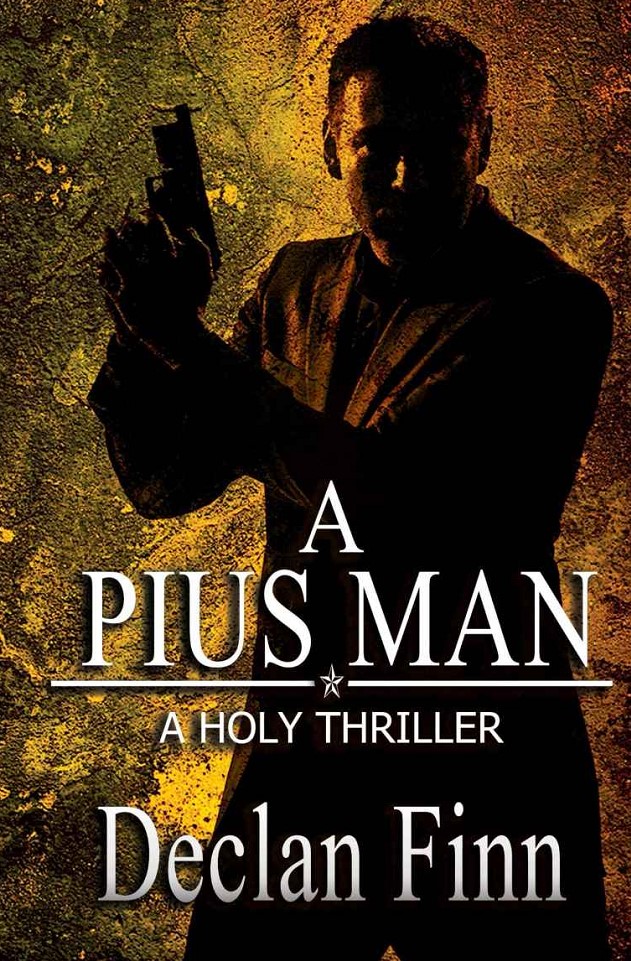
I got on a Declan Finn kick last year and have been reading about 1 a week since. I have read 47 books by Declan Finn and 46 of them in the last year. I have greatly enjoyed his works across several series and a few stand alone offerings. This volume was published a few years ago. Both the Saint Tommy and the White Ops series are greatly entertaining, Love at First Bite is highly addictive, and I cannot wait for the Pius trilogy of 5 books to be back in print. With finishing this volume I have now worked through Finn’s back catalogue, I have read all that are currently in print, and have read 1 of the 14 Anthologies he has contributed to. The two story arcs with these characters are surprising they are full of action, and adventure. This one takes it to a whole new level by adding the supernatural. The description of this story is:

“Secret Service Agent Wayne Williams is dead. But he has to keep busy somehow.

When a coven of witches reports a threat to the President of the United States, it's the sort of threat that must be investigated. But it sounds like a vacation for Wayne.

CIA Assassin Catherine Miler is on a mission to kill "Baron Samedi," a Haitian Prime Minister sacrificing American Tourists, with a sideline in drug dealing.

Author Matthew Kovach is looking for his own version of Derry, Maine.

All three are about to find themselves embroiled in San Francisco pagans, want to be vampires, pharmaceutical zombies, and New Orleans.

And all three have to survive their consultants on this case -- the Kraft Brothers.”

Williams and Miller are great characters, and the supporting cast of family, friends, and co-workers are very well written. The characters are part of what I enjoy so much about Finn’s novels, the wonderfully written characters and the excellent action. He does not caring about political correctness or wokeness, in fact his works would be the antimatter to each. At the beginning of part one of this story Williams and Miller start off on separate missions in different parts of the world. But soon the similarities of their cases draw them to the same city and tracking the same evil. Now they are jumping all over the US and playing whack-a-mole with bad guys. I love the character of Matthew Kovach. And of course William’s father. And this one ends up with an ensemble team fighting evil. They are not taking names but are kicking … The justice that is meted out is appropriate and sometimes immediate. And this story has more threads to tie together than most and Finn does it in a wonderful way.

Even after reading this a second time in this edition I can state that I am amazed at Finn’s skill as a writer with this story. It is greatly entertaining. He takes a genre many know and love and flips it on the side, and adds great new twists. His characters are amazing. His action sequences put John Wick to shame. I loved these stories so much. 

This was another great read with Finn’s usual twists! I enjoyed this book even more the second time through. This is a great read. Another fantastic volume from Finn’s masterful pen, give it a try I am certain it will entertain!  

Note: This book is part of a series of reviews: 2023 Catholic Reading Plan

Books by Declan Finn:
Love At First Bite Series:

The Last Survivors Series:

Convention Killings Series:

Pius Series:
A Pius Legacy
A Pius Stand
Pius History
Pius Tales (Anthology)
Pius Trilogy Short Stories:
...

St. Tommy Series:

Top Secret Service Series:

Dances with Werewolves Series:

White Ops Series:

Land&Sea Season 2:
...

Other books:
...

Anthologies contributed to:
Luna: Planetary Anhtology Series Book 2
Supernatural Streets
Starflight: Tales From The Starport Lounge
Mercury: Planetary Anthology Series Book 4
Venus: Planetary Anthology Series Book 5
Mars: Planetary Anthology Series Book 7
Places Beyond the Wild: A Z-Day Anthology
Shoot the Devil: Ten Tales of Humans Defeating the Demonic
Fantastic Schools, Volume 6