Wednesday, 28 December 2022

The Bible in a Year Companion Volume III Days 244-365 - Fr. Mike Schmitz and Jeff Cavins - Ascension Press

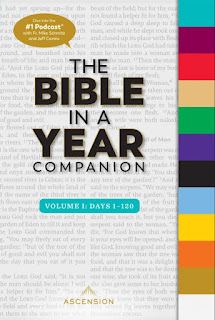
The Bible in a Year Companion 
Volume 3 Days 244-365
Kara Logan
ISBN 9781954881174
eISBN 9781954881181
ASIN B0B9T9LQN8


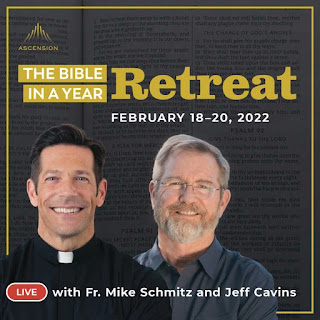
I completed the Bible in a Year in 2021. Then early in 2022 I attended the The Bible in a Year Retreat, and absolutely loved it. When I found out about the three volumes of companions for the Bible in a year I picked up Volume I Days 1-120 right away. The eBook only released for Volume III it was available several days early. I was surprised by where the splits came. They did not split the year equally in 3, or break them at ends of periods. That is the only thing odd of off about these books. Other than that I find them excellent resources for working through the Bible in a Year, following along with Father Mike and the Ascension Podcasts. I really believe that these volumes make the Bible in a Year an even better experience. 

The description of this volume states:

“The Bible in a Year Companion takes Catholics through the award-winning Bible in a Year podcast with summaries, transcripts of Fr. Mike’s daily prayers, and extra content for each episode. It’s the perfect way to remember what you’re hearing, as well as learn even more about each part of Scripture!

The Companion presents daily content for each episode of the podcast, including:

The proprietary Bible in a Year Reading Plan
Reflect on the Word, where readers will find a summary of the key points and highlights of Fr. Mike’s commentary on the daily readings
Take It to Prayer, so Catholics can pray the daily prayer with Fr. Mike and the rest of the BIY community
Dive Deeper, which features unique content surrounding each day’s readings, from images and Q&As to prayer prompts and ways to live out the Bible in everyday life

In addition to this daily content, each biblical period has a Time Period Introduction and Review. Written by Jeff Cavins, these help Catholics to know what to look for in the days ahead, and to recall what has happened in the days they have just completed.

Volume III of The Bible in a Year Companion covers Days 244–365 of The Bible in a Year podcast.
 
This sought-after guide to the award-winning podcast The Bible in a Year (with Fr. Mike Schmitz)TM featuring Jeff Cavins is coming to you thanks to many collaborators including:

Fr. Mike Schmitz
Jeff Cavins
Bobby Semendy
Members of the Ascension Catholic Bible Studies Facebook group
Kara Logan
& many more!”

And father Mike states at the end of the introduction of the first volume:

“I believe that this Bible in a Year Companion is a great tool to take you deeper. It is one thing to be exposed to the Story, but it is another to remember it. This Companion will help those who are so quick to forget—which is all of us! … In this world, where we are so tempted toward distraction and distress, we now have a resource to understand how the story of salvation unfolds and how we can fit into that story today.”

And towards the end of the introduction to this volume he states:

“As we journey through the New Testament, we will see stories of people who noticed the gift of God, appreciated Jesus’ sacrifice for us, were filled with gratitude, and then used the gift of the Holy Spirit! They did not allow the gift of God to be wasted but used what had been given to them, both to glorify God and to serve the people around them.

This has been an incredible year. It truly has been a gift. We want to receive this gift well. We want to notice all that God has done. We want to appreciate what it cost those who brought it to us. We want to express our thanks. And above all, we want to use this gift to the glory of the Father and for the salvation of the world.

Let’s receive this gift well!”

Each time period begins with an introduction by Jeff Cavins. This is where Jeff explains the colour of that period, what it means and why. He gives a brief overview of key events, people, and changes from period to period. And each period ends with a recap and summary from Jeff. Each day has a two page spread. The first page Has the Day number and title, And a section called Reflect on the Word. The Second page has the Passages read at the top and two more sections; Take It To Prayer and Dive Deeper. A sample day is:

DAY 306: Wisdom Is Beautiful 
Reflect on the Word
 • In Wisdom 7, we see a list of key words that highlight various aspects of wisdom. These are worth taking time to meditate upon. 
 • In Wisdom 8, the author speaks of how he longed for wisdom, knowing that it comes from the Lord. 
 • In the Old Testament, wisdom is often personified, typically in feminine terms.
 • While we heard about the defeat of Antiochus in 1 Maccabees, in 2 Maccabees 9 we hear who defeated him—the Lord. 
 • In the midst of the fighting and political machinations, the Lord is involved, as 2 Maccabees makes clear.
 • We can take one of two perspectives in life: either we can focus on ourselves and our own strength, or we can see how God is active in our life, always helping us.
 • The second book of Maccabees shows that life with the Lord is not predictable. There is no guarantee that we will win every single battle or never face suffering. But what is guaranteed is that God is always with us. 

2 Maccabees 9; Wisdom 7–8; Proverbs 25:1-3

Take It to Prayer

Father in heaven, thank you so much. Thank you for your Word and thank you for your goodness. Thank you for giving us the gift of wisdom. Thank you for sharing who you are with us, your character with us. Thank you for the ways in which you are unseen and yet still present. Thank you for the ways in which you act in silence and speak to us in silence, the way you love us in silence. Lord God, we also thank you for the times when you make yourself known. We thank you for the times when it is unavoidable for us to realize that you not only are present but you are active. Not only that you are good but that you love us. Help us to receive your love and help us to love you back. In Jesus’ name we pray. Amen.

Dive Deeper

What perspective do you tend to take in your life—that of 1 Maccabees or 2 Maccabees? Choose a time today to meditate on the truth that God is always with you and actively fighting for you.”

This is an excellent resource. Most days I have listened to the podcast in the morning. And then on my first coffee break at work, I read through the two pages for that day. I love praying the prayer that Father Mike prayed that day, and I love the going deeper sections. I believe this is a must have resource to support your Bible in a Year journey. This is my second time through the podcast, and I see it being an annual journey going forward. If you are listening to the BIAY pick this up as a supplement to that adventure.


Note: This book is part of a series of reviews: 2022 Catholic Reading Plan

The Bible in a Year Resources:
...

Books By Father Mike Schmitz:
Made for Love: Same-Sex Attraction and the Catholic Church


Contributed to:
Pray, Decide, and Don't Worry: Five Steps to Discerning God's Will
Don't Be Afraid to Say Yes to God! Pope Francis Speaks to Young People

Audio Talks by Father Mike Schmitz:
Living Life by Design, Not by Default
Love - Sacrifice - Trust He Showed Us the Way
From Love, By Love, For Love
True Worship
The Four Last Things
Jesus Is …
Changed Forever - The Sacrament of Baptism
We Must Go Out - The Sacrament of Confirmation

Books by Jeff Cavins:


Tuesday, 27 December 2022

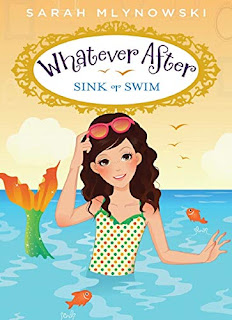
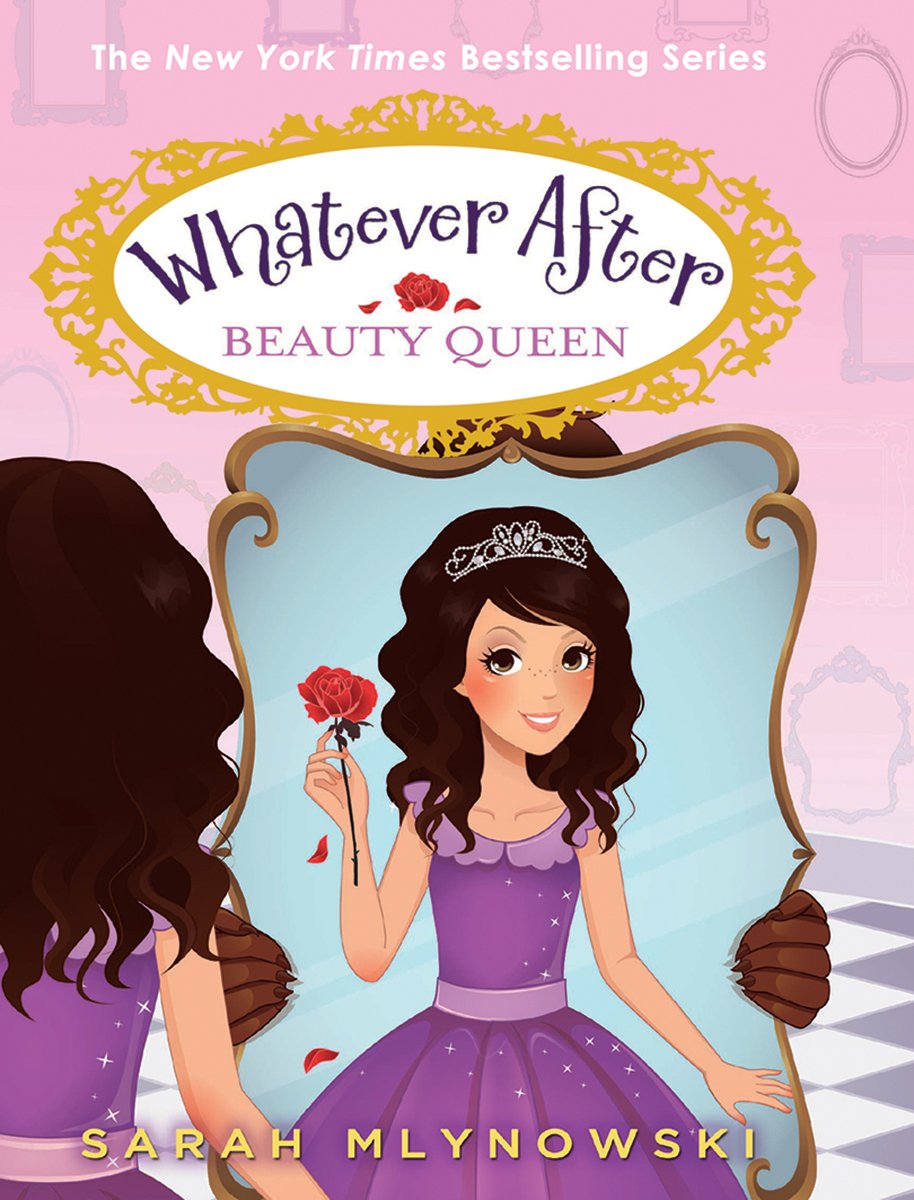
Genie in a Bottle - Sarah Mlynowski - Whatever After Book 9

Beauty Queen Genie in a Bottle
Whatever After Book 9
Sarah Mlynowski
Scholastic
ISBN 
9780545851039
eISBN 9780545851046
ASIN B015QMBYMO


This is the fifteenth time I have read a book in this series. I have been reading these stories with my girls for over 6 years now. I read a few of these stories with my oldest starting in 2016. Now my youngest is reading them to me, and her sister handed down the first several stories in the series. And we have added the rest to have the complete series, at least what is available to date. My youngest insists we review everything that we read together, so this review from 2022 is part of that effort. And my youngest had been writing her own reviews of the books she has finished for the last year and is planning on starting her own book blog. Between reading with my oldest and youngest this is the seventeenth time I have read a book in this series. The stories have great staying power. Even as an adult I can enjoy these books, not only the first time but rereading them again and again.

Mlynowski always does a wonderful job with the story in this book, and all we have read in the series so far. My oldest was a reluctant reader. Back then when we read, I would read two pages for every page she read to me. The whole family loves these stories from 8-years old to 80 years old. It is a fantastic series. The stories are fun and entertaining, but also have some valuable lessons and insight. 

My youngest daughter and I both give this story a solid 5/5 stars, she says this is her second favourite to date. She was also surprised by what happened at the end with the surprise last wish by Abby and Jonah’s gifting. This story had a lot of twists and turns that she had not guessed and took her completely by surprise. She was totally taken by what happened at the end, especially with Karimah and the street children. She loved the surprise around what happened to Abby’s jewellery box once the story was resolved, yet again this time.

The description of this story is:

“Be careful what you wish for...When my brother, Jonah, and I travel through our mirror into the story of Aladdin, we're excited. There will be magic lamps and genies granting wishes. Right? Wrong. The genie we meet isn't QUITE as helpful as we expected. And if Aladdin's wishes don't come true, he won't get to marry the princess and live happily ever after! Now we have to:- Escape an enchanted cave- Find forty buckets of jewels- Plan a parade- Learn to fly a magic carpet. Otherwise we'll run out of wishes... and never get home!"

I enjoyed Abby’s growth in this story, she is continuing to grow and mature. She is also becoming better at troubleshooting issues and problems during their adventures. I was surprised by some of the twists in this one. It is one of the best in the series.

We always enjoy Mlynowski’s twists and takes on old tales. Another great take on a familiar tale. The writing in these stories is excellent. My daughters and I love reading them together. And the retelling of this story surprised both of us at several different points and I am certain it will surprise you. It is a great book in an excellent series.


Books by Sarah Mlynowski:
Magic in Manhattan Series:

Bras & Broomsticks
Frogs & French Kisses
Spells & Sleeping Bags
Parties & Potions

Whatever After Special Editions:
Abby in Wonderland
Abby in Oz


Upside-Down Magic Series:
Upside-Down Magic #1
Sticks and Stones #2
Showing Off #3
...

Other Books by Sarah:
Milkrun
Fishbowl
Monkey Business
As Seen on TV
Me Vs. Me
Gimme a Call
Ten Things We Did (and Probably Shouldn't Have)
Don't Even Think About It
Think Twice
Know It All
A Nice Fling is Hard to Find
A Little Bit Broken
Cruisin'
Party Girls
The Two-Month Itch
...

Books Coauthored:
See Jane Write (with Farrin Jacobs)
How to Be Bad (with E. Lockhart and Lauren Myracle)
...

Books Contributed To:
Girls' Night In
Girls Night Out
American Girls About Town
Fireworks
Vacations from Hell

...

Monday, 26 December 2022

Introduction to the Devout Life - Francis de Sales, Gregory Pine, Jacob Bertrand Janczyk, and Matthew K. Minerd - Ascension Catholic Classics

Introduction to the Devout Life 
Francis de Sales
Ascension Catholic Classics
ISBN 9781954881587
eISBN 9781954881594
ASIN B0BJSNN2RB


Reading this volume was a bit of a different process. It is the first in a new series from Ascension press called Catholic Classics, and there is a podcast version by Gregory Pine and Jacob Bertrand Janczyk. I listened to the podcast in the morning and then read the associated sections in the afternoon. In essence I worked through the book twice. I did find I had to seep up Gregory and Jacob, but even with that it was great to listen to their commentary each day, and read their commentary before the different sections of the book. The description of this edition of this book is:

“The first book of the Catholic Classics series, Introduction to the Devout Life is an updated translation of St. Francis de Sales’ original text that makes this key work of Catholic Tradition approachable to modern readers.

Written as a letter to St. Francis’ lay cousin, this classic yet relevant text features advice on the questions that members of the Catholic laity often ask themselves, such as:

Is living a holy life possible for those called to a vocation other than the religious life?
What does spiritual meditation and prayer look like amid the demands of daily life?
How can virtues be pursued and vices rooted out when temptations and occasions of sin abound?
Why can setting aside daily time for silent prayer and meditation seem like such a daunting task?
And more!

Written by Doctor of the Church St. Francis de Sales to offer sound preaching and clear instruction for Catholics and translated by Matthew K. Minerd to renew Catholics’ understanding and appreciation of this classic Catholic work, Introduction to the Devout Life promises that “it is possible to have an intimate and personal relationship with Jesus, regardless of the demands of everyday life.”

This special version includes:

The full English translation of St. Francis de Sales’ 17th century work (which is not available in all translations)
Language updates that make the text accessible without changing its meaning or message
Expert commentary from Fr. Gregory Pine, O.P. and Fr. Jacob Bertrand Janczyk, O.P. introducing each section
 
This beautiful book provides inspiration and guidance for all Catholics to deepen their personal relationship with God while living out their unique vocation.”

The sections and chapters in this edition are:

About the Catholic Classics
Editor’s Remarks by Matthew K. Minerd
Introduction by Fr. Gregory Pine, O.P., and Fr. Jacob Bertrand Janczyk, O.P.
Author’s Dedicatory Prayer by St. Francis de Sales
Author’s Preface by St. Francis de Sales

Part 1: On the Counsels and Exercises
Commentary on Part 1 by Fr. Gregory Pine, O.P., and Fr. Jacob Bertrand Janczyk, O.P.
     1: What Is True Devotion to God?
     2: The Nature and Excellence of Devotion
     3: Devotion Is Suitable to All Kinds of Vocations and Professions
     4: On the Need for Guidance for Those Seeking to Live a Devout Life and Make Progress in It
     5: We Must Start by Purifying Our Souls
     6: The First Purification: From Mortal Sin
     7: The Second Purification: From Desire for Sinful Deeds
     8: How to Undertake This Second Purgation
     9: First Meditation: On Creation
     10: Second Meditation: On the End for Which We Were Created
     11: Third Meditation: On the Benefits Bestowed by God
     12: Fourth Meditation: On Sin
     13: Fifth Meditation: On Death
     14: Sixth Meditation: On Judgment
     15: Seventh Meditation: On Hell
     16: Eighth Meditation: On Heaven
     17: Ninth Meditation: How to Make Heaven Your Heart’s Choice
     18: Tenth Meditation: How the Soul Chooses to Live the Devout Life
     19: How to Make a General Confession
     20: A Genuine Profession So That the Soul May Firmly and Surely Resolve to Serve God
     21: Conclusion of This First Purification
     22: On the Need to Purify Ourselves from Affections Drawing Us to Venial Sins
     23: We Must Purify Ourselves of Attachment to Useless and Dangerous Things
     24: That We Must Purify Ourselves from Evil Inclinations

Part 2: Instructions for Elevating the Soul to God Through Prayer and the Sacraments
Commentary on Part 2 by Fr. Gregory Pine, O.P., and Fr. Jacob Bertrand Janczyk, O.P.
     1: On the Necessity of Prayer
     2: A Brief Method of Meditation, Beginning with Awareness of God’s Presence, Which Is the First Thing to Be Done in Preparation
     3: The Second Point of Preparation for Meditation: The Invocation of God’s Assistance
     4: The Second Point of Preparation: How to Propose a Mystery for Consideration
     5: The Second Part of Meditation: Considerations
     6: The Third Part of Meditation: Affections and Resolutions
     7: On the Conclusion and the Spiritual Bouquet
     8: Some Very Useful Advice Regarding Meditation
     9: On the Dryness Sometimes Experienced in Meditation
     10: Morning Exercises
     11: Evening Exercises and Examination of Conscience
     12: On Spiritual Recollection
     13: Acts of Aspiration, Brief and Frequent Prayers, and Holy Thoughts
     14: On the Most Holy Mass and How We Should Partake in It
     15: Concerning Public and Communal Exercises
     16: How We Are to Honor and Invoke the Saints
     17: How We Should Hear and Read God’s Word
     18: How We Ought to Receive Inspirations
     19: On Holy Confession
     20: On Frequent Communion
     21: How We Are to Receive Communion

Part 3: Certain Counsels for the Practice of the Virtues
Commentary on Part 3 by Fr. Gregory Pine, O.P., and Fr. Jacob Bertrand Janczyk, O.P.
     1: How to Choose the Virtues to Be Practiced in Particular
     2: Continued Discussion of the Choice of Virtues
     3: On Patience
     4: On External Humility
     5: On Interior Humility
     6: That Humility Makes Us Love Our Own Abjection
     7: How to Retain Our Good Name While Also Practicing Humility
     8: On Meekness Toward Our Neighbors and Remedies Against Anger
     9: On Meekness Toward Ourselves
     10: That We Must Deal with the Affairs of Life Diligently but Without Eagerness or Anxiety
     11: On Obedience
     12: On Chastity
     13: How to Maintain Purity
     14: On Poverty of Spirit Observed in the Midst of Riches
     15: How to Practice True Poverty, Even When You Are Rich
     16: How to Be Spiritually Rich of Spirit amid Real Poverty
     17: On Friendship—First and Foremost, Evil and Frivolous Ones
     18: On Flirtations
     19: True Friendships
     20: On the Difference Between True and Empty Friendships
     21: Advice and Remedies Against Evil Friendships
     22: Other Advice Regarding Friendships
     23: On Practices of External Mortification
     24: On Conversation and Solitude
     25: On Modest Dress
     26: On Conversation: First of All, How We Are to Speak About God
     27: On Modesty in Words and the Respect We Owe to Others
     28: On Rash Judgments
     29: On Detraction
     30: Further Counsels on Discourse
     31: On Hobbies and Recreation: Which Kinds Are Permitted
     32: On Forbidden Amusements
     33: Balls and Other Permissible but Dangerous Amusements
     34: When to Play or Dance
     35: That We Must Be Faithful on Both Great and Small Occasions
     36: That We Must Be Just and Reasonable
     37: On Desires
     38: Counsels for Married People
     39: On the Holiness of the Marriage Bed
     40: Counsels for Widows
     41: A Word to Virgins

Part 4: Necessary Counsels Concerning Temptations that Occur Frequently in the Christian Life
Commentary on Part 4 by Fr. Gregory Pine, O.P., and Fr. Jacob Bertrand Janczyk, O.P.
     1: That We Must Not Bother Ourselves About What the Children of the World Say
     2: That We Must Be of Good Courage
     3: On the Nature of Temptations and the Difference Between Experiencing Them and Consenting to Them
     4: Two Beautiful Examples of This
     5: Encouragement for the Soul Experiencing These Temptations
     6: How Temptation and Delight Can Become Sinful
     7: Remedies for Great Temptations
     8: That We Must Resist Small Temptations
     9: How to Remedy Minor Temptations
     10: How to Strengthen the Heart Against Temptations
     11: On Anxiety
     12: On Sorrow
     13: On Spiritual and Sensible Consolations and How We Ought to Receive Them
     14: On Spiritual Dryness and Barrenness
     15: A Notable Example that Confirms and Exemplifies What We Have Said

Part 5: Exercises and Counsels for Renewing the Soul and Strengthening Her Devotion
Commentary on Part 5 by Fr. Gregory Pine, O.P., and Fr. Jacob Bertrand Janczyk, O.P.
     1: That One Must Yearly Renew Good Intentions by Means of the Following Exercises
     2: Consideration of the Blessing Given to Us by God’s Calling Us into His Service, in Accord with the Profession Made Earlier
     3: On the Examination of Our Soul Concerning Its Advancement in the Devout Life
     4: An Examination of the State of the Soul in Relation to God
     5: An Examination of What the Soul Thinks of Itself
     6: Examination of Our Soul in Relation to Our Neighbors
     7: Examination Concerning Our Soul’s Affections
     8: Affections to Be Aroused After This Examination
     9: Reflections Suited to the Renewal of Our Good Resolutions
     10: First Consideration: The Excellence of Our Souls
     11: Second Consideration: The Excellence of the Virtues
     12: Third Consideration: The Examples of the Saints
     13: Fourth Consideration: Jesus Christ’s Love for Us
     14: Fifth Consideration: On God’s Eternal Love for Us
     15: General Affections Concerning the Previous Considerations, and the Conclusion to These Exercises
     16: The Sentiments That We Must Retain After These Exercises
     17: Response to Two Objections That Can Be Raised Against This Introduction to the Devout Life
     18: Three Final and Principal Counsels for This Introduction to the Devout Life
Notes

This edition has it’s:

Nihil obstat: Reverend Robert A. Pesarchick, Censor librorum, June 2, 2022

Imprimatur:, +Most Reverend Nelson J. Perez, Archbishop of Philadelphia, June 3, 2022

Now please note there are over 250 editions of this book in English. By several different translators. With and without commentary. Because the book is now in public domain many, many editions are just copies of each other. We are informed about this edition that:

“Introduction to the Devout Life presented here is a deep editing and reworking of an anonymous translation from 1891 of St. Francis de Sales’ early seventeenth-century spiritual masterpiece Introduction à la vie dévote.”

By the editor Matthew K. Minerd. It is uncertain if Minerd will be the editor of future volumes in the series, and I was a little disappointed that the next volume was not announced at the end of the book or podcast. Having both read and listened to this volume I highlighted 48 passages, a few of them are:

“It is true that this is difficult, and therefore, I could wish that many strive to live such a life with more ardor than has been done up to this point, and I, weak as I am, will strive in this treatise to provide some help for those who shall take up so worthy an enterprise with a generous heart.”

“For the rest, my dear reader, it is true that I write of the devout life without myself being devout, but certainly not without the desire to become so. And this desire is what gives me courage to undertake this attempt to instruct you. For as a famous learned man said,10 a good way to learn is to study, a better way is to hear, but the best way is to teach.”

“There are many things that we would like to do. Most of us would like to develop an exercise routine. Perhaps we would like to learn a foreign language or how to play a musical instrument. Unfortunately, though, we do not always get around to doing all the things we would like to do. Whether for lack of time, talent, commitment, or motivation, we leave quite a bit undone. What about our spiritual life, though? Have we gotten around to that? In this first part of the Introduction to the Devout Life, St. Francis helps us address this question.”

“I have written these meditations entirely for this purpose. Meditate upon them in order, taking only one per day, if possible in the morning, which is the most proper time for spiritual exercises. This will allow you to ruminate on it for the rest of the day. However, if you are not yet accustomed to meditation, see what is said in the second part concerning this topic.”

“Consider that it is quite true that you are set between heaven and hell and that both are opened up before you, all depending upon the choice you will make.”

“However, all these spiritual acts should be made briefly and fervently, before you leave your bedroom, if at all possible. Thus, by means of this exercise, all that you do throughout the whole day thereafter may flourish with the blessing of God.”

“Therefore, willingly join the confraternities established where you reside, especially those whose exercises are most fruitful and edifying. In so doing, you practice a kind of obedience acceptable to God, for although these confraternities are not commanded of us, they are, nevertheless, recommended by the Church, who, in witness of her approval of them, grants them certain privileges.”

“From this, I infer that frequent Communion is by no means inconsistent with the state of a parent, husband, or wife, so long as the person who receives Communion be prudent and discreet.”

“Begin your preparation for Holy Communion the night before, through many aspirations and brief and quick prayers of love, going to rest earlier so you may rise sooner in the morning. If you wake during the night, fill your heart and mouth immediately with some sweet words, so that your soul may be perfumed for the reception of her Spouse.”

“Our friend becomes our enemy when he would lead us to sin, deserving to lose his friendship when he would ruin and destroy his friend. Thus, one of the most infallible marks of false friendship is to see it formed with a sinful person, whatever kind his sins happen to be, for if he whom we love is vicious, without doubt our friendship is vicious also.”

“Let your speech be meek, frank, sincere, open, simple, and truthful. Guard yourself from equivocations, artifices, and dissimulations, for although it may not be advisable to say all sorts of truths at all times, nonetheless, it is never permissible that we speak something contrary to the truth.”

“Do not desire crosses, except in proportion to the patience with which you have borne those which have been already sent to you, for it is a mistake to desire martyrdom and not to have the courage to bear an injury.”

“However, God joins husband and wife by his own blood. Thus, this union is so strong that the soul would sooner separate from the body than husband from his wife. But the union meant here is not principally bodily but, rather, of the heart, affection, and love.”

“Thus, by means of the continual exercise of prayer, the sacraments, and confidence in God, our strength will come back to us, and we shall live a vigorous and happy life.”

“Throughout the day, or at least in the morning and evening, examine whether you have your soul in your hands or whether some passion or anxiety has not snatched it from you.”

“They should include things such as diligence in prayer, in the reception of the sacraments, in good works, in the amendment of your faults uncovered in self-examination, in avoiding the occasions of evil, and in following the counsels which are given to you.”

I hope those few quotes give you a feel for this book and this translation and edition. It is an excellent volume. And great to read or follow along with the pod cast. This book was a wonderful read. It challenged me personally and I know it will do the same for you. I am thankful for having read and to be slowly applying the lessons from this Saint and Doctor of the church. And I look forward to the other volumes from his pen. I highly recommend this book and look forward to the next Catholic Classics from Ascension Press.

Note: This book is part of a series of reviews: 2022 Catholic Reading Plan

Books by Saint Francis de Sales:
Introduction to the Devout Life
The Sign of the Cross
The Art of Loving God
Roses Among Thorns
Finding God's Will for You
...

Sermons of St. Francis de Sales:
Sermons of St. Francis de Sales on Prayer
Sermons of St. Francis de Sales on Our Lady
Sermons of St. Francis de Sales for Lent
Sermons of St. Francis de Sales for Advent and Christmas


Saturday, 24 December 2022

Roses Among Thorns: Simple Advice for Renewing Your Spiritual Journey - Francis de Sales and Christopher O. Blum (Translator)

Roses Among Thorns: 
Simple Advice for Renewing Your Spiritual Journey
St. Francis de Sales
Christopher O. Blum (Translator)
ISBN 9781622822065
ASIN B00JLVNNP8


This was one of two books I was reading by Saint Francis de Sales in parallel. The other was along with the Ascension Catholic Classics Podcast and was Introduction to the Devout Life. This one I was reading as part of Father Mark Goring’s Saint Mark’s School of Reading. Both were excellent reads. It was also an exercise in patience reading only 1 or 2 of the reflections in this volume per day. The description of this book is:

“From the thousands of personal letters by St. Francis de Sales comes this short, practical guide that will develop in you the soul-nourishing habits that lead to sanctity.

St. Francis de Sales is widely regarded as one of the greatest spiritual advisors in the history of the Church, and we have drawn from his letters the wisest advice for those prepared to take the next step on their spiritual journey.”

The chapters in this volume are:

Foreword
Seasons of Life
Jesus the Gardener
Roses Among Thorns
Choosing Virtue
A Pattern of Devotion
Jesus in Our Heart
Peace of Soul and Humility
Christian Maturity
Oppressed in Conscience
Accepting God’s Will
The Visitation
Maintaining Peace of Soul
Loving God
Bearing Jesus
Bearing Our Crosses
Facing Temptation
The Burden of Work
Too Busy to Pray
Perseverance in Worship
Parents and Teachers
A Devout Life
Blessed Joseph
Imperfection
Confidence amid Tribulation
A Strong Heart
John the Baptist
Ordered Desires
Impatience or Self-Love
In the Desert
Christian Liberty
Perseverance in Prayer
Judge Your Feelings
Be Patient
Pardon Your Heart
A Time of Depression
Our Daily Bread
Oppressed by Pain
The Envy of the Angels
A Quiet Life
The Ascension
Not into Temptation
St. Peter in Chains
A Time of Fear
The Baptist amid the Thorns
God’s Vigilance
The Assumption
A Spiritual Vintage
Complaining
Beautiful Devotion
The Imagination in Prayer
The Peace of God
A Time of Illness
The Presence of God
A Time of Separation
The Death of a Loved One
Interior Desolation
Last Things
Prepare for Death
Dying
The Passage of Time

In the forward the Most Rev. James D. Conley, Bishop of Lincoln sates:

“I became a Catholic in 1975, and shortly after my conversion, I was given a copy of St. Francis de Sales’s Introduction to the Devout Life. The wisdom of this saint formed my spirituality and my early practice of the Faith. I still return to St. Francis de Sales and recommend his writings regularly to those beginning the path of discipleship.”

And also:

“Today, more than ever, Catholic men and women need clear instruction in the path of Christian discipleship. We have, unfortunately, lost many of the great practices of piety and devotion that form Catholic culture and Catholic conscience. There is beauty in mortification, in order, and in piety; and the work of St. Francis captures that beauty.

St. Francis de Sales gives direction in prayer, devotion, discernment, and mortification, in a way that can be understood and implemented in the midst of ordinary life. He understands clearly the movements of the soul, the affectations and temptations that draw us from Jesus Christ. He also understands the antidote. His work is a guidebook for anyone who seeks a deeper relationship with Jesus Christ.

Roses Among Thorns offers newly translated meditations from the works of St. Francis de Sales that Catholic men and women — lay, clerical, or religious — can reflect on prayerfully. This book can be used as a devotional or in spiritual direction or in the sacrament of penance.

St. Francis de Sales understood that Christ is revealed as one heart speaks to another. I pray that the heart of the great saint, reflected in these meditations, will reflect to you the Sacred Heart of Jesus Christ.”

A sample reflection is:

Our Daily Bread

You say that you do nothing when you pray. Yet what do you desire beyond what you are doing, which is presenting to God your nothingness and misery?

The most effective appeal that beggars make is simply to place their open wounds and needs before us. Yet, you say, sometimes you do not even accomplish that, and you remain like a phantom or a statue. But even this is no small thing. In the palaces of princes and kings, statues are placed for no other purpose than for the prince to look upon them. Content yourself to be in God’s presence in that way; he will bring the statue to life when it pleases him to do so.

Trees require sunlight to bear fruit. Some do so earlier, others later, some annually, others only every third year, and none of them bears the same way as the others. We should be happy to be able to remain in the presence of God and be content that he will make us bear fruit sooner or later, either daily or now and then, according to his good pleasure.

I highlighted over thirty passages my first time through this volume. A sampling of them are:

“Only in heaven will everything be springtime in its beauty, autumn in its fruitfulness, and summer in its ardor. There will be no winter there; but here winter is necessary for the work of abnegation and for the thousand minor but beautiful virtues that we exercise in a fallow time.”

“Do not be anxious. Rouse yourself to serve the Lord with steadfastness, attentiveness, and meekness. That is the true way to serve him. If you can refrain from trying to do all things, but instead attempt to do only some one thing, then you will do much.”

“Our task is to let our hearts be ever united to his, and our wills to his pleasure.”

“If you were able to stir your heart a little more deeply to the practice of meekness and true humility, you would be courageous. But you must frequently think of it. Prepare yourself to do so first thing each morning, and God will send you a thousand consolations.”

“There are three things we must do to be at peace: have a pure intention to desire the honor and glory of God in all things; do the little that we can unto that end, following the advice of our spiritual father; and leave all the rest to God’s care.”

“Humility makes us accept pains with meekness, knowing that we deserve them, and good things with gratitude, knowing that we do not.”

“It will surely come, that hour for which you long, on the day that sovereign providence has named in the secret of his mercy, and then it will come with thousands of secret consolations.”

“After having made this exercise two or three times, you can shorten or vary it as you find best, but you should frequently recall it by short aspirations.”

“It is better for you to assist at Mass every day than not to do so on the pretext of having more time to pray at home. It is better not only because the real presence of the humanity of our Lord cannot be replaced by his presence in our minds, but also because the Church strongly desires that we attend Mass. We can consider this desire as advice that to follow is a kind of obedience when we can do so rightly and, by our good example, be of use to others.”

“You must before all things observe the general commandments of God and of the Church, which are established for all faithful Christians, and without which it is not possible to have any devotion.”

“God desires from us more fidelity to the little things that he places in our power than ardor for great things that do not depend upon us.”

“Be patient with all, but especially with yourself. Do not trouble yourself about your imperfections. Always have the courage to pick yourself back up and begin again every day, for there is no better path to success in the spiritual life than always to begin again and never to think that you have done enough.”

“In order to be devout, not only must we want to do the will of God, we must do it joyfully.”

I hope those few quotes and sample meditation give you a feel for this volume. It is an excellent little read. It can be read through from beginning to end or flipped to random pages to read that specific reflection. Or used the list and pick and choose as they apply to your life at the moment. It is easy to see why this is a classic. It is a book that can be read again and again and each time the reader would benefit in a new way. A great read that I can easily recommend.

Note: This book is part of a series of reviews: 2022 Catholic Reading Plan!

For a list of all books that are part of Father Mark Goring's Saint Mark’s School of Reading click here.

Books by Saint Francis de Sales:
Introduction to the Devout Life
The Sign of the Cross
The Art of Loving God
Roses Among Thorns
Finding God's Will for You
...

Sermons of St. Francis de Sales:
Sermons of St. Francis de Sales on Prayer
Sermons of St. Francis de Sales on Our Lady
Sermons of St. Francis de Sales for Lent
Sermons of St. Francis de Sales for Advent and Christmas

Friday, 23 December 2022

The Church and the Age of Reformations 1350–1650 - Joseph T Stuart and Barbara A Stuart - Reclaiming Catholic History Series Book 5

The Church and the Age of Reformations (1350–1650): 
Martin Luther, the Renaissance, and the Council of Trent
Reclaiming Catholic History Series Book 5
Joseph T. Stuart
Barbara A. Stuart
Mike Aquilina (Editor)
Ave Maria Press
ISBN 9781646800339
eISBN 9781646800346
ASIN B09PDQ14X4


I have greatly enjoyed the other five volumes in this series that I have read, and I have but 1 to go. They were not released in Chronological order, and have slowly been coming out over the last few years. The second The Church and the Roman Empire by Mike Aquilina, came out first in 2019 as did the second The Early Church by James L. Papandrea. There will be seven volumes in this series, and this one volume 5 was released second last. Mike Aquilina is the general editor of the series. I can easily state that this volume is an excellent read. This book and the whole series are great reads. I spent 20 years as an undergraduate, for the most part because I loved learning. My last degree was in Religious Studies with a focus on Roman Catholic Thought. I would have loved this book and those I have read in this series as resources, for several of the courses I completed.   

Many years ago when I did an Introduction to Church History course at Conrad Grebel College at the University of Waterloo, our professor, Arnold Snider, often said throughout the year, “I do not care as much about dates and names and places, as the story of Christianity. On your final exam the main question will be ‘Your uncle Billy at Christmas dinner says: ‘I hear you did the history of Christianity, tell us the story in your own words?’” And that was the one essay question on the exam. This book and the others I have read in the series would have been great resources for that course. Maybe could have even served as textbooks if the course had not been taught at a Mennonite College, if it had been offered at St Jerome’s University I could see these being the books used today. If I had had them they would have been pulled out often for essays, papers and research. This is a great read in an excellent series. These books are written in an engaging manner that any Catholic could pick them up and benefit from reading them. And this one is on a very hard time frame in Church history. 

This is the sixth volume published in this series, Reclaiming Catholic History, though it is the fifth book in the series. The series is being edited by Mike Aquilina and the first published volume was by him as well. About this series we are told by Aquilina:

“The history of the Catholic Church is often clouded by myth, misinformation, and missing pieces. Today there is a renewed interest in recovering the true history of the Church, correcting the record in the wake of centuries of half-truths and noble lies. Books in the Reclaiming Catholic History series, edited by Mike Aquilina and written by leading authors and historians, bring Church history to life, debunking the myths one era at a time.”

Each of the book I have read so far I have benefited from greatly and recommended to several friends and family members. The chapters in this volume are:

Reclaiming Catholic History: Series Introduction
Chronology of The Church and the Age of Reformations (1350–1650)
Map
Introduction

Chapter 1: Reform in the Late Middle Ages
     Up Close and Personal: St. Catherine of Genoa
     You Be the Judge: Didn’t the Inquisition kill 
     and torture people because of their faith?
     Up Close and Personal: St. Philip Neri
     Up Close and Personal: The Papacy in Scripture 
     and the Church Fathers

Chapter 2: Protestants
     You Be the Judge: Didn’t the Catholic Church make 
     up which books were in the Bible during the Council 
     of Trent?
     You Be the Judge: Don’t Catholics pray to the saints 
     instead of Christ?
     You Be the Judge: Didn’t the Church prohibit Catholics 
     from reading the Bible?
     Up Close and Personal: St. Thomas More
     You Be the Judge: Should Pope Pius V have excommunicated 
     Elizabeth I of England?

Chapter 3: Catholics
     Up Close and Personal: Reforming Religious Orders before 
     the Council of Trent
     Up Close and Personal: St. Teresa of Ávila
     Up Close and Personal: St. Ignatius
     You Be the Judge: Did the Church sell forgiveness of sins?
     Up Close and Personal: Pope St. Pius V
     Up Close and Personal: St. Charles Borromeo

Chapter 4: Consequences
     Up Close and Personal: St. Francis de Sales

Conclusion
Notes
Bibliography
About the Authors

The introduction to this book states:

“In the Age of Reformations, numerous challenges converged to confuse people about true reform. The new literate culture emerging due to the invention of the printing press around 1439 seemed to make texts more authoritative than living people such as wise elders or Church leaders. This contributed to a catechetical crisis. In addition, the resurgence of a kind of spiritualism in the Renaissance cast doubt on the material world as a vehicle of spiritual reality, undermining the sacraments.

A new view of history emerged that negated the very idea of tradition. It characterized the “Middle Ages” as dark and unimportant, and the classical era of early Christianity as the ideal pattern for Christian life. All subsequent history was decline. This broke historical continuity and development of doctrine. It also injected a dose of utopianism into the intellectual life of the age by giving rise to unrealistic hopes for Christians to reform by purging all corruption from among themselves and society.

Because the gap between Christian ideals and the messiness of real life seemed wider than ever and corruption clearly remained in the old Church, that seemed to prove the need to “start over.” Several new Christian churches emerged. The resulting conflict of theological voices calling for divergent ideas of reform constituted one of the central dramas of the age.

Then there was the political temptation. Zealous Catholic and Protestant reformers often aspired to governmental control of society. This created militant religious ideologies seeking to force reform in ways that easily betrayed Christian charity and respect for religious freedom. The perceived need to seek political solutions created huge challenges for authentic reform in the long run.

Finally, apocalypticism and impatience with the “ungodly” led to dreams of social revolution and violence. This was the temptation of pride in reformers, wishing God would show himself powerful, put down evil, and create a better world—through their help!"

Further on it states:

“We approach our subject from the perspectives of both history and theology, our fields of expertise. That is because more than theological differences came into play during the Age of Reformations. Human spiritual freedom is not the freedom of pure spirits but rather the difficult freedom of people embedded in history and influenced by events outside their control. If one was born in 1550 in Spain, for example, one was likely to be a Catholic; if in Denmark, then a Lutheran. The religious choices of individuals were largely made for them by previous generations. The historian Christopher Dawson wrote that the decisions of one person—an apostle or a heresiarch, a king or a statesman—affected the spiritual destinies of millions of ordinary people. It is no less a mistake for the theologian to ignore historical context than it is for the historian to miss the “reality and the creative power of religious truth.”

I highlighted over 50 passages my first time through this volume. This book, as are all in the series, are excellent resource. It can be read by late high school students or undergrads and used as a resource. It can be read by anyone interested in church history. It is very engaging and often entertaining, though this volume does not have some of the humour of other offerings. It is an excellent resource! Most chapter’s follow the same format of the main history. Then two focused sections. The first is Up Close and Personal and is a profile of a specific person or people. And this volume has a few of each in each chapter. These sections usually focus on saints or blessed. The next is a section called You Be The Judge, which goes deeper into a question, point of interest or conflict. The book would be worth reading for either of these sections alone, and as a whole thing is very well written. The Stuart’s do an excellent job of presenting a balanced and fair view of the subjects and persons covered, maybe even too much so occasionally. 

I benefited from reading this volume, and already plan to read it again. And I am certain you will as well. I know that I will be reading the remaining volume in the series. And will likely circle back and reread them all in order. 

A good read in an excellent series! 

Note: This book is part of a series of reviews: 2022 Catholic Reading Plan!

Books in the Reclaiming Catholic History Series:
The Early Church - James L. Papandrea
The Church and the Roman Empire - Mike Aquilina
The Church and the Dark Ages
The Church and the Middle Ages
The Church and the Reformations
The Church and the Age of Enlightenment
The Church Facing the Modern Era