Saturday, 5 August 2023

A Boy Called Dewi Patron Saint of Wales - Steffan Lloyd and Brett Breckon

A Boy Called Dewi - Patron Saint of Wales
Steffan Lloyd
Brett Breckon (Illustrator)
Pont Books
Gomer Press Limited
ISBN 1848511531
ISBN 9781848511538

A Boy Called Dewi Patron Saint of Wales - Steffan Lloyd and Brett Breckon

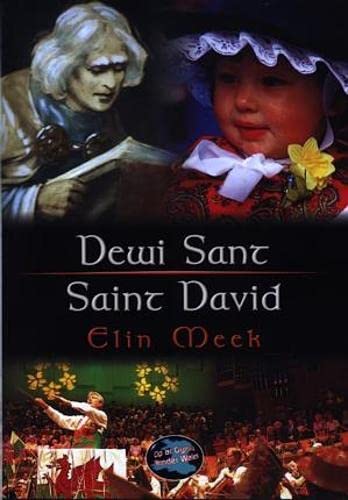
This is one of a number of books I have read about Saint David of Wales, or Dewi Sant. Most of the books I was able to find were for young readers. This is one of two by Steffan Lloyd written about this saint, the other is A Miracle for David. It follows this volume. I was unaware of this one until after finishing this the other reading its back cover.

This is a short picture book on Saint David of Wales, or Sant David Dewi, it was originally published in 201o with the second volume following in 2011. A few years ago I read Dewi Sant: St David Patron of Wales, by J.B. Midgley which started my interest in this saint. And my son found out this is the patron saint of his school Saint David’s in Waterloo, Ontario so I decided to look for more books about him. This one was harder to track down and as such is the sixth volume about David I have read this year to that further study.

Description on the back of the book:

“When a young boy restores his blind teacher's sight, everyone says it's a miracle. But it's not the first strange event in Dewi's life and it certainly won't be the last... 

From his birth on a storm-buffeted cliff to the healing of Paulinus, this is the story of the young Dewi Sant, patron saint of Wales.”

Even though this was a short picture book I highlighted a few passages while reading it. Some of them are:

“This story happened many years ago, not long after the last Roman soldier returned home from Britain.”

“When her baby was about to be born, Non was caught in the middle of a terrible storm on the clifftop at Caerfai. She was clinging to a rock when it was struck by a bolt of lightning. As the rock split in two, her baby was born, bathed in a sea of brilliant light. Capel Non (or Non's Chapel) was built in honour of Dewi's mother, and the ruins can still be visited today.”

“Although Dewi enjoyed learning new things, he liked nothing better than to be out in the fresh air, enjoying the wild and wonderful scenery near his seaside home.”

“This was a time when believing in God could be very dangerous. Irish and Anglo-Saxon attackers believed in different gods and saw nothing wrong in raiding churches for gold and treasure. Sometimes they killed the monks and set fire to the church buildings. These were difficult days for Christian believers.”

“Everyone agreed that it was a miracle that Paulinus could see again. It wasn't the first miracle in Dewi's young life and it certainly wouldn't be the last.”

“When he grew up, Dewi became an important bishop and built a monastery at
St Davids. Today it is the home of a cathedral which children visit when they come to Pembrokeshire on holiday. Dewi, or Saint David as he is often known, would have been so pleased to meet them!”

And like the other volume this one ends with this motto:

“Do the little things in Life.
Gwnewch y petau bychain.”

This was another fun read about this saint. I can easily recommend it for young readers. Nearly every other page is a full page illustration. And the drawings by Brett Breckon are well done. This story sticks to Saint David in his younger years. The two could easily be published together as a single volume. I am glad I went to the effort to track this down. It was another good book about Saint David for young readers. I can recommend the two volumes by Steffan for church, school, or home library. A good read that will challenge and inspire.

Friday, 4 August 2023

Saint Patrick's Purgatory The Sanctuary Of Station Island Lough Derg - Alice Curtayne

Saint Patrick's Purgatory: 
The Sanctuary Of Station Island Lough Derg
An Excursion into the Fifth Century
Alice Curtayne
The Clergy Review (1932)
Browne and Nolan, Ltd. (1933)
Anthonian Press (1935)

Saint Patrick's Purgatory:  The Sanctuary Of Station Island Lough Derg An Excursion into the Fifth Century - Alice Curtayne

I first encountered the works of Alice Curtayne in 2018, since then I have read works by her a titles of 25 times. I have been slowing tracking down all her volumes. If my research is accurate she wrote 22 books, 10 booklets or tracks, she was an editor and translator of 2 volumes. She also contributed numerous articles to various newspapers, magazines and religious publications. Some of her volumes I have read a number of times. And I read this one twice back to back. Most of Curtayne’s works never had North American editions. I have had a hard time finding them. Recently I discovered that the National Library of Ireland will scan out of print books for a price. I tracked down what I thought were two different volumes but it was the same text from two publishers both reprints. One was listed as Lough Derg (1935) and the other as Saint Patrick’s Purgatory (1933), however both were the same volume. I read them both and did a comparison and other than page size they are identical. It was disappointing to pay for scans of the same volume twice but I enjoyed it so much I read each edition. I have longed dreamed of doing the Camino but after reading this volume, I hope to someday do this if it is still available.

I have no description of dust jacket information from this volume. The first part if Curtaynes description of the pilgrimage. Following that are some descriptions of the sanctuary, and some of the indulgences. The sections in this volume are:

An Excursion Into The Fifth Century
St. Mary's Church, St. Patrick's Purgatory, Lough Derg.
The Picture of Our Lady Of Perpetual Succour.
Copy of Authentication
Prayer to Our Lady Of Perpetual Succour
Farewell Hymn to Lough Derg.
Pilgrimage of Lough Derg Devotional Exercises.

I highlighted several passages my second time through the volume. Some of them are:

“STATION ISLAND, in Lough Derg, County Donegal, the goal of Ireland's national pilgrimage, is a mere craggy knoll less than an acre in extent, set in a grey quiet lake, enfolded by a chain of low rolling mountains, barren, grey too, quiet as the lake they shield”

“One detail enhancing its antiquity is that the physical features of the landscape have remained absolutely unaltered through the centuries. Of course, there are new buildings on the island, of which I shall speak presently, but from all points the view is unchanged. Its aspect remains the same as in the fifth century. The eye still rests on all that Patrick saw.”

“The world appears never to have intruded. No town has grown up within view; nowhere on the landscape are there visible traces of man. Into this world of silver cloud, dark water and dim mountain, not even the railway has ventured its clatter and puff; as though fearing to dare, it stopped short four miles away, at Pettigo. The spirit of the ancients broods undisturbed over this charmed corner. No one is in a hurry here. Speed has no interest.”

“The whole pilgrimage is more instructive of Patrick than tomes of commemoration.
The Apostle truly belongs to it. One senses vividly at odd moments that he leads the way, not stiffly in episcopal robes and mitre as he is conventionally pictured, but striding in his white habit as Ethne and Fedelm saw him, his cloak fastened by the great brooch that he lost once in the vehemence of his gestures, tearing up all the heather to find it again.”

“The pilgrimage is strictly a three-day minimum. On the first day there commences the pressure of a rigid discipline probably beginning in hideous discomfort, but ending in such a miraculously tonic effect-physical, mental and spiritual-that it is never forgotten, and the pilgrim invariably returns for its renewal.”

“On each of the three days, fasting is enjoined.”

“The moment the boat pushes off, the Holy Island swings into view. The beautiful white Basilica crowning it appears to float on the water like a mirage or a dream.”

“In contrast with the sanctuary, the broad naves are flooded with the colour of gorgeous stained-glass windows under the galleries, each window containing a Station of the Cross by the late Harry Clarke.”

“The pilgrim next learns that at least one Station has to be made before the day's fast is broken, since a total of nine Stations are said during the period of residence on the island. A Station commences with a visit to the Blessed Sacrament in the Basilica. The pilgrim then walks to St. Patrick's Cross, made of rude iron and set on a stone column. It stands a: few paces from the church door. Kneeling before this, he recites one Pater, one Ave and the Creed.”

“The pilgrim then walks to St. Brigid's Cross which is one of Roman type, deeply incised on the left wall of the Basilica, and believed to date from the twelfth century. The block on which it is cut was taken from the wall of the old church that was demolished to permit the erection of the present Basilica. Kneeling here, three Paters, three Aves and the Creed are said. Then, rising, the pilgrim faces the lake with outstretched arms his back to the Cross, and three times renounces the World, the Flesh and the Devil.”

“He now ascends the craggy hillside where a mighty wheel of Paters, Aves and Creeds revolves inexorably. Spread out on this knoll are the remains of six beehive cells, or oratories. They are mire circles of stones, dedicated respectively to Saints Brigid, Brendan, Catherine, Columba, Molaise and Dabheoc. In the centre of each circle stands a bronze Crucifix, numbered in its order and named, so that following the exercise presents no difficulty.” 

“The endless files of pilgrims, walking, kneeling, dipping, murmuring, make a scene fantastic beyond all telling.”

“The method, in fact, produce a dual effect. It begins by stunning the mind like hammer blows on the head. But then the first stage of listless reaction has passed, the monotone of prayer is found to have the same result as that produced by chanting the Liturgy in an unvaried tone: the whole mind focuses on the words. When you arrive at saying the fiftieth Creed at Lough Derg, you really begin to take note of the word, and at the hundredth you begin to mean them.”

“I have said that simplicity is one of the precious characters of this pilgrimage. It is a penance, and every other idea is excluded. Each day of the pilgrimage one meal only may be had. This consist of dry bread which may be toasted, and black tea which may be sweetened.”

I hope those few samples give you a feel for this work. There is an extended scene of this pilgrimage in her novel House of Cards. In fact reading this a lot of it was familiar from the section in the novel. It appears the Pilgrimage is still available today and from the pictures on the Lough Derg site, it appears nearly as isolated and picturesque as Curtayne’s descriptions from nearly a century ago. I loved reading this little volume and from research finding out about this pilgrimage site that has been active for over 1500 years. This is an excellent little volume and if you can lay your hands on it I highly recommend it.  

Note: This book is part of a series of reviews: 2023 Catholic Reading Plan

For All reviews and articles about Alice Curtayne click here.

Books and Booklets by Alice Curtayne:
A Recall to Dante
Francis Ledwidge: A Life of the Poet
Lough Derg: St. Patrick's Purgatory
Patrick Sarsfield
Saint Anthony of Padua
St. Bernard Doctor of The Church 1933
The New Woman Transcript of a Talk
The servant of God, Mother Mary Aikenhead
The Story of Knock
The Trial of Oliver Plunkett
Twenty Tales of Irish Saints
...

Books Edited by Alice Curtayne:
The Complete works of Francis Ledwidge
...

Books Translated by Alice Curtayne:
Labours in the Vineyard by Giovanni Papin
...

Books Contributed to by Alice Curtayne:
...

Saint Patrick's Purgatory:  The Sanctuary Of Station Island Lough Derg An Excursion into the Fifth Century - Alice Curtayne

Saint Patrick's Purgatory:  The Sanctuary Of Station Island Lough Derg An Excursion into the Fifth Century - Alice Curtayne

Saint Patrick's Purgatory:  The Sanctuary Of Station Island Lough Derg An Excursion into the Fifth Century - Alice Curtayne


Thursday, 3 August 2023

Islam, Britain and the Gospel - John Coonan, John Wijngaards, and William Burridge - CTS Onefifties

Islam, Britain & the Gospel
John Coonan
John Wijngaards
William Burridge
Catholic Truth Society
ISBN 9781784695378
eISBN 9781784695095
ASIN B075FN1S7F
CTS Booklet CL11


Over the last several years I have read over 300 volumes from the Catholic Truth Society. In 2018 during the 150 Anniversary of the CTS they released special editions of 25 of their most popular and influential booklets, they were released as a series called Onefifties. And were released between late 2016 and early 2018 I believe. I have been slowly working my way through them. I have picked up all of them in eBook format. We are told about the series that:

“CTS Publisher Fergal Martin said, “1868 to 2018 we feel is something to celebrate. We have delved into our archives of thousands of titles and uncovered countless gems that celebrate the huge range and diversity of CTS publishing across a century and a half. The CTS archive represents a unique and valuable resource chronicling the changing concerns of the Catholic population of the British Isles and beyond over the last 150 years. There is something original and special here for everybody. Our hope is that readers can dip into the past – and find the present.”

The description of this volume is:

“In the last half of the twentieth century, mass immigration brought Islam, amongst other things, to Britain for the first time. These are some contemporary religious responses.

Mgr Coonan’s text is really a primer on Muslim belief and practice; it clearly notes the main differences between Christian and Muslim teaching (on the divinity of Jesus Christ and the nature of God, for instance) but does not explain why one might prefer one to the other, nor about different branches and styles of Islam.

William Burridge’s Our Muslim Neighbours adapts some of Coonan’s material. He gives a notably sympathetic account of the social reality of Islam, and portrays (for example) the place of women in Islam in a wholly positive light. He briefly discusses differences within Islam.

Neither of these texts criticises Islam, nor makes any apologetic effort on behalf of Christianity.

Our third text is more constructive. John Wijngaards, a well-known Scripture scholar, addresses head-on the common Muslim allegation that the Gospels have been deliberately altered to conceal the true nature of Jesus. He gives a clear and patient argument for the authenticity of the Gospel text.”

The three original volumes contained in this booklet are:

Islam Comes To Britain - 1979
Our Muslim Neighbours - 1987
Can We Trust The Gospels? -1985

They are interesting selections for the best of the CTS over the preceding 150 years, especially in a post 9/11 World, with the grooming gangs in England over the last few decades. Reading this in 2023 during massive Islamic riots in France that includes burning down many buildings including churches, and defacing of the National Holocaust memorial, make it hard to read without conflicting feelings.. Doing some research I do not believe that Coonan has any other published books, and Burridge only has the original volume, on the other hand I found over 20 volumes attributed to Wijngaards. Looking at his other titles there is nothing that appeals to me and just from the titles a few are circumspect. So again I cannot help but wonder at the inclusion of these in this collection. Was it a mere act of political correctness, at attempt at appeasement, or really just a mistake? I have read hundreds of books from the CTS over the last several years, and this is only the second one that theologically and politically I have questioned. 

The chapters and sections in this volume are:

Islam Comes To Britain 
     Mosques in London – and Rome
     Mohammed
     The Teaching
          The Qur’an
          Tradition (Sunna)
          Muslim Law (Shar’iah)
          The Credo of Islam
          God
          Angels
     Sacred Books
     Prophets
     Resurrection and Last Judgment
     Predestination
     Concerning Christ
     Concerning Our Lady
     The Practising Muslim
     The Profession of Faith
     Ritual Prayers
     Fasting
     Pilgrimage
     Almsgiving
     The Community of Islam
     Christian Mission and Islamic ‘Calling’, Da’wah
     Islam shares with Christianity belief in:
     Islam differs from Christianity:
     Bibliography

Our Muslim Neighbours 
     Submission to God
     The Five Pillars of Islam
     Muhammad
     The Message 
     The Muslim family
     The rights of women
     Christians and Muslims
     Islam shares with Christianity belief in:
     Islam differs from Christianity:
     Divisions in Islam
     Some useful names and addresses
     Books and pamphlets

Can We Trust The Gospels? 
     The origin of a myth
     The text of the Gospels
     The nature of the evidence
     Guardians of Tradition
     A new beginning

The two contrasting lists of similarities and differences are identical in the first two pieces it is:

Islam shares with Christianity belief in: 
1. One God;
2. The Last Judgment and future life;
3. The Resurrection;
4. The value of prayer, fasting and almsdeeds;
5. The virginity of our Lady;
6. Angels;
7. The existence of evil – the devil.
8. It gives a special place to our Lord as a prophet.

 Islam differs from Christianity: 
1. It does not accept the doctrine of the Trinity.
2. It rejects the Divinity of Christ.
3. It rejects His death on the Cross.
4. It rejects the claims of the Catholic Church.
Both religions are expansionist: the Catholic Church through mission, Islam through Da’wah, or calling.”

The first two pieces seem to be written by authors who have drank the kool-aid and I found them both so blatantly out of touch even for when they were written that it is hard to believe. The final piece does have some great sections on defending the validity of the Gospels. But the vast majority of the volume is just not worth the time.

If I was not committed to reading and reviewing all the books in the CTS OneFifties Series, I would have added this to the ‘did not finish’ pile early on, within the first few pages of the first two pieces. The third piece has some great merit but not enough to outweigh the other two. This is only the second volume I have read from the Catholic Truth Society, of over 360 book and booklets read that I cannot recommend, that I gave 1/5 stars. 

There are many great books in this series and from the CTS, this is not one of them!

Note: This book is part of a series of reviews: 2023 Catholic Reading Plan! For other reviews of books from the Catholic Truth Society click here.

For all reviews of books in the CTS Onefifties Series click here.


Wednesday, 2 August 2023

The Holy Man of Dublin or the Silence of Matt Talbot - Eily MacAdam

The Holy Man of Dublin or the Silence of Matt Talbot
Eily MacAdam
The Anthonian Press
Dublin (1938)
24p
 
The Holy Man of Dublin or the Silence of Matt Talbot Eily MacAdam

It has taken me a while to track down an actual copy of this volume. I had found online a couple different version of Matt Talbot by Eily MacAdam. This one is a few years after but has the exact cover as The Holy Man of Dublin: or the Silence of Matt Talbot by Alice Curtayne even though the subtitle is different and they were published three years apart. The subtitle and author only appears on the title page not even on the cover of the booklet. And it leaves me wondering if there are other booklets about him by the same title but by other authors. 

This was the six volume I have read about Matt Talbot and also the piece about Matt in the volume The Irish Way: Studies in Irish Sanctity from St. Patrick to Matt Talbot, edited by F.J. Sheed. I have tracked down and read a number of biographies about Matt now and still have one I have yet to read and one I have not been able to track down.   

The text of this original edition does not have the first three paragraphs of the online version, nor does it have a timeline, and prayer at the end. This is a very brief biography. It contains 6 illustrations; there are 24 pages of text. The illustrations and photos are the same ones that appear in the Curtayne volume but in a different order in this later work. I highlighted numerous passages my first time through this volume. Some of them are:

“One night he was not sober when he came home to that good mother and the upright father. He was caned, removed from the job and a position found for him in the bonded stores of which his father had charge. It was soon evident that Matt was going to be a heartbreak. He began to drink whiskey and his poor father had the terrible knowledge that somehow that whiskey was coming out of the stores of which he was in charge. More canings followed. Matt got himself a new job, after four years in which his father had tried every means to keep him straight. Matt became a bricklayer’s labourer. He was now seventeen and for several years he worked for different building contractors, and ultimately got a permanent job with Messrs. T. & C. Martin at the North Wall where for the rest of his life he worked loading carts, unloading timber, etc., until ultimately he became storekeeper.”

“He went home that day. His mother greeted him with a remark about his early return. “And you’re sober,” she added. He said nothing but when he had eaten his dinner he dressed himself. He was going to take the pledge, he said. We know nothing of what was working in his soul that day. With a gentle smile his mother bade him be sure he meant to keep itbefore he took it.”

“If we let ourselves forget that Matt Talbot was young when he entered on his fight we miss the thrill of it. Old men pray more easily. The body is less fond of activity, more biddable. Matt had to fight and pray for forty years. It became easier because his first prayers were for the gift of prayer and it was later given him. How logical was this unlearned man who had left school at twelve-and-a-half. Prayer could save him but he could not pray, so he asked for the gift of prayer. How logical too in his subduing of the body that had led him astray with its craving for drink. It was to be severely disciplined indeed until it became the eager servant of the soul, no longer dragging against the spirit but one with it in the service of God. That is surely how we see this man as he was in the later years of his life, so far as our human eyes can see. He fought. We think he won.”

“He had prayed, he told her, and he was not to marry. But her entrance had its value for us. Matt was not to marry. Nothing was to disturb the mode of life he had now settled, into. He was to continue the daily round of prayer and fasting, the austere days empty of comfort for body, filled with prayer, each day practically alike outwardly, but what of inward glory they brought is not known to us. Matt talked little of that life of his.”

“For sixteen years Elizabeth Talbot, widow, watched the manner of life of this son who had once been her cross. She woke at night sometimes in her bed in the corner of that humble room and fingering her beads watched quietly as Matt prayed, his arms outspread. At those times she saw his face filled with a light that made it other than the face she knew. She was not talkative, this pious woman. Few knew what went on in that poor room. Only the sisters, Susan and Mary (Mrs. Fylan and Mrs. Andrews) knew how their brother lived, and they, one gathers, were somewhat in awe of him.”

“Matt Talbot was to live alone once more, still carrying out his fixed programme of fasts and prayer, still distrustful of that body that had led him into drunkenness, still finding all his joy in God. Nineteen-sixteen came, Easter Week; while men fought, others looted, there was turmoil; the world of Dublin was upside down. But God does not change. A quiet figure made its way from Rutland Street to Dominick Street or Gardiner Street, caring little for military barricades. The same figure made its way to work and to Mass through all the alarms from 1918 to 1923. But the time was coming when the chain-laden body was to grow feeble, not perhaps because of its chains or its privations, but because man is mortal. The plank bed and the wooden pillow had led to partial deafness and one side of his face had become numb, when in 1923 he became ill and was admitted to the Mater Hospital in Eccles Street. He removed his chains before he went there.”

The section at the beginning of the online newer version of this booklet is:

“Since this booklet was first published, the fame of Matt Talbot, humble Dublin workman, has continued to spread far and wide. The crowds who visit the simple room in Rutland Street in which he lived for the last twenty-five years of his life, continue to grow and his vault in Glasnevin is a place of constant pilgrimage.

This is not the grave in which, in 1925, the body of an obscure Dublin workman was laid. That humble grave attracted many who heard of the holy life of Matt Talbot and came to seek his intercession.

Then, in 1952, with due ceremony, as part of the Apostolic Process in the Cause, the body was exhumed and laid in the O’Connell Circle, in a vault known as the Gentili Tomb, from the fact that the great Italian missioner of the Famine times, Fr. Aloysius Gentili, was buried there until the Fathers of Charity took the body to the mother-house in Omeath.

It is to the Gentili vault that the fervent pilgrims now make their way to seek Matt Talbot’s prayers and to pray that, if it is God’s will, the divine seal of miracle may be set on the Cause of the Servant of God.

Even in his life time, there were people who set great value on the prayers of the hardworking poor man, whose real work only became known to most people when Sir Joseph Glynn, (R.I.P.) heard the story of the charities and the fasts of the man who had collapsed and died in a city street—as many a worn-out old person has done before—and decided to write the life of Matt Talbot. The publication aroused great interest, which has never flagged.

Will it be ours to see the Church gratify the wishes of many by declaring Blessed the humble worker?”

And the section at the end is:

“In 1931, the Ordinary or Informative Process was begun by Most Rev. Dr. Byrne, the then Archbishop of Dublin, when witnesses, who had known Matt Talbot were questioned, on oath, on all relevant matters.

In 1937, Rome having meantime examined the evidence tendered, a Papal Decree was signed formally introducing the Cause of Matt Talbot.

Ten years later, in 1947, His Holiness the Pope signed the Latin Decree announcing that the Cause had been officially opened by the Sacred Congregation of Rites.

In 1948 followed the next step, the opening of the Apostolic Process in Dublin and the examination, on oath, of forty witnesses. This evidence was also sent to Rome.

In 1952, as part of the Apostolic Process, the remains were exhumed, in the presence of His Grace the Archbishop and many distinguished people and then sealed in a special double coffin and re-interred in the Gentili Vault in Glasnevin Cemetery.

Now it remains for those many who desire to see Matt Talbot honoured by the Church to pray that Rome may declare him “of heroic virtue” and that God may grant miracles through his intercession. Let us pray.

PRAYER

O Jesus, true friend of the humble worker, Thou hast given us in Thy servant, Matthew, a wonderful example of victory over vice, a model of penance and of love for Thy Holy Eucharist, grant, we beseech Thee, that we, Thy servants, may overcome all our wicked passions and sanctify our lives with penance and love like his. 

And if it be in accordance with Thy adorable designs that Thy pious servant should be glorified by the Church, deign to manifest by Thy heavenly favours the power he enjoys in Thy sight, who livest and reignest for ever and ever. Amen. 

(The above prayer, issued and approved by the Archbishop of Dublin, carries with it an indulgence of 100 days for each time recited.) 

PROTESTATION 
In obedience to the decree of Pope Urban VIII, the writer and publishers protest that all that is written in this book has no other authority or credit than such as is grounded on human evidence. Hence no expression or statement is intended to assume or forestall the decision of the Church. 

Nihil Obstat: 
Domnallus O’Lehane.

Imprimatur: 
JACOBUS JOSEPH, 
Episcopus Ardachadinn et Cluanennis."

This is another version of this powerful story. It can serve as an introduction to the man and his life. It is very moving. I am thankful I finally tracked down this one to read. And have read both the original edition and the expanded later edition. And I plan on reading more about Matt, his life and the cult of those with a devotion to him. It was like discovering a new friend in heaven, and one I wish my brother had encountered before he overdosed. In my research I only found one other volume by Eily MacAdam, a short volume on Teresa Neumann, Mystic and Stigmatist. This is another great little volume. And Matt is a man whose store is needed today, for those addicted to the drink and other substances. I can easily recommend this volume and many of the others I have read about Matt. I encourage you to look up this volume and give it a read.

Note: This book is part of a series of reviews: 2023 Catholic Reading Plan!

Books about Matt Talbot:
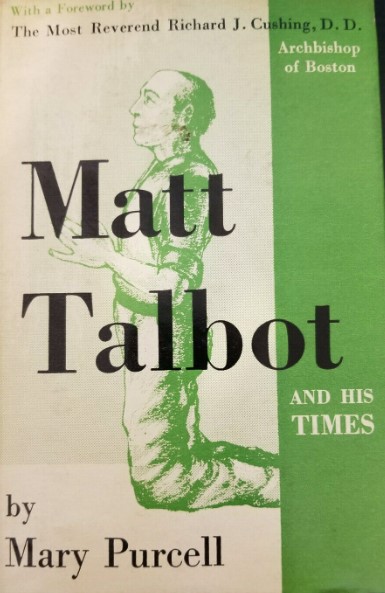
Matt Talbot and His Times - Mary Purcell
Matt Talbot: His Struggle, His Victory over Alcoholism - Susan Helen Wallace 
Matt Talbot - Xavier Carty 
Spotlight on Matt Talbot  - Edward O'Connor, S.J.
Matt Talbot - Simon O'Brynne 
The quest for Matt Talbot - Philip Rooney 
We knew Matt Talbot - Albert H Dolan
Matt Talbot - James F. Cassidy. 
An address to Pope John Paul II from the Parish of Matt Talbot, The Worker. 
Matt Talbot : the Irish worker's glory - James Francis Cassidy 
Matt Talbot - Albon White 
The Story of Matt Talbot - Malachy Gerard Carrol

Books by Eily MacAdam:
Teresa Neumann, Mystic and Stigmatist
...

The Holy Man of Dublin: or the Silence of Matt Talbot - Alice Curtayne


Tuesday, 1 August 2023

The Way of the Cross According to Luke - Father Eugene LaVerdiere, S.S.S.

The Way of the Cross According to Luke
Father Eugene LaVerdiere, S.S.S.

The Way of the Cross According to Luke - Father Eugene LaVerdiere, S.S.S.

During Lent in 2022 our parish did On the Way of the Cross with Saint Paul by Eugene LaVerdiere, S.S.S. and it was excellent. During research I found that Father LaVerdiere also wrote this Station and also ones according to each of the other Gospels. I was able to order 1 copy of each from Emmanuel Publishing. This was the third I have done and they are excellent. I try and pray a Stations each Friday of the year, and I strive to pray a Stations each day during Lent. The stations written by Father Eugene LaVerdiere, S.S.S., are:


I do not recount encountering the works of Father Eugene prior to that first Stations. But having look at the list of volumes he published I have added several to my wish list. I discovered that Father Eugene LaVerdiere, SSS, was a distinguished lecturer at Fordham University in New York and an adjunct professor at the Catholic Theological Union. He published numerous books and articles, he published works on Scripture on Luke from the New Testament Message series, The Eucharist in the New Testament and the Early Church, and The Beginning of the Gospel: Introducing the Gospel According to Mark Volumes 1 and 2. He was also the senior editor of Emmanuel magazine. The publishing company that produces this and the other Stations composed by him. The description of this volume is:

“Lukes’ Gospel tells the story “of the events that have been fulfilled among us, just as those who were eyewitnesses from the beginning and ministers of the word have handed them down to us” (1:1-2). As the early Christians met resistance and internal difficulties, the image of Jesus, ever loving and forgiving, became blurred. We too, will be strengthened in faith and love through Luke’s Way of the Cross as we follow Jesus to Jerusalem and the place of crucifixion.”

A sample station is:

Third Station
Leader: Third Station: Jesus Falls the First Time
Cross bearer: We adore you, 0 Christ, and we praise you.
All: Because by your holy cross you have redeemed the world.
You may be seated.

Leader:
Jesus fell. The Son of the Most High, God's chosen one
for the throne of David (1:32) fell. Our Savior ( 2: 11)
fell in the person of his followers, too weak to stand
when faced with rejection. When they asked if fire
might be called down from heaven on those who
opposed them, Jesus rebuked them (9:54~55). Rising,
they continued with him on the journey to God (9:57).

Simeon:
It was such a short time ago I took him in my arms and
blessed God. I had waited so long, certain I would not
die before seeing the Messiah of the Lord. Little did I
realize what would be asked of God's Messiah and his
followers. "Master, you may let your servan t go in peace,
according to your word" ( 2 : 26~ 29).

Anna:
I still hear the echo of Simeon's canticle, strong and
vibrant. I hear too his message to Mary: "This child is
destined for the fall and rise of many in Israe l, and to be
a sign that will be contradicted ... so that the thoughts
of many hearts may be revealed" (2:34-35). All those
years of prayer and fasting (2:37). They prepared me for
this moment.

Leader: My eyes have seen your salvation,
All: which you prepared in sight of all the peoples.
Luke 2:30-31

(Please stand.)

Leader: Let us pray.
All:
Lord Jesus,
you fell every time your disciples fell.
And they fell over and over again,
as we fall today.
But you never abandoned them,
and you never abandon us.
Help us to rise
when we stumble and fall through impatience.
For this we pray to you, our Lord and Savior,
living and reigning for ever and ever.
Amen.”

I hope that sample station gives you a feel for this version of this devotion. This is another excellent stations of the cross. I loved praying in on my own and would greatly enjoy doing it at church with a few different people playing the different roles. It was a great tool to pray and reflect upon it on my own. I look forward to reading the other stations by Father Eugene and some of his other books. I know I will return to these stations often. I just wish this, and other volumes were available electronically, with my dual form of dyslexia I prefer eBooks so I can change the font, font and page colour to make books more accessible and easier to read.

This is another great resource for personal, family, or parish use. It is an excellent version of this devotion; I can easily recommend this volume.  


Note: This book is part of a series of reviews: 2023 Catholic Reading Plan

For all other reviews of Stations of the Cross click here.

Books by Eugene LaVerdiere, S.S.S.:
A Church for All Peoples: Missionary Issues in a World Church
Acts of the Apostles
Dining in the Kingdom of God: The Origins of the Eucharist According to Luke
Fundamentalism: A Pastoral Concern
Invitation to the New Testament, Epistles II
Luke New Testament Message 5
The Annunciation to Mary: A Story of Faith, Luke 1:26-38
The Beginning of the Gospel: Introducing the Gospel According to Mark - Volume 1 (Mark 1-8:21)
The Beginning of the Gospel: Introducing the Gospel According to Mark: Volume 2 (Mark 8:22-16:20)
The Breaking Of The Bread: The Development Of The Eucharist According To The Acts Of The Apostles
The Eucharist in the New Testament and the Early Church
The Gospel of St. Luke
The New Testament in the Life of the Church: Evangelization, Prayer, Catechetics, Homiletics
The Psalms
The year of Luke
When We Pray: Meditation on the Lord's Prayer

Stations of the Cross:

The Way of the Cross According to Matthew- Father Eugene LaVerdiere, S.S.S.

The Way of the Cross According to Mark -  Eugene LaVerdiere, S.S.S.

The Way of the Cross According to Luke - Father Eugene LaVerdiere, S.S.S.

The Way of the Cross According to John -  Eugene LaVerdiere, S.S.S.

On the Way of the Cross with Saint Paul Eugene LaVerdiere, S.S.S. Cover