Showing posts with label CristeroWar. Show all posts

Tuesday, 20 June 2023

Mexican Martyrdom - Wilfrid Parsons - Firsthand Accounts of the Religious Persecution in Mexico 1926-1935

Mexican Martyrdom
Firsthand Accounts of the Religious Persecution in Mexico 1926-1935
Wilfrid Parsons
ISBN 9780895553300
eISBN 9781505104301
ASIN B010CI82CM
1936

Mexican Martyrdom - Wilfrid Parsons

I will admit I was expecting something very different from this volume. I will be honest I had not looked closely at the book details. But the title and cover immediately captured my attention. I have read a number of volumes around the topics of the Cristero’s and Cristero War. Only after I got reading did I realise that this volume was written in part as a first-hand account and in part as direct primary research at the time. The description of the volume states:

“Mexican Martyrdom is a series of true stories of the terrible anti-Catholic persecutions which took place in Mexico in the 1920s. Told by the Jesuit priest, Fr. Wilfrid Parson, these stories are based upon cases he had seen himself or that had been described to him personally by the people who had undergone the atrocities of those times. Though most contemporary readers don t know it, a full-fledged persecution of the Church, with thousands of martyrdoms, took place in modern times, just south of our own border including the famous Jesuit priest, Fr. Miguel Pro, was martyred before a firing squad during this persecution. Between the conquest of Mexico by Cortes in 1521, and the Mexican Independence from Spain in 1821, Spain created in Mexico a great Catholic civilization to rival that of any nation in Europe. But when the Great Mexican Revolution began in 1810, this flourishing country began to wither and die. That Revolution was not to end until 1928, with the end of the brutal rule of President Plutarco Elias Calles, though in many ways it continues still. The heroic resistance of Mexican Catholics during this persecution is a great inspiration to Catholics today.Mexican Martyrdom proves that hatred for the Catholic Church exists even in our times and can still flare into open and bloody persecution in this so-called enlightened age.”

Another description states:

“From 1910 to 1917, Mexico underwent a turbulent revolution that turned the country upside down. The new 1917 Constitution sought to destroy Catholicism and subvert religion in the populace, with disastrous consequences. What followed in the 1920s and '30s under the atheistic, communist government of Plutarco Calles was a series of harsh, bloody persecutions and a counter-revolution by Catholics, collectively titled the Cristero War. 

Mexican Martyrdom is a collection of true stories from these terrible anti-Catholic persecutions. Told by Jesuit Fr. Wilfrid Parson, these stories are based upon cases he had seen himself or that had been described to him personally by the people who had undergone the atrocities of those times. These pages are filled with intense stories of those who chose to die rather than forsake Christ the King. 

The Cristero martyrs bear witness to the radical willingness we all must share to lose our own blood in profession of the Christian Faith. In our own times, when Christ the King is discarded and derided, such persecutions as happened only a century ago in Mexico do not seem far off from us. We must learn to be prepared like the martyrs of these pages. Riveting and haunting, Mexican Martyrdom will feed your faith with the blood of the Mexican martyrs. 

­¡Viva Cristo Rey!”

Both the beginning and the ending of this volume mention Blood-Drenched Altars—A Catholic Commentary on the History of Mexico, by Most Reverend Francis Clement Kelley. I have added that to my list of future books to read on these subjects. 

The chapters in this volume are:

Publisher's Note
Foreword
Contents
Dilemma
Challenge
Defiance
Father Pro
Hidden Shepherds
Veiled Heroines
Three Months
Solution?
Meditation At Tepozotlán
Political Interlude
Picking Up The Threads
Splendor Before The Storm
"I Will Strike The Shepherd . . . "
Catacombs
Deadlock
A Rivalry
"There Is No God"
Kaleidoscope
"De Profundis"
Doom And Verdict
Decency Says Farewell
Epilogue

The end of the Publishers Note states:

“Almost all of today's reference books and most history books about Mexico paint the Spanish colonial period, 1521 to 1821, as an age of ignorance, repression, poverty, slavery and general deterioration of culture, but the era of the Revolution, 1810 to the present, as one of progress, enlightenment, freedom and prosperity. Blood-Drenched Altars proves just the opposite to be true, and Mexican Martyrdom is a strong exclamation mark in support of that thesis. Let the reader peruse these two books and decide for himself on which side lies the truth.”

And the forward begins with:

“This book is an attempt to illustrate by a recital of facts the nature of a struggle that has gone on in a neighboring country for the past ten years. It is not a controversial work, still less is it a work of scholarship on the Mexican situation. It is not an historical account of all Mexican events. It is designed to give the reader as vivid a picture as possible of how the Mexican people have lived during that time, particularly if they took sides with the Church in the struggle. It is frankly written with sympathy for these Mexicans, though a sincere effort has been made to understand and to present the point of view of those who are opposed to them.”

This volume was the May read for the Goodreads Catholic Book Club, I had voted for it a few times and am glad to have finally read. I only highlighted a couple of passages while read it. They were:

“This was the central headquarters of the Catholic labor movement in Mexico. Now the official Mexican labor movement is perhaps the most publicized feature of the Revolution. Its affiliation with the American Federation of Labor, its achievements in the Carranza movement dating from the Casa del Obrero Mundial and the brothers Magon, offshoots of the I. W. W. in the United States, the favor it enjoyed from the dictator Calles, all gave it a preponderating influence in public affairs. No politician dared to offend it, and it is generally true that it was at one time the very heart of the Mexican Revolution. It threw itself wholly into the war against religion. It was supreme, though its leader, Morones, was at the time in eclipse, following the murder of Obregon.”

“As he knelt there, the American could not help but think of all the people in the State who could not hear Mass, and who had not heard it for two or three years, and who might not for many years to come. Would their faith hold out? It had not in England, with whose conditions in penal days the present state of Mexico had such striking resemblances. And he resolved to tell the story of Mexico everywhere, so that the power of world public opinion might force the rulers of Mexico to abate their persecution.”

The book is not ordered in a linear fashion. And often the author states some was covered previously in chapters xx or will be covered in the future in chapters xx. I found that a little hard when reading it. A couple of times I had to either jump ahead and read, then reread when I got to that chapter, or jump back. It is something I struggled with a bit. 

The book is an excellent expose of the times. A clear history of what was happening nationally and even regionally in regards to these persecutions and anti-Catholic laws. It was great to have read it and add it to my knowledge about this time and these events. 

Note: This book is part of a series of reviews: 2023 Catholic Reading Plan

Other books about Catholic Mexican History:
The Mexican Crisis Its Causes and Consequences - Rev. Michael Kenny, S.J., Ph.D.
Blood-Drenched Altars: A Catholic Commentary on the History of Mexico - Francis Kelley
Saints and Sinners in the Cristero War: Stories of Martyrdom from Mexico - James Murphy 


Tuesday, 22 November 2022

Padre Pro Mexican Hero - Fanchon Royer - Portraits in Faith and Freedom

Padre Pro Mexican Hero
Portraits in Faith and Freedom
Fanchon Royer
James J. Fox (Illustrator)
Bethlehem Books
ISBN 9781932350586


I was recently asked if I had ever read and reviewed any books in this series, at the time I had not. I read Joseph the Huron by Antoinette Bosco first and loved it so much I have now read this one and already have 2 others in my to be read pile. Several volumes in the series grabbed my attention. I was asked by someone who had enjoyed my reviews of the Encounter the Saints books by Pauline Books and Media, and who was following now my reviews on the Vision Books for Young Readers now from Ignatius Press to read and review come books in this series. I am very thankful they did, my plan is to read about 1 a week until I have finished the 18 currently available, I hope by then there will be more volumes in the series available. I will note these versions are not available on Amazon, but are very reasonable from the publisher in print or eBook editions. This volume was originally published in 1963 by P. J. Kenedy & Sons. This edition from Bethlehem Books is revised, it has added maps, and other additional material was released in 2016. It is part of the Portraits in Faith and Freedom series and is part of Set 3 Spanish And Mexican Heroes. Over the last few years I have read a few volumes about Catholics in Mexico specifically in and around the time of the Cristero War, and this one has fueled my desire to read even more about those times. Based on how good the two volumes I have read so far have been, I plan on reading all in the set and likely all in the whole series.

The description of this volume is:

“There are two doorways into the life of the gallant Mexican priest Padre Pro. One doorway begins at the end, during an intense period of anti-Catholicism in Mexico, in the high public drama of a daring young priest’s use of disguises and audacious risks to secretly carry communion to the faithful, with his subsequent capture and courageous death. The other doorway starts in the heart of Miguel’s closely knit, devout family. Born in 1891, by fifteen, Miguel is at once a beloved son and a mischievous rascal. Rather than attending school far away from the affectionate society of his sisters and brothers, he assists his father, an agent assigned to a remote mining camp in Zacatecas. His family begins to worry when at twenty the generous, yet often moody, young man still has no idea about the direction his future should take. Then he knows. Miguel’s journey to the priesthood is plagued by difficulties and setbacks that temper and transform the mischievous youth into Padre Pro, a man ready to lay down his life for Christ his King. Blessed Miguel Pro dies before a firing squad in Mexico City in 1927, this last unforgettable triumph-in-death photographed for posterity by his very enemies. Padre Miguel Pro was beatified in 1988 by Pope John Paul II.

Mexico, 1891-1927.”

The chapters in this volume are:

1. The Boy Who Didn’t Go to School
2. The Brewing Storm
3. Farewell to the Mines
4. The Decision
5. Troubled Novitiate
6. The Teacher
7. Perilous Mission
8. Return to Danger
9. The Bomb That Backfired
10. A Prize for Plutarco
11. “Viva Christ the King!”
12. Mexico Hails Her Martyr 
About the Author
Historical Insights by Daria Sockey

At the beginning of the volume are several sections they are:

Web Resources
Maps

And at the end of the volume:

About the Author
Historical Insights by Daria Sockey
List of titles in Portraits in Faith and Freedom

Those sections at the beginning of the book are excellent for helping young readers, for use in the classroom or for home schooling. The downloadable resources are top quality. And the additional information at both the beginning and end of the story are greatly beneficial for readers of all ages. There are several subjects in this series that I am familiar with a few I have read a number of books about. This was my first encounter with Padre Pro, in fact because of my dyslexia I first read the title as Padre Pio, but reread it after reading the subtitle of Mexican Her . I devoured this volume over a few sittings. I just could not put it down. It is a story of the faith and devotion that grew from a rocky start. It is a story of great faith, devotion and sacrifice. 

The writing is engaging, and the biography is wonderfully written. It was well researched,The Historical Insights section at the end of the volume is a great starting point for young readers. It is a wonderful story of faith, commitment to family, friends, and service and. In the Historical insights section, we are informed that:

“In the end, the hatred of Calles & company for the Catholic faith wasn’t due to the existence of a fat bishop or two, nor of perceived historic wrongs. It was that the Catholic Faith, even without material or political advantages, was still firmly ingrained in the culture of Mexico, and forever written in the hearts of the people. Poor Calles! He could not see what the people saw: that despite the Church’s human failings, Jesus Christ—poor, despised and suffering with them—was incarnate there. Jesus Christ, who was granting them dignity and hope in a way that no political leader ever could, because He, the God of Heaven, had once come to earth to be one of them. And continued to come to them in the Blessed Eucharist, so long as courageous priests like Miguel Pro were in their midst. It is no wonder that the people of Mexico, poor and powerless as they were, could endure all things until the powers that be became too tired to fight back any longer.”

This book, and series is attempting to bring back into print a volume that is a great read for tweens and teens today. It is also another important read for us older folks. The example of Padre Pro’s faith and growth is inspiring. This is a volume any Catholic would benefit from reading and it leaves you desperate to read others in the set and the series. Another excellent read that I can easily recommend.

Note: This book is part of a series of reviews: 2022 Catholic Reading Plan


Books in the Portraits in Faith and Freedom Series:
Set 1: Founding Voices For Freedom In The U.S.
Charles Carroll and the American Revolution - Milton Lomask
Priest, Patriot and Leader: The Story of Archbishop Carroll - Eva K. Betz
Mathew Carey: Pamphleteer for Freedom - Jane F. Hindman

Set 2: Polish Advocates Of Hope And Nationhood
The Lion of Poland: The Story of Paderewski - Ruth and Paul Hume

Set 3: Spanish And Mexican Heroes
The Sea Tiger: The Story of Pedro Menéndez - Frank Kolars

Set 4: Women Of Faith And Courage
Star of the Mohawk: Kateri Tekakwitha - Francis MacDonald
Margaret Haughery: Bread Woman of New Orleans - Flora Strousse
The Door of Hope: The Story of Katharine Drexel - Katherine Burton

Set 5: Missionaries On The Frontier
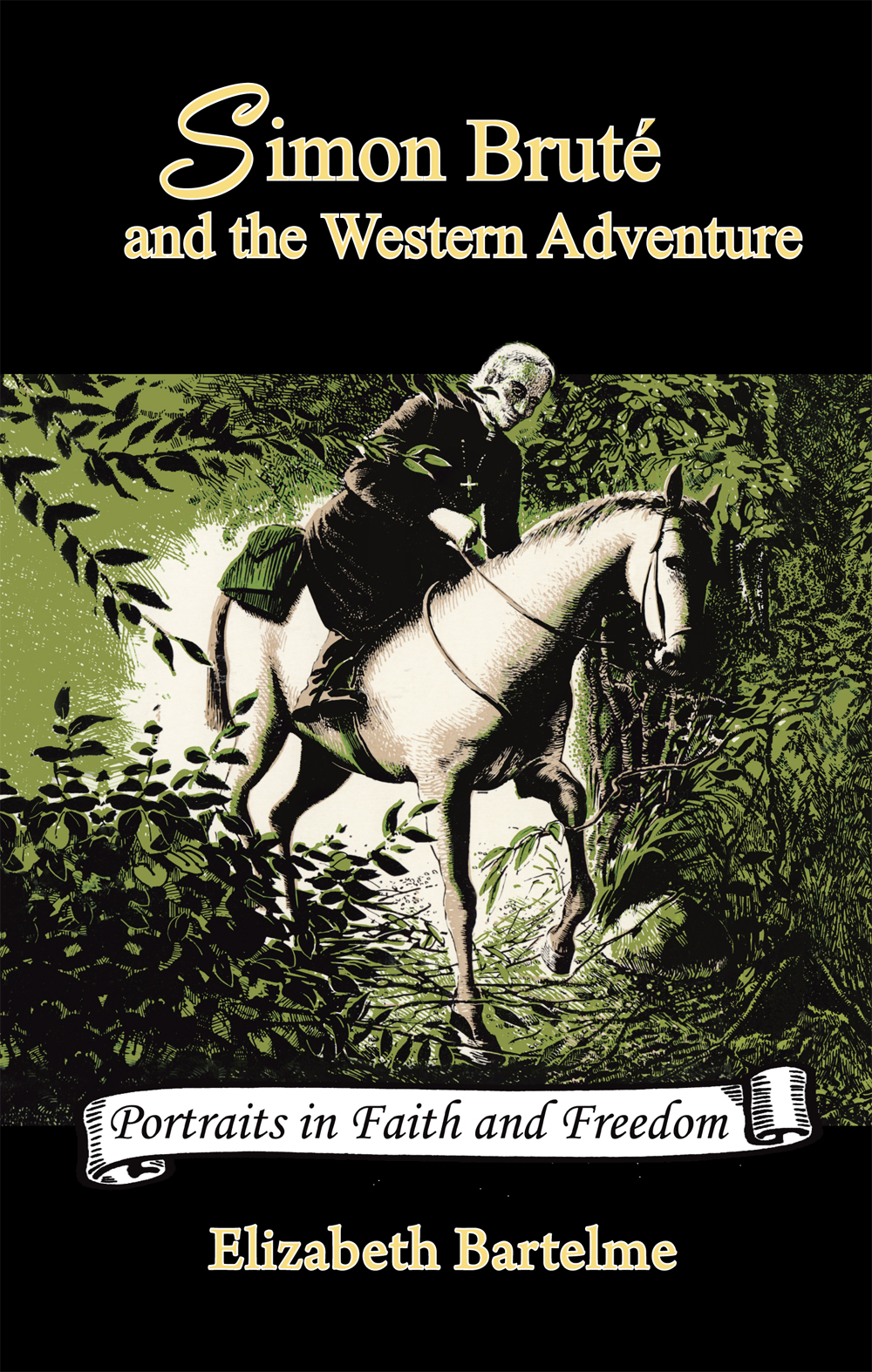
Simon Bruté and the Western Adventure - Elizabeth Bartelme
Frontier Priest and Congressman: Father Gabriel Richard, S.S. - Brother Alois
Black Robe Peacemaker: Pierre De Smet - J. G. E. Hopkins

Set 6: New York Ambassadors Of Brotherhood
Pierre Toussaint: Pioneer in Brotherhood - Arthur and Elizabeth Sheehan
John Hughes: Eagle of the Church - Doran Hurley
Alfred E. Smith: Sidewalk Statesman - William G. Schofield

Other books about Catholic Mexican History:
The Mexican Crisis Its Causes and Consequences - Rev. Michael Kenny, S.J., Ph.D.
Blood-Drenched Altars: A Catholic Commentary on the History of Mexico - Francis Kelley
Saints and Sinners in the Cristero War: Stories of Martyrdom from Mexico - James Murphy 


Sunday, 16 October 2022

Rebel Mexico - Edward Lodge Curran - International Catholic Truth Society

Rebel Mexico
Edward Lodge Curran
International Catholic Truth Society
1935


This is the second of three booklets from the same time, and on the same subject . I stumbled across this and a couple of other titles from The International Catholic Truth Society while doing research for a review of a different volume about the Cristero Wars. These three volumes were published between 1927 and 1935 the three I found on Open Library were:

Catholic Mexico - Edward Lodge Curran
Rebel Mexico - Edward Lodge Curran
The Mexican Crisis Its Causes and Consequences - Rev. Michael Kenny, S.J., Ph.D.

And this is the direct companion to, Catholic Mexico, which was published the year before this one. The description of this booklet:

“A clean and forceful account of the last hundred years of revolution, tyranny and oppression in Mexico.

Three hundred years of Catholic influence undone by usurpers of government. Mexico changed from a civilized country into a land of ignorance, poverty and degradation.

A reading of this pamphlet together with Catholic Mexico will make your knowledge of Mexican history complete.”

Reading this volume was fascinating. The two volumes are clearly meant to be read together. This one is a little clearer. Less wandering in the thought and material presented. Thopught at times it still goess off track with a look at the last 100 years in Mexico, comparison Mexico to the Us, and even the Irish under British rule and oppression. He covers a lot in such a short volume. This ones seems to be less all over the place. This volume would never be published today, and as such it offers a great insight. I highlighted many passages. I will share them here to give a feel for the volume:

“THIS pamphlet, written as a supplement to "Catholic Mexico," indicates the cause and suggests the remedy of a century of persecution in Mexico.

The Mexican people have been robbed of their right to worship God and train their children in accordance with their conscience."

The author is pleased to dedicate this pamphlet to the day when tyranny in Mexico shall be ended and when the Mexican people, who love their God and their Church and their country, shall be permitted to live in peace with themselves and with all humanity.”

“MEXICO is Catholic. Her churches and shrines are impregnated with the suns of centuries. Her Virgin of Guadelupe, often wrapped in the smoke of battle, often marred, as happened recently, by the hands of the blasphemer, has never lost her hold upon the minds and imaginations and hearts and souls of the Mexican people, who honor the Virgin because she is the mother of Christ, who is God. No persecution of the past one hundred years has been able to extinguish the indelible character of the faith of Christ, left as an eternal deposit by the flowing and ebbing waters of Holy Baptism. Mexico was Catholic. Mexico is Catholic. Mexico shall remain Catholic, if we, who are likewise Catholic, shall but raise our voices and our prayers in her defense.”

“Mexico is still Catholic Mexico in soul and heart and mind and substance. Rebel Mexico is a madness and a malady, a disease in the brain of those who call themselves the National Revolutionary Party, whose regime has been a reign of terror. For the past one hundred years in general and for the past twenty-five years in particular Mexico has been in the greedy grasp of a military and tyrannical minority. Successful presidents have been first successful generals. Bullets and not ballots have controlled the presidency.”

“One and only one judicial condemnation can follow such a verdict. The present military tyranny in Mexico must go. It must yield to the rights of Mexicans as human beings. It must succumb to an enlightened and charitable public opinion throughout the world.”

“It is not only the rights of the Church as an organization that are at stake today. The rights of humanity likewise hang within the balance. The Mexican people have a greater right to rise against their oppressors than the Serbians had against the Austrians in 1914; than the American Colonies had against England in 1776; than the French nation had against the Bourbons in 1789; than the Irish had against England; than the Balkan nations had against the Turks. Their failure to exercise that right for a hundred years has not been due to cowardice. It has been due to the Christlike control that the Catholic Church has been able, at terrific odds, to exercise in their regard.”

“In the first place, generation after generation, and law by law, the Church's public influence on the life of Mexico has been taken away until today she is denied the status of a legal entity and prevented from performing such functions as are purely spiritual and religious. Thus, in the year 1932, autocratic and plutocratic, Calles who controls the destinies of the Mexican government, no matter who occupies the presidency, caused a law to be enacted for the Federal District of Mexico (corresponding to our District of Columbia) which reduced the number of priests to 25 for 1,300,000 Catholics. Other States of the Republic of Mexico were quick to follow his example.”

“Hence, less than 500 priests are permitted to minister to 14,000,000 Catholics in Mexico. No priest at all is allowed in the state of Chiapas, where 320,000 Catholics reside; or in the state of Sonora where 300,000 Catholics reside; or in the state of Vera Cruz where 1,000,000 Catholics are robbed of the rights of conscience and humanity. In no state is the Church allowed to train future candidates for the priesthood, so that, even while we write, the number of five hundred priests may have been permanently lessened through natural death or through the bloody sword of persecution which respects neither sex nor age nor home nor sanctuary nor sanctity. For· bidden to organize or direct her priests, who in turn are forbidden to even instruct the children in the home, the Church is on the verge of institutional as well as legal extinction in Mexico.”

“Robbed of her priesthood, the Church has likewise been robbed of her property and possessions. Like Christ she is to have no place of refuge, not even a rock whereon to lay her weary head.”

“That is the policy and the persecution behind the instructions of the Attorney General, Senor Portes Gil, with regard to the nationalization of church property. According to these official instructions all property which has served as (a) the residence of a bishop or priest; (b) a seminary; (c) an asylum; (d) a school conducted by a religious association; (e) a convent; (f) a place of worship; (g) and all objects related to the administration, propaganda or teaching of a religious cult must be absolutely transferred to the ownership of the nation, whether formerly owned by religious individuals and organizations or by private persons. In October 1934, the Mexican Supreme Court, as slavishly controlled and manned by the National Revolutionary Party as the Mexican Legislature or the Governors and Legislatures of the individual Mexican States, upheld the rulings of the Attorney General in a test case that was subjected to its unfair and unwise and unholy and ungodly judicial (?) decision.”

“Again in 1917, when the Constitution of Queretaro, which specifically outlaws religion, was foisted upon a religion loving people by a military tyranny, the Bishops of Mexico contented themselves with the following protest and remarks: "We have no desire to raise any political question. With the little freedom now permitted us, we defend the religious liberty of the Christian people of our country against an attack on religion. We issue this statement in the simple performance of the duty we have to defend the rights of the Church and the liberty of religion."”

“In the same year, President Calles issued the enabling decree which translated the anti-religious provisions of the Constitution into actuality. The legal individuality of the Catholic Church and of every other Church was swept away. The Church was forbidden to exercise any control over her clergy. Religious education was outlawed and the number of priests, as has already been illustrated, fixed and limited for a given geographical territory by the Federal Congress and the governments of the individual states.”

“Despite the petty encroachments that were made from time to time by one Mexican President after another upon the previous rights and privileges of the Church, it was not until the year 1857, and the infamous constitution promulgated in that year by President Ignacio Comonfort, that the military tyranny in Mexico formally and constitutionally declared itself the avowed and open enemy of the Church.”

“In May, 1873, every religious rite or demonstration outside a church building was forbidden. By the same law all ministers of religion were forbidden to wear in public any special dress or insignia of their sacred calling.”

“Here is a condition of affairs that should demand interference, by way of protest at least, on the part of the League of Nations. Here is a condition against which every decent citizen in the United States and every religion, Catholic, Protestant or Jewish, should protest. Here is a condition against which every liberal throughout the world should raise his voice, if the voice of liberalism be enlightened by Christian principles and sincere. Here is a condition against which every Catholic throughout the world must raise his voice in an endless petition of prayer. Mexican Catholics are united with American Catholics and with Catholics everywhere in a unity of faith and morality and sacrament and spiritual authority. Mexican Catholics are a great and noble and gracious part of the mystical body of Christ. The whole body must be interested and alarmed when a part of the body is persecuted and poisoned. In justice to the Church and in defense of the rights of humanity these facts must be placed before the minds and hearts of civilization everywhere.”

“Nor has the United States always been so delicate and bashful in her dealings with Mexico herself. The tiniest school boy knows that it was Woodrow Wilson who interfered in the struggle between Victoriano Huerta, accused of the murder of Francisco Madero who had overthrown Porfirio Diaz, and Venustiano Carranza, whose supporters later gave to Mexico the iniquitous constitution of 1917. By forbidding the shipment of arms to one rebel general and by permitting the shipment of arms to another rebel general the United States has interfered in the internal policies of Mexico again and again during the past twenty-five years.”

“The American government has always been quick to interfere for the sake of American business.”

“2. Justice demands that an American Ambassador be sent to Mexico who knows the history of Mexico and who will not, by word or deed or silence, create the impression that the Government of the United States is in sympathy with savagery.”

“5. Justice demands that the press in America give adequate space to the presentation of the rights of humanity in Mexico and to the constant daily violation of those rights by the brutal soldiery of Calles and his minority. Silence in a press that roared its denunciation of Spain in Cuba and of Germany in Belgium and of the Boxers in China, is the mark of editorial cowardice.”

“Our government has antagonized the Mexican people in the past because of its materialistic interference in their affairs. Now is the time to win back their love and respect and gratitude. Our relations with those beyond the Rio Grande can be as peaceful and as mutually beneficial as are our relations with those beyond the Saint Lawrence and the Great Lakes and the thousand miles of unguarded border, if we but recognize and proclaim to all the world the following verdict, in the case of the Mexican people against the Mexican government:”

“The wrongs of Mexico are born of the Constitution of 1917 and the passage of laws against freedom of conscience, of worship, of speech, of writing, of assemblage and the bloody execution of those laws by a political and military minority known as the National Revolutionary Party. Therefore that constitution must be revised; those laws must be repealed; and that party must go!”

This was an intriguing read. It really captures a very specific point in history and specifically Catholic Relations to the government in Mexico and The US relations to Mexico. As such I believe this is an interesting historical document. I am thankful I read it and the companion volume. And they add some interesting pieces into my growing knowledge of Mexican Catholic History.  

Note: This book is part of a series of reviews: 2022 Catholic Reading Plan! For other reviews of books from the Catholic Truth Society click here. This volume is from the International Catholic Truth Society, not the Incorporated Catholic Truth Society in the UK. 

Other books about Catholic Mexican History:
The Mexican Crisis Its Causes and Consequences - Rev. Michael Kenny, S.J., Ph.D.
Blood-Drenched Altars: A Catholic Commentary on the History of Mexico - Francis Kelley
Saints and Sinners in the Cristero War: Stories of Martyrdom from Mexico - James Murphy 


Tuesday, 11 October 2022

Catholic Mexico - Edward Lodge Curran - International Catholic Truth Society

Catholic Mexico
Edward Lodge Curran
International Catholic Truth Society
1934


Reading this book was a surprise on many levels. I stumbled across this and a couple of other titles from The International Catholic Truth Society while doing research for a review of a different volume about the Cristero Wars. These three volumes were published between 1927 and 1935. The three I found on Open Library were:

Catholic Mexico - Edward Lodge Curran
Rebel Mexico - Edward Lodge Curran
The Mexican Crisis Its Causes and Consequences - Rev. Michael Kenny, S.J., Ph.D.

The description of this booklet:

A brief, clear and forceful account of three hundred years of Spanish rule and Catholic influence in Mexico (1524 to 1824).

A reading of this pamphlet together with Rebel Mexico will make your knowledge of Mexican history complete.”

Reading this volume was fascinating. The author seems to do a mix of promoting 300 years of good things under Catholic in Mexico, Bashing the last 100 years in Mexico, comparison Mexico to the Us, and even the Irish under British rule and oppression. He covers a lot in such a short volume. But also seems to be a little all over the place. This volume would never be published today, and as such it offers a great insight. I highlighted many passages. I will share them here to give a feel for the volume:

“THIS pamphlet is the first of two which shall be written to acquaint our fellow American Citizens with the truth about Mexico. The present pamphlet deals with three centuries of Catholic influence. The second pamphlet will deal with the anti-Catholic and anti-Religious century of revolution in which the Church was not allowed to play any part and for the devastating results of which she can in no way be held responsible. The author is pleased to dedicate this pamphlet to the memory of those Mexican Catholics who have lived and died and who still live and die for what is dearest and best in Mexico.”
 
“American citizens know little about Mexico. Catholics as well as non-Catholics must be included in this indictment. In the mind of the average American there is some vague remembrance of the Revolt of Texas, of the Mexican War, of Woodrow Wilson's "Watchful Waiting."”
 
“Little knowledge is had of the anti-religious, and not merely anticlerical, provisions of the Constitution of 1857, of the "Reform Laws" of 1859 and of the Constitution of 1917, which robbed the Church of her properties, of her right to exist as a distinct legal personality, and even of her opportunity to work for the spiritual betterment of the overwhelming majority of the Mexican population, ninety to ninety-five percent, who have been willing and who still are willing to commit themselves to her spiritual care.”
 
“The American nation and the American government owe a lasting apology, an apology whose depth should be gauged by the physical impossibility of ever making adequate retribution, for their treatment of the American Indian.”
 
“An isolated monument to the Jesuit Martyrs or to Father Marquette or to Father Juniper Serra is all that remains.”
 
“Generally speaking, the Catholic tradition and invasion of Mexico and Central America was pro-Indian. These and a multitude of other facts must become a part of the mental makeup of every living American throughout the land.”
 
“The present day Republic of Mexico is not geographically identical with the Mexico which greeted Captain-General Hernando Cortes and six hundred followers and sixteen horses and thirty-two crossbows and seventeen firearms in the spring of 1519. I trust that the reader will re-read the number”
 
“Besides its present area of 767,005 square miles and its present distribution into twenty-seven states, three territories and a federal district, Mexico of the sixteenth century embraced present day Guatemala and British Honduras to the south, and the whole stretch of Texas, Arizona, New Mexico and southern California, constituting now our own American southwest, to the north. The eastern coast slopes gradually to the Gulf of Mexico.”
 
“Finally, the Spanish conquerors had come to Christianize. This fact is amply proven by the presence of priests with the army and by the history of subsequent events. Many of those who came with firearms in the original detachment of Cortes threw down their arms, laid aside their military trappings and devoted themselves to prayer and the sacrificial life of Spanish Missionaries.”
 
“The Franciscans were the first to offer themselves. Twelve of them formally took possession of the missions in 1524. Prior to that, three Flemish
Franciscans, one of them the famous lay brother, Peter of Ghent, a kinsman of Emperor Charles V, had already joined the priests of the original expedition.”
 
“Today, the Indian population is the backbone and the heart and soul of Mexico.
Only eighteen per cent of the present Mexican population is non-Indian. Thirty-five percent are pure Indian and forty-seven percent are Mestizos, possessing half or more than half of Indian blood. Extermination of the Indian because he is an Indian was the unofficial policy of non-Catholic America, a policy which resulted in Indian Wars throughout the nineteenth century and in the failure of the Federal government, until the middle of the nineteenth century to treat the Indian as a brother and grant him full exercise of those inalienable God-given rights which he, too, despite the subsequent distortion of the Declaration of Independence, possesses.”
 
“In 1876, upon the discovery of gold in the Black Hills of the Dakotas, in the homelands of the Sioux tribe, white settlers were still driving the Indians from their American homelands, at the point of the musket and for the sole purpose of securing gold. Let those who talk and write about the Spanish invasion of Mexico for gold keep silent until the extinction of the American Indian for gold and lands has received its proportionate historical statement and development.”
 
“Many of the missionaries attained the martyr's crown. During a formidable rebellion of Indian tribes in New Mexico in 1680, twenty-one Franciscans were martyred and Christianity was all but exterminated. The names of those who, unprotected by the sword and uninspired by any Captain save the Captain of souls, converted Mexican territory to the North, where the Spanish sword never conquered and where peace came through Christ and not Cortes, are amongst the noblest names that any nation reveals upon its roster. Father Salvatierra, who secured Lower California for the government, and Father Junipero Serra, who founded the missions of Upper California, are but two of the many gentle ambassador of Christ whose gifts and graces are as pressed spiritual rose leaves between the pages of history.”
 
“A consideration of the methods of Spanish Conquest reveals several interesting conclusions. In the first place, it was not an exceptionally bloody conquest. It was no bloodier than the Cromwell's conquest of Ireland, over a century later. It was no more savage than the English conquest of the Boers, three and three-quarter centuries later. Spanish troops engaged in the conquest were no crueller than the troops of Sherman marching through Georgia, than the invaders of Belgium, or than the troops of any of the armies along the western front. In fact, the balance wheel turns in favor of the Spaniard.”
 
“In the third place, the Spanish m1ss10naries and the Spanish occupation of Mexico regarded the Mexican Indian, whether Nahuas or Mayas or Otomis or Mixtecas Zapotecas, the four races which have produced two-thirds of the modern Indian population, as human beings with a right to life and as possessors of a culture and economic existence worthy of preservation and development.”
 
“Moreover, the survival of the slavery of the black in the United States, down to 1865, with all the attendant horrors of importation from Africa and division of families, should temper the pen of any American historian who presumes to write about the indentured service status of the Mexican Indian immediately following the Spanish conquest.”
 
“Thus, through the aid of the missionaries, the Spanish Government obtained from
Pope Paul III a papal document which gave the Indian equal rights with the white man and proclaimed his right to receive the Christian faith in its entirety. The will of the Spanish Queen Isabella entreated the Spaniards to treat the Indian as a freeman and a spiritual equal.”
 
“The historian who contrasts the history of the Indians to the north and east of the Rio Grande with the history of those to the south and west of the same "great river" will acknowledge the greater humanity and prudence and Christianity of the Spaniard.”
 
“The fact that the Mexican Indian is civilized today is due to the seeds of civilization that were sown by the Catholic Church and watered by the Catholic Church and harvested by the Catholic Church during those three centuries of unbroken peace. Schools and hospitals and literature and progress need a peaceful soil wherein to fasten their tender roots.”
 
“Wherever the Catholic missionary went, the arts of peace accompanied him. In each new centre a school was attached to each church and convent. From eight hundred to a thousand children attended the larger schools. Thus Bishop Zumarraga, the first Bishop of Mexico, founded eight or nine schools for girls in his diocese.”
 
“The churches of Mexico today, nearly all of them, go back to the time of the Church's benign influence. The schools of Mexico are likewise traceable to her labors. The anti-clerical rulers who have governed Mexico for the past twenty-five years, when they opened schools, have merely reopened those closed by some one of their vicious predecessors or established a substitute for an older school whose doors will never again hear the shuffling sound of Indian feet across the threshold.”
 
“Three centuries of absolutism cannot, therefore, be laid at the door of the Catholic Church. Rulers then, as rulers now, interfered in every way with her freedom of appointments and with her freedom of activity. Such was and is the danger to religious freedom from every state that conceives itself to be powerful in its own right. Such was the temper of the times.”
 
“The expulsion of the Church's influence in Mexico began with the expulsion of the clergy as teachers from the public schools in the year 1833. A hundred years have elapsed between that acorn and the mighty oak of wholesale persecution whose baleful shadow covers the presidencies of Obregon and Calles and their successors. The Catholic Church need not apologize for what she did for Mexico between 1524 and 1824. The military tyrants who forced themselves into the presidency between 1833 and 1934 must take the blame for the present condition of Mexico.”
 
“At the present date, by the restriction of one priest to every twenty-five or fifty thousand souls, and by the prohibitions against the wearing of the clerical dress, against the holding of religious services outside religious buildings, title to all of which is vested in the State, the Catholic Church is forbidden to exercise her purely spiritual ministrations. What right has anyone to blame the Catholic Church for the past century of misrule, of constant warfare, blood-thirsty general succeeding blood-surfeited general in the presidency, of closed schools, of oppressed peons, made slaves to foreign owners of oil fields and rubber plantations and copper mines, of misery and hardship and modern paganism and historical lies and political tyranny and economic enslavement!”
 
“American Catholics love their persecuted brethren in Mexico. American Catholics repudiate the economic invasion and the political blundering on the part of American capitalists and American diplomats in Mexico.”
 
The Verdict
The Catholic Church guided the progress of Mexico, despite civil absolutism, from 1524 to 1824. She offers no apology for the glorious history of those golden years of triumph in Mexico.
 
The Catholic Church has been refused the slightest leadership or direction in the past hundred years of Mexico's enthrallment. Therefore, she is absolved of all responsibility for the condition of Mexico today. Others must apologize for the history of those red and purple years of tragedy in Mexico.”

While reading this the volume The Skull Measurer's Mistake by Sven Lindqvist, it was another fascinating read of 22 stories of people who historically stood up against racism. But even in those examples Some stood against racism against Native Americans but had no issue with slaves. Thus exhibiting a contradiction or dichotomy in their own thought. I feel the same way in part about this volume. Over the last couple of years I have read much about Saint Junipero Serra, I do believe he is getting an undeserved rap these days. But I also do not think things were as clean and clear cut as Father Curran presents. As such I believe this is an interesting historical document. I am thankful I read it and do plan on reading the companion volume. But I by no way agree with it 100%. 

Note: This book is part of a series of reviews: 2022 Catholic Reading Plan! For other reviews of books from the Catholic Truth Society click here. This volume is from the International Catholic Truth Society, not the Incorporated Catholic Truth Society in the UK. 

Other books about Catholic Mexican History:
The Mexican Crisis Its Causes and Consequences - Rev. Michael Kenny, S.J., Ph.D.
Blood-Drenched Altars: A Catholic Commentary on the History of Mexico - Francis Kelley
Saints and Sinners in the Cristero War: Stories of Martyrdom from Mexico - James Murphy 


Monday, 3 February 2020

Mexican Exodus - Julia G. Young - Emigrants, Exiles, and Refugees of the Cristero War

Mexican Exodus:
Emigrants, Exiles, and Refugees of the Cristero War
Julia G. Young
Oxford University Press
ISBN 9780190205003
eISBN 9780190272876
ASIN B00YYM8HAA


This book was recommended to me after reading Saint José Boy Cristero Martyr by Fr. Kevin McKenzie and the novel Nicholas Gilroy: Viva Christo Rey by Father Stephen Gemme and Deacon George O’Connor. I had also watched the movie For Greater Glory: The True Story of Cristiada. This book was not what I expected, even considering the description and the publisher. The description of the book is:

“In the summer of 1926, an army of Mexican Catholics launched a war against their government. Bearing aloft the banners of Christ the King and the Virgin of Guadalupe, they equipped themselves not only with guns, but also with scapulars, rosaries, prayers, and religious visions. These soldiers were called cristeros, and the war they fought, which would continue until the mid-1930s, is known as la Cristiada, or the Cristero war. The most intense fighting occurred in Mexico's west-central states, especially Jalisco, Guanajuato, and Michoacán. For this reason, scholars have generally regarded the war as a regional event, albeit one with national implications. Yet in fact, the Cristero war crossed the border into the United States, along with thousands of Mexican emigrants, exiles, and refugees.

In Mexican Exodus, Julia Young reframes the Cristero war as a transnational conflict, using previously unexamined archival materials from both Mexico and the United States to investigate the intersections between Mexico's Cristero War and Mexican migration to the United States during the late 1920s. She traces the formation, actions, and ideologies of the Cristero diaspora--a network of Mexicans across the United States who supported the Catholic uprising from beyond the border. These Cristero supporters participated in the conflict in a variety of ways: they took part in religious ceremonies and spectacles, organized political demonstrations and marches, formed associations and organizations, and collaborated with religious and political leaders on both sides of the border. Some of them even launched militant efforts that included arms smuggling, military recruitment, espionage, and armed border revolts. Ultimately, the Cristero diaspora aimed to overturn Mexico's anticlerical government and reform the Mexican Constitution of 1917. Although the group was unable to achieve its political goals, Young argues that these emigrants--and the war itself--would have a profound and enduring resonance for Mexican emigrants, impacting community formation, political affiliations, and religious devotion throughout subsequent decades and up to the present day.”


The work is much more academic than I expected based on the recommendation I received. But once I started reading, I was hooked. It was hard not to read this book and consider some of the implications to both Mexico and the United States, both historically and the continuing impact. The Sections in the book are:

Acknowledgments
Introduction: A Desert Uprising
1) A History of Faith and Conflic
2) Religious Refugees, Political Exiles, and the U.S. Catholic Church
3) "In Defense of Their Brothers Beyond the Río Grande"
4) Bishops, Knights, Border Guards, and Spies
5) After the Arreglos
6) Memories, Myths, and Martyrs
Epilogue: Cristeros Resurgent
Notes
Bibliography
Index

Over a third of the book is the End Notes, Bibliography and Index section. This is truly an academic treaty, but Young has written it in such a way that anyone interested in this period of history can read and benefit from the volume. It presents at times both sides of the conflict, but throughout it focuses on the impact of the influx in American regions, states and cities of such a large population shift. In the epilogue it states:

“It is certainly true that the memory of the Cristero War has remained alive in California, as well as in many other parts of the United States and Mexico. In 2006, The New York Times Magazine published an article entitled “Nuevo Catholics,” which argued that Hispanic immigrants have revitalized the Catholic Church in the United States.”

And the book ends with:

“As historians and other scholars continue to assess the impact of the war, the actions, interactions, and ideologies of the Cristero diaspora must be taken into consideration. Newer religious devotions, such as that of Santo Toribio, indicate that the legacy of the Cristero War—particularly its history of martyrdom and militancy—will continue to retain symbolic significance, and to shape religious and political identities, for Mexican Catholics on both sides of the border.”

And that is the place from which I approached the book. And as such greatly appreciated it. This book will not be for all readers. Some will balk at the price or academic nature. With the recent release of the paperback edition, and adjustment to the ebook price it is much more accessible. But I would state to both it is worth the effort, especially if you have an interest in the events, the saints and blessed of this time and place.

Note: This book is part of a series of reviews: 2020 Catholic Reading Plan!

Other books about Catholic Mexican History:
The Mexican Crisis Its Causes and Consequences - Rev. Michael Kenny, S.J., Ph.D.
Blood-Drenched Altars: A Catholic Commentary on the History of Mexico - Francis Kelley
Saints and Sinners in the Cristero War: Stories of Martyrdom from Mexico - James Murphy 


Tuesday, 17 September 2019

Saint José Boy Cristero Martyr - Fr. Kevin McKenzie

Saint José: Boy Cristero Martyr
Vision Books
Fr. Kevin McKenzie
John Herreid (Illustrator)
Ignatius Press
ISBN 9781621642428
eISBN 9781642290769
ASIN B07RXM7NQ9


I picked this book up to read because my interest in this saint was sparked by the novel Nicholas Gilroy: Viva Christo Rey, written by Father Stephen Gemme and Deacon George O’Connor. After a brief encounter with stories about Saint Jose in that story I had to read more about the saint. And this book did not disappoint. I have picked up a few other books from the Vision Books series on the lives of saints. But have not got around to reading them yet. But after how much I benefited from reading this story, they have jumped way up in my to be read list. But back to this book about Saint Jose.

I need to state first that this is a new and revised version of a book originally published as Blessed Jose: Boy Cristero Martyr. Doing a side by side comparison the books are very similar. A few chapter titles are changed, and some chapters in the original are combined as sections in the current edition. But there are enough differences that you could read both versions, because of changes of wording. But most readers will settle for reading one or the other.

I can understand while there is such devotion to this saint in Mexico, and among those of Mexican heritage. I do not know how any Catholic could read this story and not be inspired. Or be encouraged in the small trials and issues they experience in their lives. The author shares how he experienced the story of Saint Jose in the sixth grade. That story by a visiting teacher he states:

“he told us the story of a Mexican boy who was martyred for his faith and never stopped shouting, “Long live Christ the King!” When I heard about this fourteen-year-old boy, explosions went off in my twelve-year-old heart. If José could give his life for God, then I could do something for God too.”

Father McKenzie also states:

“When I looked for more about José, I couldn’t find a single book about him in English. That was 1993. In 2004, I decided it was time for me to put his story in writing. This book is the result of ten years of research, during which time I obtained copies of what I believe to be every historical document ever written about José.”

This volume is that book. It is the story of José Luis Sánchez del Río who at the age of 14 died because of his love for God, and for his faithful devotion the Catholic church. He died a martyr because he would not renounce his faith. He was condemned by his own god father, who was a politician, and mayor and was trying to size power. He died even though his father sold everything he had to ransom his life. It is the story of incredible devotion and bravery. And the story reads like an adventure novel, a case of truth being even better than fiction.

An excellent read. If you only have a passing knowledge of this saint, I strongly encourage you to read this book.

Note: This book is part of a series of reviews: 2019 Catholic Reading Plan!

Books by Father Kevin McKenzie:
Saint José: Boy Cristero Martyr
Blessed Jose: Boy Cristero Martyr

...

The Theodore Books:
The Adventures of Theodore
The Return of Theodore

...


Books in the Vision Books Saints Biographies:
The Cure of Ars 
Edmund Campion 
Florence Nightingale's Nuns 
Fr. Marquette and the Great Rivers 
Francis and Clare, Saints of Assisi 
Kateri Tekakwitha 
Mother Cabrini, Missionary to the World 
Mother Seton and the Sisters of Charity 
Saint Anthony and the Christ Child 
Saint Catherine Laboure and the Miraculous Medal 
Saint Dominic and the Rosary 
Saint Elizabeth's Three Crowns 
Saint Francis of the Seven Seas 
Saint Helena and the True Cross 
Saint Ignatius and the Company of Jesus 
Saint Isaac and the Indians 
Saint Katherine Drexel 
Saint Louis and the Last Crusade 
Saint Philip of the Joyous Heart 
Saint Therese and the Roses 
Saint Thomas Aquinas and the Preaching Beggars 
Saint Thomas More of London 
Vincent De Paul: Saint of Charity 

Out of Print books in the Series:
Catholic Campuses, Stories of American Catholic Colleges 
Champions in Sports and Spirit 
Children Welcome: Villages for Boys and Girls 
Christmas and the Saints 
Columbus and the New World 
Dear Philippine: Mission of Mother Duchesne 
Edel Quinn: Beneath the Southern Cross 
Frances Warde and the First Sisters of Mercy 
Good Pope John b
Governor Al Smith 
In American Vineyards, Religious Orders in the United States 
John Carroll Bishop and Patriot
John Neumann, The Children's Bishop 
Kit Carson of the Old West 
Lydia Longley, the First American Nun 
Marguerite Bourgeoys, Pioneer Teacher 
Martin de Porres, Saint of the New World 
Modern Crusaders 
More Champions in Sports and Spirit 
Mother Barat's Vineyard 
My Eskimos: A Priest in the Artic 
Peter and Paul: The Rock and the Sword 
Peter Claver, Saint Among Slaves
Pope Pius XII, the World's Shepherd 
Rose Hawthorne: The Pilgramage of Nathaniel's Daughter 
Saints of the Byzantine World 
Sarah Peter: The Dream and the Harvest 
St. Augustine and His Search for Faith 
St. Francis de Sales 
St. Gregory the Great, Consul of God 
St. Jerome and the Bible 
St. Margaret Mary, Apostle of the Sacred Heart 
The Bible Story, The Promised Lord and His Coming 
The Cross in the West 
The Ursulines, Nuns of Adventure 
...

Other books about Catholic Mexican History:
The Mexican Crisis Its Causes and Consequences - Rev. Michael Kenny, S.J., Ph.D.
Blood-Drenched Altars: A Catholic Commentary on the History of Mexico - Francis Kelley
Saints and Sinners in the Cristero War: Stories of Martyrdom from Mexico - James Murphy 

Wednesday, 21 August 2019

Nicholas Gilroy: Viva Christo Rey - Father Stephen Gemme and Deacon George O’Connor

Nicholas Gilroy: Viva Christo Rey
Father Stephen Gemme
Deacon George O’Connor
ISBN 9781080005857
ASIN B07VQ4DZBC


I must admit I have mixed feelings about this book. After waiting over 2 years for the next installment in the story of Nicholas Gilroy maybe my anticipation and expectations were too high. I absolutely loved the first story, Nicholas Gilroy: Our Lady and the Guardian, and have been eager to read this next book. But I honestly feel it falls a little flat. The first story was a book I could hardly put down. This one feels like it was forced, and to some extent stuffed to get to a certain page count. There are several instances where prayers are typed out in full, or even parts of the mass, and another section a large piece of the Catechism are quoted. Some of it feels like filler. And parts of this feel like preaching at us, rather than a story with a message. My final complaint is the cover, it does not fit the feel of the story, or the cover of the first volume at all. And yet even with those criticisms I am not saying it is a bad book, it is just not as great as the first one. It was a good read, and I do hope for a third installment in the series. 

In this story Nicholas and his close friend Jose will spend a year in exchange studying in Mexico at the Saint Juan Diego High School Seminary. They meet Javier a youth about their own age. They volunteer at an orphanage run by the Missionaries of Charity. They visit many shrines and sites in and around Mexico. They have a large impact on a few people. They coach soccer/football. And they inspire lives. It is interesting to watch Nicholas’s interaction with Javier and Pablo. 

This book has inspired me to learn more about Our Lady of Guadalupe and Saint Jose and the Viva Christo Rey movement in Mexico. It really opened my eyes to how deficient my knowledge of Catholicism in Mexico had evolved and been through trials. And for that I am thankful. 

I really feel if the authors focused more on writing and less on asking for reviews and promotion of the first book, then this volume might have been as good as the first. It is an interesting series, and I do look forward to what will happen with Nicholas next. I am planning on rereading this book with my son. If you enjoyed the first, you will appreciate a lot in this story. It is a good read in a great series. And if you have not read book 1 it is an excellent read. And I hope that book three will not take as long as book 2 to release. I cannot help but wonder what will happen to Nicholas next as her peruses his seminary studies. 

Note: This book is part of a series of reviews: 2019 Catholic Reading Plan!

Books by Father Stephen and Deacon George:
Nicholas Gilroy Series:

Nicholas Gilroy: Our Lady and the Guardian
Nicholas Gilroy: Viva Christo Rey


Other books about Catholic Mexican History:
The Mexican Crisis Its Causes and Consequences - Rev. Michael Kenny, S.J., Ph.D.
Blood-Drenched Altars: A Catholic Commentary on the History of Mexico - Francis Kelley
Saints and Sinners in the Cristero War: Stories of Martyrdom from Mexico - James Murphy