
St John Henry Newman: A New Doctor of the Church
Fr Hermann Geissler, FSO
ISBN 9781784698607
eISBN 9781784698775
ASIN B0G673ZX56
CTS Booklet CP004

With the announcement of Saint John Henry Newman becoming the newest Doctor of the Church that has been a fresh revival in interest in the man, his life and his works. This was one of three new volumes released by the CTS after that announcement. The other two are:
The Second Spring
And there has been renewed interest in the volume:
Saint John Henry Newman: His Life and Works
Two of the 4 have been made available electronically. But back to the volume at hand.
The description of this volume is:
“Fr Hermann Geissler, FSO offers deep insight into how the wisdom of St John Henry Newman can enrich an understanding of many core concerns of the Church today: the development of doctrine within an unchanging Tradition, the nature of conscience, and the identity of the Church itself, while opening up for us Newman’s more mystical side.
“The characteristic of the great Doctor of the Church, it seems to me, is that he teaches not only through his thought and speech but also by his life, because within him, thought and life are interpenetrated and defined. If this is so, then Newman belongs to the great teachers of the Church, because he both touches our hearts and enlightens our thinking”. With these words Cardinal Joseph Ratzinger expressed 35 years ago what Pope Leo XIV officially declared on November 1, 2025: St John Henry Newman is to be numbered among the Doctors of the Church.
In this intellectual and spiritual biography of St John Henry Newman, Fr Hermann Geissler, FSO offers deep insight into how the wisdom of this great saint, and Doctor of the Church, can enrich an understanding of many core concerns of the Church today: the development of doctrine within an unchanging Tradition, the nature of conscience, and the identity of the Church itself. Nonetheless, this is not a wholly technical exposition of Newman’s thought. Taking his cue from the Cardinal’s own motto, Cor Ad Cor Loquitur (Heart Speaks Unto Heart), Fr Geissler opens for us Newman’s more mystical side, his insight into the inner disposition of the Christian and the internal life of faith.”
Another states:
“St John Henry Newman (1801-1890), one of the greatest Christian thinkers of the West, was numbered among the Doctors of the Church by Pope Leo XIV on 1 November 2025.
A passionate seeker of truth and a convert to Catholicism (1845), he "today becomes an ever brighter beacon for all who are seeking an informed orientation and sure guidance amid the uncertainties of the modern world" (Pope Paul VI, Address to the participants in the Cardinal Newman Academic Symposium, 7 April 1975. His works enrich theology, his journey enlightens consciences and his person is already venerated throughout the Church.
This easy-to-read volume offers a brief biographical and theological portrait of Newman. It then makes his clear and balanced voice heard on several crucial questions of ecclesial life: the development of doctrine, the witness of the faithful, the unicity of the Church, the significance of conscience and the characteristics of an apostle.
What comes forth is the extraordinary relevance of the life and thought of this theologian and saint. As then Cardinal Ratzinger wrote in 1990: "Newman belongs to the greatest teachers of the Church, because he both touches our hearts and enlightens our thinking" (Presentation on the occasion of the first centenary of the death of Cardinal John Henry Newman, 28 April 1990).”
About the author of the forward we are informed:
“Father Hermann Geissler, FSO, born on 12 June 1965 in Hall in Tirol (Austria), studied at the Benedict XVI Philosophical-Theological University in Heiligenkreuz/Vienna and earned a doctorate in theology from the Pontifical Lateran University in Rome with a thesis on “Conscience and Truth in the Writings of Cardinal John Henry Newman”. A member since 1988 of the Spiritual Family The Work, he was ordained a priest in 1991. From 1993 to 2019 he worked at the Congregation for the Doctrine of the Faith; in 2009 Benedict XVI appointed him head of the doctrinal section. He has published numerous articles on the life, spirituality and theology of John Henry Newman, on Mother Julia Verhaeghe, the founder of the Spiritual Family The Work, and on current topics of ecclesial life. He is the director of the International Centre of Newman Friends in Rome, a formator in the Priests’ Community of The Work and a professor of theology at various theological institutions in Italy and Austria.”
The chapters and sections in the book are:
Introduction
I. A Witness of Faith: Newman’s Life and Thought
II. A Living Truth: The Development of Christian Doctrine
III. The Transmission of Sound Doctrine: The Testimony of the Faithful
IV. Apologia Pro Vita Sua: The One Fold of Christ
V. Aboriginal Vicar of Christ: The Significance of Conscience
VI. Cor ad Cor Loquitur: The Inner Dispositions of the Apostle
I highlighted several passages while reading this volume, some of them are:
““The characteristic of the great Doctor of the Church, it seems to me, is that he teaches not only through his thought and speech but also by his life, because within him, thought and life are interpenetrated and defined. If this is so, then Newman belongs to the great teachers of the Church, because he both touches our hearts and enlightens our thinking”. 1 With these words Cardinal Joseph Ratzinger expressed 35 years ago what Pope Leo XIV officially declared on 1 November 2025: St John Henry Newman is to be numbered among the Doctors of the Church.”
“Although he was made a cardinal by Leo XIII in 1879 and left the world in the odour of sanctity, his writings initially received little attention.”
“Moreover, through the mediation of eminent theologians Newman’s thought was also accepted by the magisterium of the Church. For this reason, Ian Ker, considered one of the greatest experts on Newman’s thought, called him the “Father of Vatican II”.”
“John Paul II also emphasised his affinity with the English theologian on many occasions. At an audience held on 27 April 1990 for a group of Newman friends, he said: “The mystery of the Church always remained the great love of John Henry Newman’s life. […] Newman’s writings project an eminently clear picture of his unwavering love of the Church as the continuing outpouring of God’s love for humanity in every phase of history.”
“Considering Newman’s influence on theology, his invisible presence at Vatican Council II and the high esteem in which recent popes have held him, it is not surprising that he was long rumoured to be a possible Doctor of the Church.”
“This book aims to present, in simple terms, some of the most important and timely themes of this new Doctor of the Church, bringing out their relevance to current theological and ecclesial discussion. The various presentations have developed in recent years in the context of my work as director of the International Centre of Newman Friends, established in 1975 by members of the Spiritual Family The Work.”
“Of particular relevance is Newman’s awareness that Christianity is a living truth, of divine origin, that unfolds in the community of the Church, under the guidance of the Holy Spirit, in the course of history.”
“Newman strove throughout his life to refute liberalism in religion, highlighting Christianity as a true religion. His sermons on St Paul, presented in the sixth chapter, show that he devoted himself to this service of truth with great sensitivity, sincerity and delicacy.”
“Many Catholics could not comprehend his genius because he was a forerunner of future times and reflected on questions that would only be addressed a hundred years later. Some of his writings, for a while, were even suspected of being heterodox. At the same time, however, Newman was already loved and admired.”
“Newman made great efforts on behalf of the students, seeking to shape their minds, their characters and their consciences.”
“During this illness Newman saw in the depths of his soul that he had served the Lord and his neighbour, but he also took note of his pride and felt the pressing call to give himself to God with more humility and to follow his plan with more fidelity.”
“Praying and studying, Newman was increasingly drawn to the Church of Rome, but he was not yet convinced that he had to convert. His great question was this: if the Roman Catholic Church is in apostolic continuity, what justification is there for those doctrines that do not appear to be part of the heritage of faith of early Christianity, like the doctrine of purgatory, the veneration of Mary and the saints, the primacy of the Pope?”
“While prayer brought an increasingly convinced openness to the Church of Rome, he felt the need to further clarify the grounds of reason that his journey of faith had already intuited.”
“For him this transition was not a matter of personal sentiment or taste, but of obedience to the truth, revealed little by little in his conscience.”
“During this stay in Rome he also learned about St Philip Neri, who was much to his liking, and he decided to become an Oratorian. With the Pope’s approval and after a brief novitiate he and a group of friends founded the first English Oratory in Birmingham, adapting the statutes to the English mentality.”
“These words describe today’s mentality, called “relativism” by Benedict XVI and “indifferentism” by Pope Francis. With prophetic vision Newman had foreseen this danger looming over the Church. But he added that, in spite of all the challenges, we must not become discouraged, because the Lord remains with his Church, and Christians must not think they have more influence if they conform to the spirit of the world.”
“The canonisation process officially began in 1958, during the pontificate of Pius XII. After Vatican Council II the Spiritual Family The Work–together with the Oratorians–contributed to promoting the veneration of Newman, above all with the organisation of the first academic symposium on Newman in Rome (1975) and the foundation of various Newman Centres in Rome, Littlemore/ Oxford, Bregenz and Budapest.”
“Paul VI personally committed himself to the continuation of the canonisation process. In 1991 John Paul II, another admirer of Newman, was able to sign the decree on his heroic virtues.”
“Today Newman is appreciated, venerated and studied by many people all over the world, well beyond the confines of the Catholic Church. His theology, firmly anchored in Revelation, attentive to the treasury of Tradition and to the developments of the deposit of faith in history, and unafraid of the questions of today’s world, is capable of building bridges and pointing out new paths.”
“Newman, declared a Doctor of the Church by Pope Leo XIII on 1 November 2025, is one of the great witnesses of faith who, through their lives and writings, touch our hearts and enlighten our thinking.”
“The Christian religion experiences a constant progress (profectus), which, however, must not be confused with a change or alteration (permutatio).”
“Passionate inquiry, intense prayer and a monastic rhythm of life characterised these dramatic months in Newman’s life, spent with some friends at the “College” of Littlemore. The result of his intellectual and spiritual struggle was his conversion to the Catholic Church, which took place on 9 October 1845, even before the definitive completion of his essay.”
“Christian Revelation, in fact, is not something static, like a piece of gold that is passed down from generation to generation, but rather something dynamic, like a tree that has within itself a great capacity, constantly receives nourishment, grows and produces new branches and twigs. It is the mystery of Jesus Christ himself that becomes ever more explicit.”
“This has led to real and proper doctrinal developments in which the community of the faithful, theologians, and the successors of the apostles as subjects of the magisterium of the Church have participated. These developments have helped the faithful to have a better understanding of Revelation than in the previous period, but they have not led to a different faith, because the new doctrines were contained in seminal form in the original Revelation and only made new aspects of its central idea explicit.”
“The seven criteria that Newman elaborates can also be helpful in various current debates, for discerning between authentic developments in doctrine and their deviations and falsifications, offering useful indications for the path to take. They are so timely that a 1990 document by the International Theological Commission entitled The Interpretation of Dogma presents them in full in its discussion of the problem of the development of dogmas.”
“These few examples show that Newman’s seven criteria have enduring relevance for the theology and life of the Church. Still today they can help in distinguishing between authentic developments that are in accord with Catholic identity and obfuscations, distortions and false adaptations to the spirit of the times.”
“Pastors of the Church, following the example of the Lord, should minister to one another and to the other faithful. These in their turn should enthusiastically lend their joint assistance to their pastors and teachers. Thus in their diversity all bear witness to the wonderful unity in the Body of Christ. This very diversity of graces, ministries and works gathers the children of God into one, because ‘all these things are the work of one and the same Spirit’ (1 Cor 12: 11)”.”
“The history of the people of God shows that sometimes it was not the majority but rather a minority who authentically lived the faith. It’s enough to think of the holy remnant among the people of Israel, or the evangelical movements in the history of the Church, like the Benedictines, the mendicant orders, the Jesuits or the new spiritual movements and families, which not rarely have begun as small groups regarded with distrust and suspicion. It is therefore very important to carefully distinguish between the sensus fidei and majority opinion.”
“In this regard certain fundamental attitudes are of particular importance, like listening to the Word, sentire cum Ecclesia, openness to reason, adherence to the magisterium, the desire for holiness and the pursuit of the edification of the Church.
“He then mentioned the decisive role of conscience: “The path of Newman’s conversions is a path of conscience–not a path of self-asserting subjectivity but, on the contrary, a path of obedience to the truth that was gradually opening up to him”.””
“All at once the Apologia made Newman famous again. Countless people all over England read it; it was discussed at table, in clubs, on trains, in pubs, and the work passed from hand to hand; it was recommended in church by both Anglican and Catholic preachers; it was commented on in many newspapers and was soon translated into other languages.”
“The central conviction of this movement was that England was gradually distancing itself from the faith of the early Church and needed a “second Reformation” to restore the spirit of primitive Christianity. The promoters of the Oxford Movement worked primarily through intense homiletic activity and the publication of easily accessible pamphlets.”
“For Newman, persevering prayer and lived penance are also essential, while conflicts in doctrine must be addressed starting from Sacred Scripture, the Fathers of the Church and the great teachers of Christianity.”
“Everything depended on this question: where, today, is the Church founded by Jesus Christ, the Church of the Fathers, the true Church? And this question was connected to another: if I, in conscience, am certain that the true Church is that of Rome, can I be saved if I do not convert to the Church of Rome? Newman clearly recognised that the question concerning the Church was linked to that of his personal salvation. No other question touches the conscience of the individual in such a radical way.”
“All through his life Newman was “one who converted, who was transformed and in this way remained the same, becoming ever more himself”.”
“Newman’s journey of conversion was a journey of conscience, not of self-asserting subjectivity but, quite to the contrary, of obedience to the truth that was gradually opened up to him.”
“The commands of conscience therefore arouse in people the desire for a clearer and more certain orientation, and even for a Saviour who can free us from sin and give us peace.”
“The Pope’s authority is grounded in Revelation, which expresses the divine goodness towards humanity. God has given his Revelation to the Church, and by the power of his Spirit he ensures that it is faithfully preserved, interpreted and transmitted in the Church and through the Church.”
“Catholics obey the Pope not because they are forced to do so but because they have the conviction, in faith, that–through him and the bishops in communion with him–the Lord continues to guide the Church, preserving it in truth and communion.”
“At the beatification of John Henry Newman in Birmingham on 19 September 2010, Benedict XVI preached on the importance of this great theologian for our time. He commended him first of all for “his insights into the relationship between faith and reason, into the vital place of revealed religion in civilised society, and into the need for a broadly-based and wide-ranging approach to education”–insights that not only were profoundly significant for his time but continue to inspire and enlighten many people all over the world.”
“Newman left us four sermons devoted entirely to the apostle to the Gentiles. The theme of these spiritual lectures is not so much Paul’s apostolic activity as the sentiments and inner attitude that characterise his work of evangelisation. Newman’s reflections have lost none of their freshness and can help Christians, at the beginning of the 21st century, to rediscover and deepen their missionary vocation, according to Cardinal Newman’s motto: Cor ad cor loquitur.”
“The believer who wants to become an apostle listens to the voice of conscience and the word of Revelation, makes them their examiners, lets themself be transformed and is attentive to welcoming God’s ever-new call.”
“This leads him to conclude that this is the essential and permanent vocation of all members of the Church: “our business to sow and to fight, and to leave the rest to God”.”
I hope those quotes give you a feel for the volume. This volume is easy to engage with, anyone with a secondary education could easily work through it. It is also a fascinating read. There is some repetition throughout the book, but usually as the same events or works are looked at in different way. I have a small collections of volumes about Newman from the CTS I still wish to read, and several by or about him that I have. I celebrate that he is a Doctor of the church and can easily recommend this or any of the other CTS volumes about or by him.
This book is a n excellent read. I am thankful for the work that the CTS does, and for their effort to stay up to date on eBook editions. With my dual form of dyslexia and my son having eye tracking issues I consider them essential, especially with adaptive technology. I picked this up and did not start it as I was awaiting an eBook of one of the other new volumes, and hopefully an older one as well. I would also love to see the CTS Publish the collection of Newman’s sermons on Saint Paul.
Over the last several years, I have read many books from the Catholic Truth Society, in fact over 460 of them as of the reading of this volume; many read more than once; this all since the spring of 2018. Most were good reads; some were great reads; and a few are exceptional. Including this title.
Note: This book is part of a series of reviews: 2026 Catholic Reading Plan! For other reviews of books from the Catholic Truth Society click here.
Reviews of other books by John Henry Newman:
Stations of the Cross
Meditations on Mary, Our Mother
Prayers Before The Eucharist
...
CTS books about Newman:
John Henry Newman: Lead Kindly Light -Dr. Raymond Edwards
Newman His Life and Legacy – Fr. Ian Ker
John Henry Newman Apostle to the Doubtful - Meriol Trevor and Leonie Caldecott
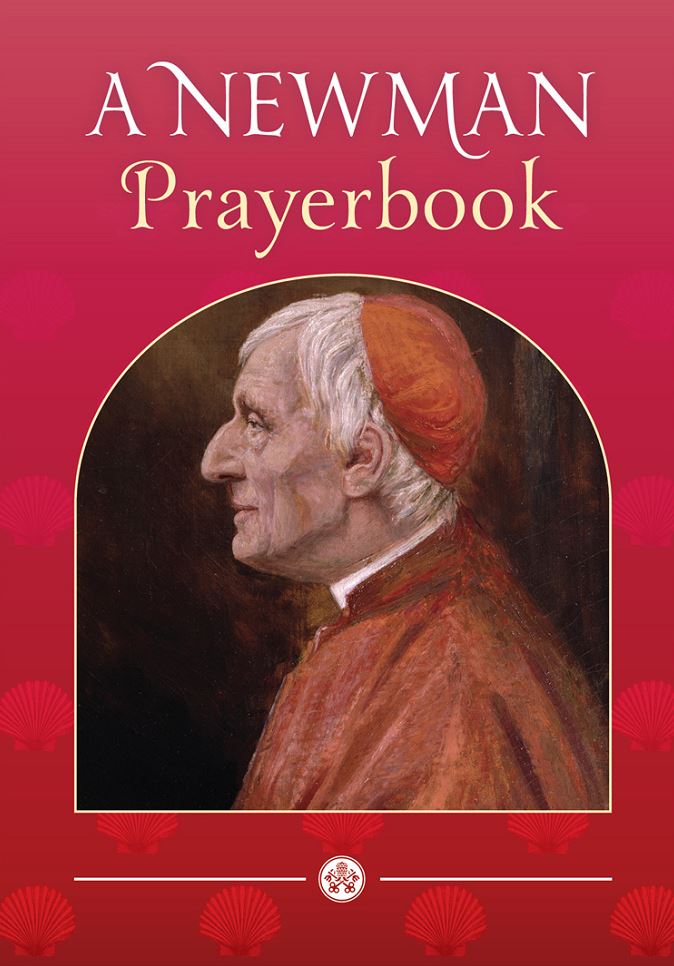
Newman Prayer Book - The Birmingham Oratory (ed)
The Mind of Cardinal Newman: From His Own Writings - Charles Stephen Dessain
Daily Christian Living with John Henry Newman
Reviews of other books by John Henry Newman:
Stations of the Cross
Meditations on Mary, Our Mother
Prayers Before The Eucharist
...
CTS books about Newman:
John Henry Newman: Lead Kindly Light -Dr. Raymond Edwards
Newman His Life and Legacy – Fr. Ian Ker
John Henry Newman Apostle to the Doubtful - Meriol Trevor and Leonie Caldecott
Newman Prayer Book - The Birmingham Oratory (ed)
The Mind of Cardinal Newman: From His Own Writings - Charles Stephen Dessain
Daily Christian Living with John Henry Newman
Saint John Henry Newman: His Life and Works - CTS
Benedict XVI and Blessed John Henry Newman the State Visit - Benedict XVI
…
CTS Books by John Henry Newman:
Meditations on Stations of the Cross
Christ upon the Waters - CTS Onefifties Book 3
The Second Spring
…
Reviews of other books about Newman:
Take Five: Meditations with John Henry Newman - Mike Aquilina and Juan Velez
…




No comments:
Post a Comment